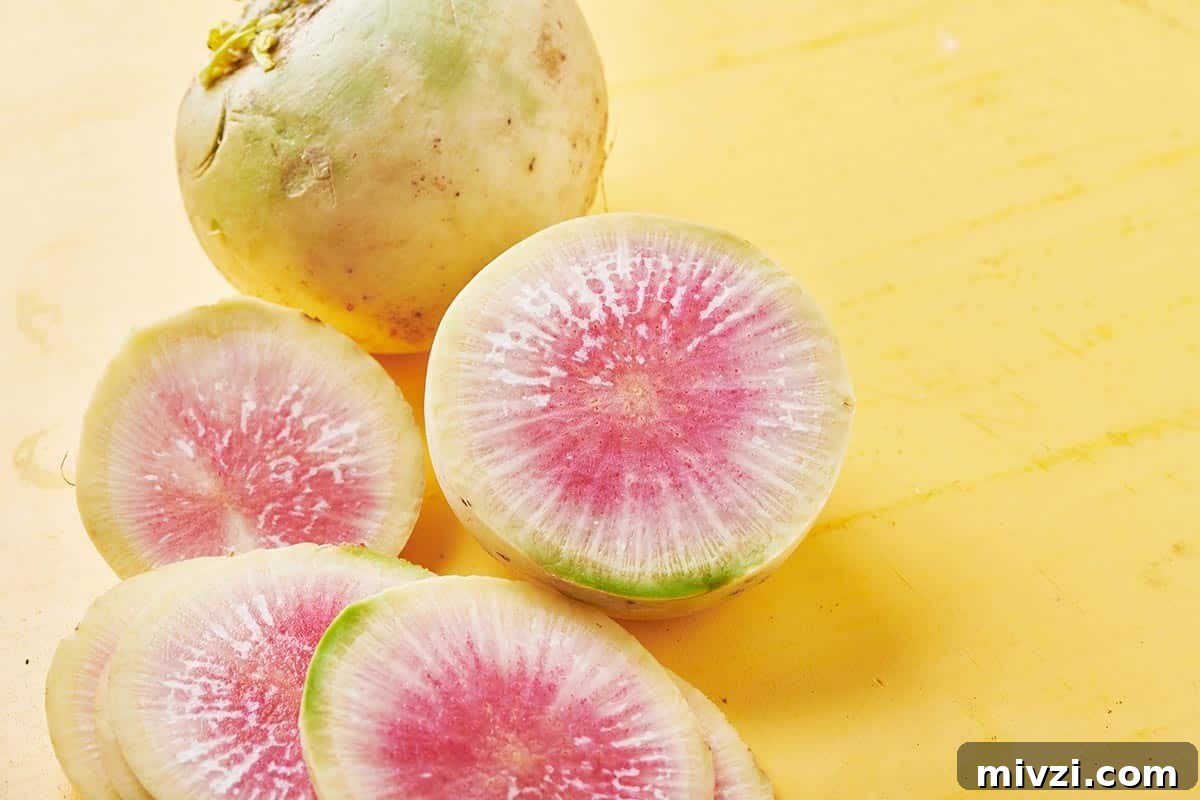
Watermelon radishes are named for their striking appearance: a muted green or beige exterior that hides a vivid pink to red interior, much like a watermelon. An heirloom variety of the Chinese daikon radish and a member of the mustard family, these radishes originated in China but are now cultivated in many regions where root vegetables thrive.
In the United States you can find watermelon radishes at well-stocked supermarkets, specialty food stores, and farmers markets. Their prime season runs from early fall through spring, so check farm stands and market stalls during those months. In grocery stores they are typically displayed alongside other radish varieties.
- What Does Watermelon Radish Taste Like?
- How to Use Watermelon Radish
- Pickled Watermelon Radishes
- Recipes with Radishes
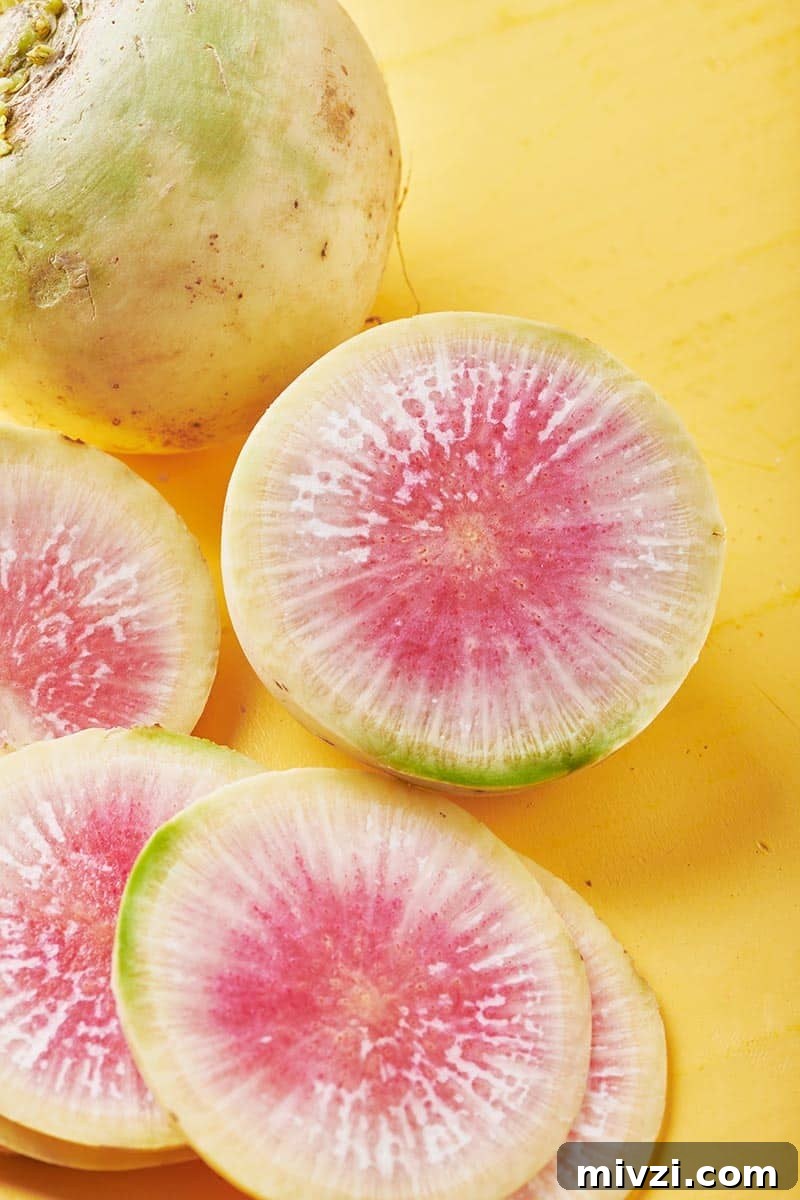
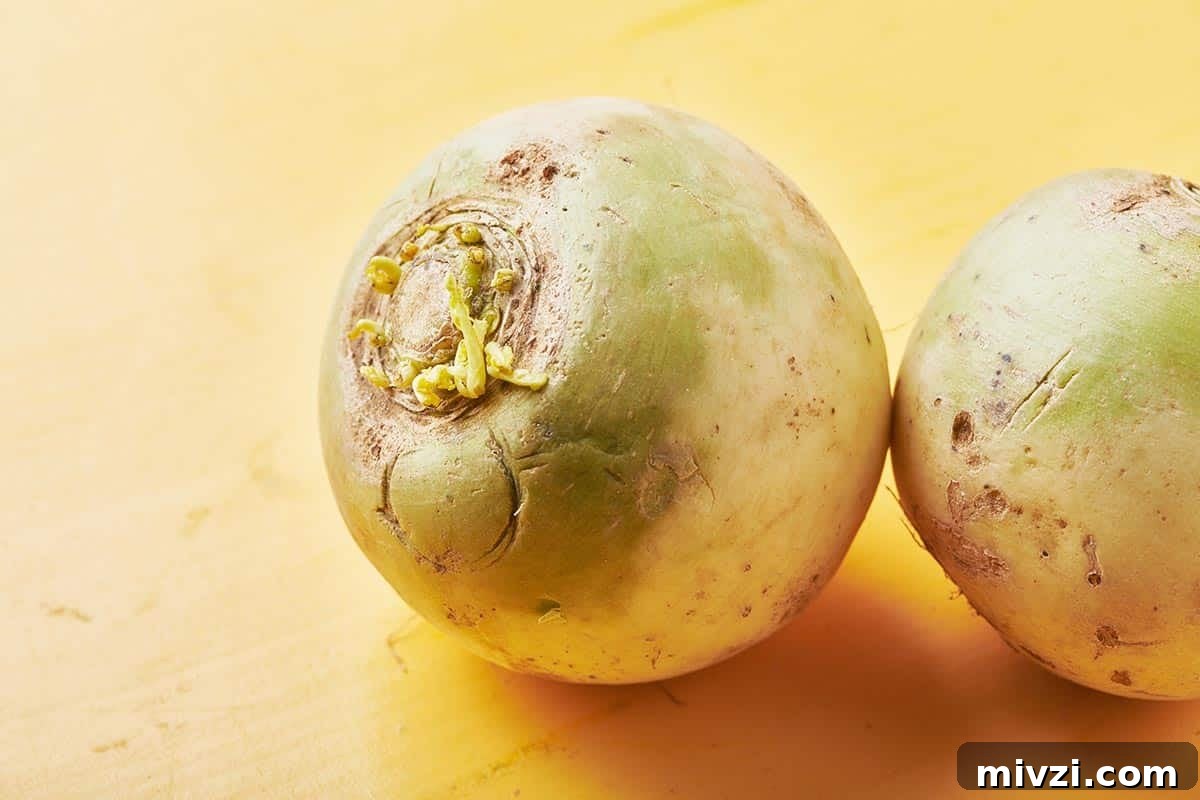
From the outside, watermelon radishes look unassuming—round and often pale beige or greenish. They range in size from a bit larger than a golf ball to nearly the size of a tennis ball; smaller roots tend to be milder and are often preferred. The skin is edible and nutritious, containing antioxidants, vitamins, and minerals.
The interior color is the most notable feature. Near the edge you’ll see a greenish-white rim that transitions to a vibrant center that can be pink, deep red, or somewhere in between, sometimes with a tie-dye effect. When selecting watermelon radishes, pick ones that feel heavy for their size and avoid any that are soft or spongy.
What Does Watermelon Radish Taste Like?
Despite the name, watermelon radishes do not taste like watermelon. Their flavor is in line with other radishes: a crisp texture with a peppery bite and a hint of sweetness. Intensity varies by size and age; larger roots typically carry a stronger, spicier flavor.
Watermelon radishes can be used interchangeably with red radishes, daikon, Korean radish, or black Spanish radish. If you need a substitute with a similar crunch, carrots or jicama work well, though they lack the vibrant color that makes watermelon radishes visually special.
How to Use Watermelon Radish
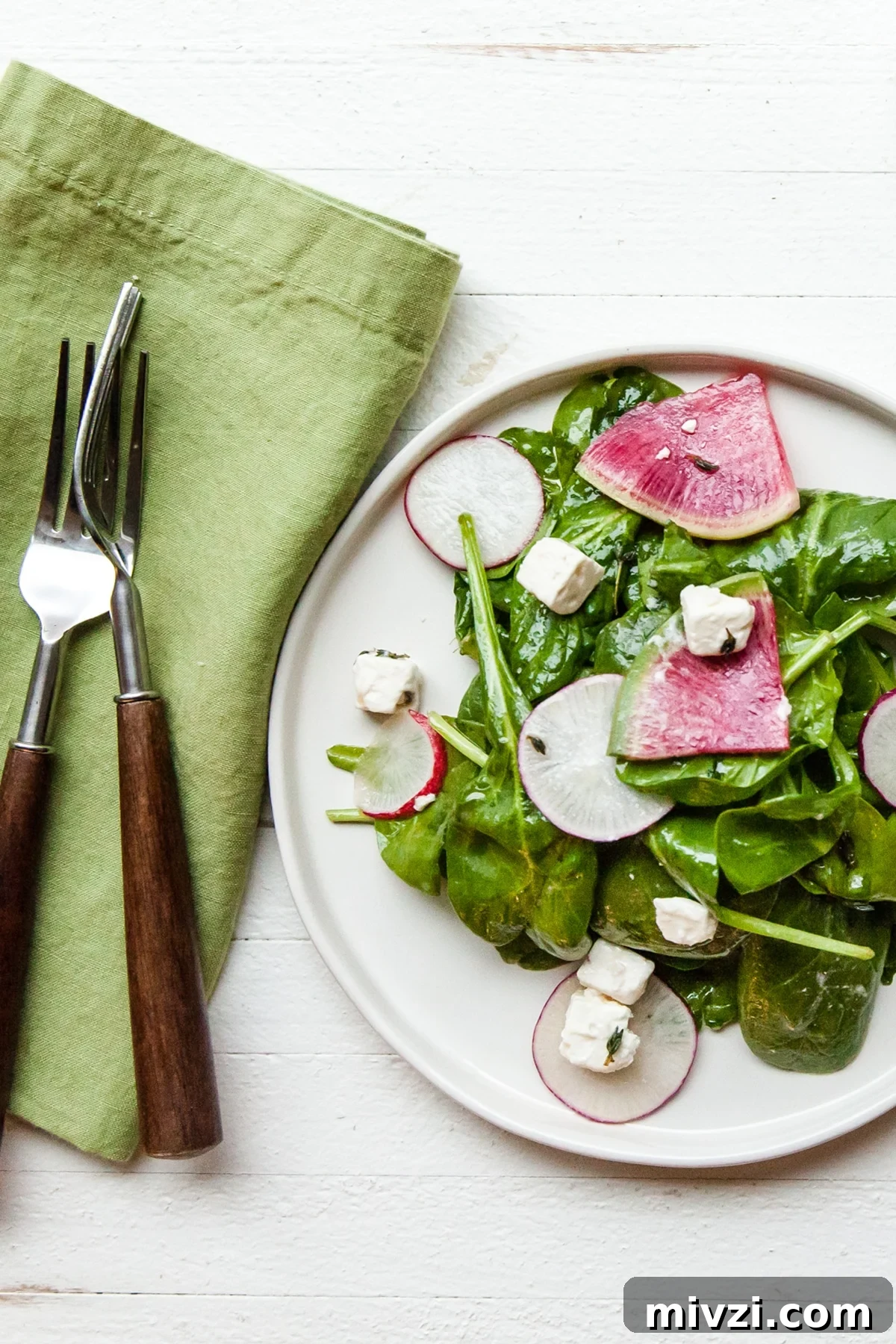
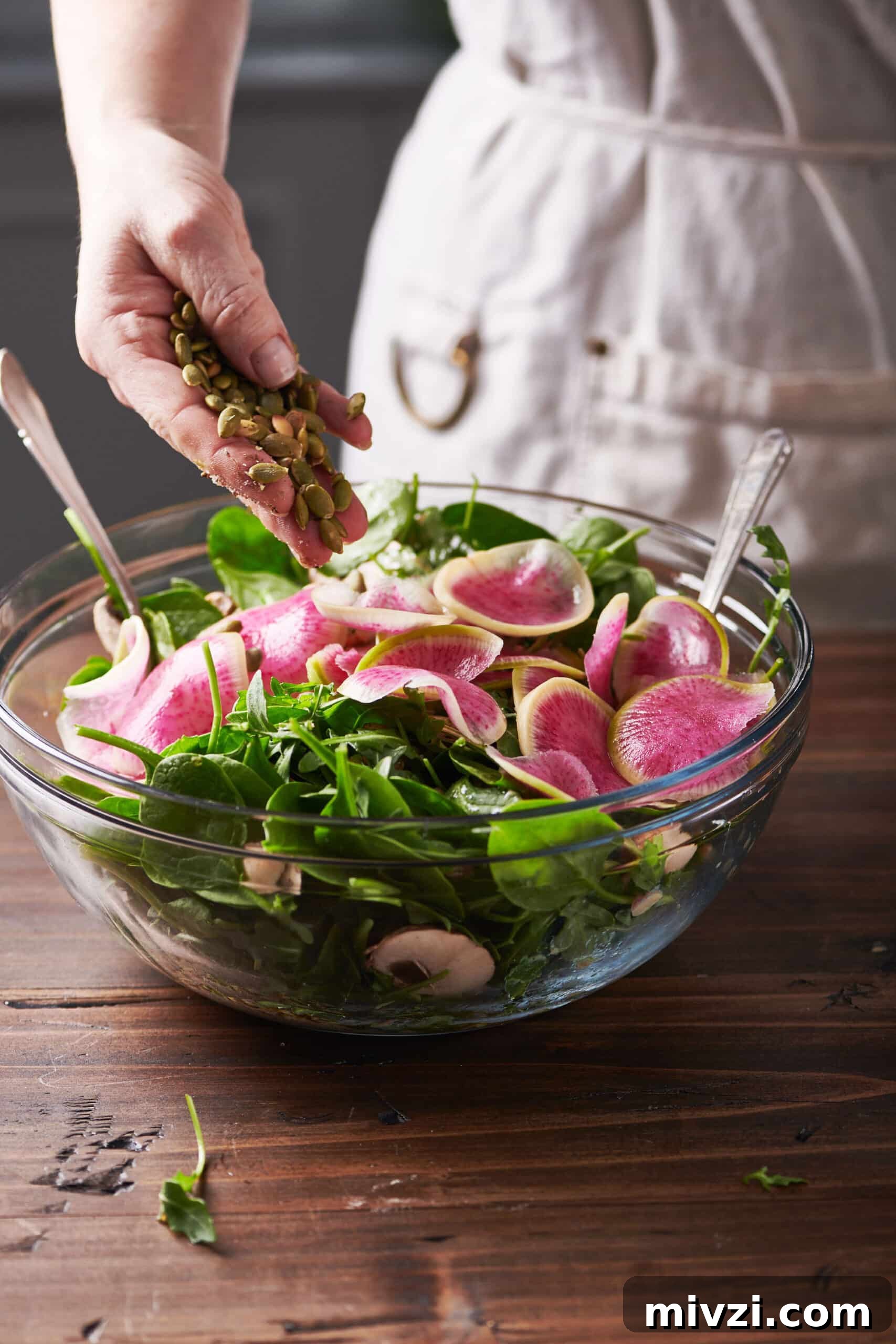
Watermelon radishes are versatile. They’re excellent raw, pickled, or roasted. Thin raw slices add color and a peppery crunch to salads and sandwiches—both for flavor and eye-catching presentation. They’re frequently featured in food photography and restaurant dishes for that reason.
Serve raw slices on a vegetable platter with dips; keep the slices thick enough to scoop up dip without breaking. To store them, remove any stems and keep the radishes in a breathable container in the refrigerator; properly stored they can last several weeks.
For roasting, cube the radishes, toss with olive oil and seasonings, and roast at 425°F (about 220°C) for 10–20 minutes. Roasting softens their bite and mellows the color somewhat, creating an appealing side dish with a different flavor profile.
Pickled Watermelon Radishes
Pickled watermelon radishes are simple to make and add zing to tacos, sandwiches, and salads. To prepare them, wash and thinly slice the radishes and pack them into a sterilized jar. In a small saucepan combine ½ cup distilled white vinegar, ½ cup water, 1 teaspoon salt, and 1 teaspoon sugar. Heat until the sugar and salt dissolve, about a minute. Remove from heat and add 2 peeled garlic cloves and ½ teaspoon lightly crushed peppercorns. Pour the hot brine over the radishes, including the garlic and peppercorns. Allow the jar to cool to room temperature, then refrigerate for at least one day; they will keep for several weeks to a few months. Use sparingly: the pickles are flavorful and pungent.
Also See How to Cook:
- Sugar Snap Peas
- Sweet Potatoes
- Shallots
- Spaghetti Squash
- Tomatoes
- Hatch Chiles
- Ramps
Recipes with Radishes
Watermelon radishes work in any recipe that calls for radishes. Their color elevates simple preparations, and their peppery crunch complements greens, grains, cheeses, and richer proteins. Here are a few recipe highlights that showcase how well they perform.
Radishes with Herb Butter
Spinach and Radish Salad with Feta