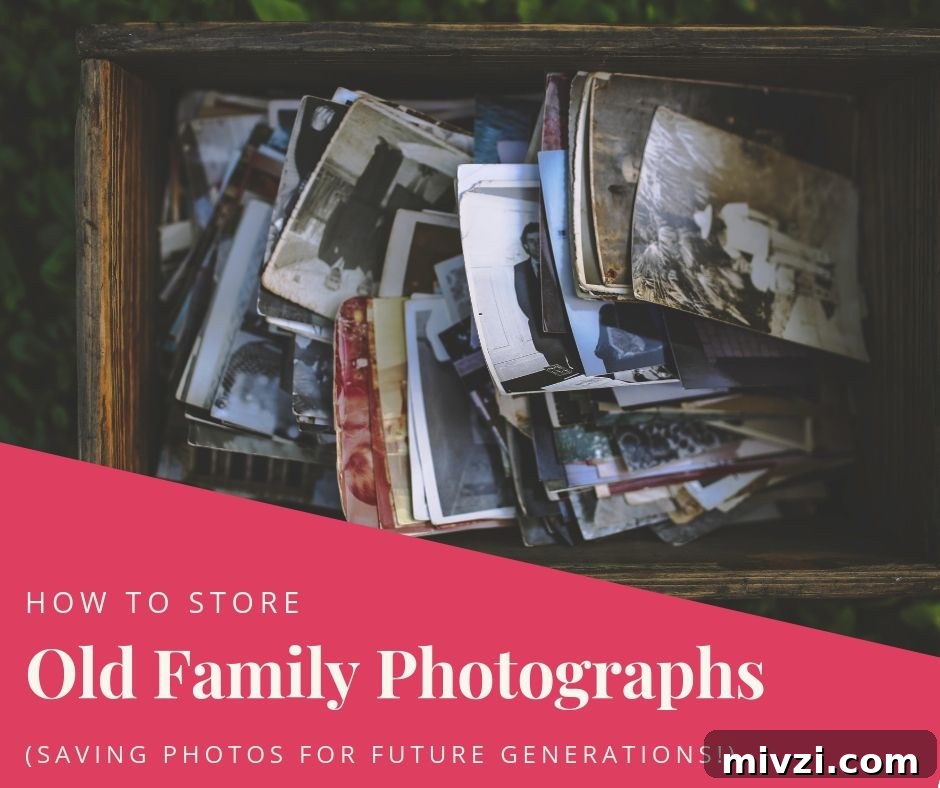
Ever wondered how best to store old photographs? I’m always surprised at where family photos turn up — in hot, dusty attics, sealed Ziploc bags, magnetic albums, and even in a trunk in a barn where they survived 50+ years. Some of these finds are in excellent condition; others are fragile reminders that proper storage matters.
Cleaning out my grandmother’s house felt less like a chore and more like an archaeological dig. I uncovered forgotten memories: some touching, some amusing, and then there was the sealed attic. Years before, my grandfather had duct-taped the attic door shut to keep conditioned air inside. Years later four of us stood staring up at that door, ready to see what lay beyond.
When the duct tape came down and the stairs unfolded, we peeked into the hot attic: boxes and wrapping paper crumbled at our touch, but resting on the floor was a framed photograph of my grandfather holding my father as a toddler — perfectly preserved. It now hangs in my home. That lucky outcome convinced me I needed to learn how to properly store family photos so they survive for future generations.
How To Store Old Family Photographs
Here are the basic principles for storing photographs. They may seem obvious, but a clear reminder goes a long way in preserving fragile images.
- Store photographs in a cool, dry place. Attics and basements are generally poor choices due to temperature swings and moisture.
- Keep storage temperatures moderate; ideally below 75°F to slow chemical deterioration.
- Avoid extremes of humidity. High humidity encourages mold; very low humidity can make photos brittle.
- Protect photos from direct light. Sunlight and strong indoor light fade images over time.
- Avoid magnetic photo albums, which can damage photographs over the long term.
Ways To Store Your Family Photographs
“Archival safe” means storage materials are lignin-free, acid-free, PVC-free, and have a neutral pH. These properties help prevent chemical reactions that degrade photographs. Photo boxes and sleeves labeled archival or museum-quality are the best options.
When using archival boxes and sleeves, follow these practical tips:
- Don’t overfill boxes. Packing too many photos together risks scratching, creasing, or tearing.
- Don’t underfill boxes either. Too few items can allow photos to bend or warp. Use the correct box size or add archival spacers if needed.
- Group similarly sized photos. Keeping like sizes together reduces shifting and abrasion inside the box.
- Use archival sleeves. Place a single photograph in each sleeve and choose a sleeve slightly larger than the photo so edges don’t protrude.
- Store oversized images flat. Use flat archival boxes designed for larger prints to avoid folding or rolling.
- Work on a clean, dry surface and handle photos with clean, dry hands. Avoid lotions or oils on your hands, which can transfer to the paper.
Finding Archival Safe Photo Storage Products
Look for reputable sources of acid- and lignin-free boxes, sleeves, and supplies. Museums, archival suppliers, and specialty storage retailers offer appropriate materials in a variety of sizes. Choose products specifically labeled archival or museum-quality to ensure long-term protection.
Protecting Your Photographs From Catastrophic Events
Natural disasters, fires, and floods can destroy heirloom photos. Plan ahead to reduce risk and preserve copies.
- Make physical copies and store them off-site, such as in a safe deposit box, or distribute copies to family members for safekeeping.
- Digitize your collection and keep backups in multiple locations. Use cloud storage and offline backups like encrypted external drives or dedicated backup devices designed for photos.
- Keep a prioritized list of irreplaceable items and consider professional conservation for the most valuable or fragile pieces.
What To Do If Your Photographs Have Already Been Damaged
I am not a photo conservator, but here are appropriate next steps and resources if you discover damaged photographs.
- For antique processes such as daguerreotypes, ambrotypes, or tintypes, consult a professional archivist or conservator. These materials require specialized care.
- If photos are stuck in old magnetic albums or adhesive pages, seek guidance before attempting removal. Improper techniques can worsen the damage.
- If prints are dirty or stained, create a high-quality digital scan before attempting any physical cleaning. Scanning preserves the image and allows digital restoration using photo-editing software.
- After digitizing, use image-restoration tools to correct fading, scratches, or discoloration. Once restored digitally, images can be shared and reprinted without risking the originals.
Taking these steps will help ensure your family photographs survive and can be enjoyed by future generations. Treat them with care, store them in archival materials, back them up digitally, and consult professionals for rare or severely damaged items.