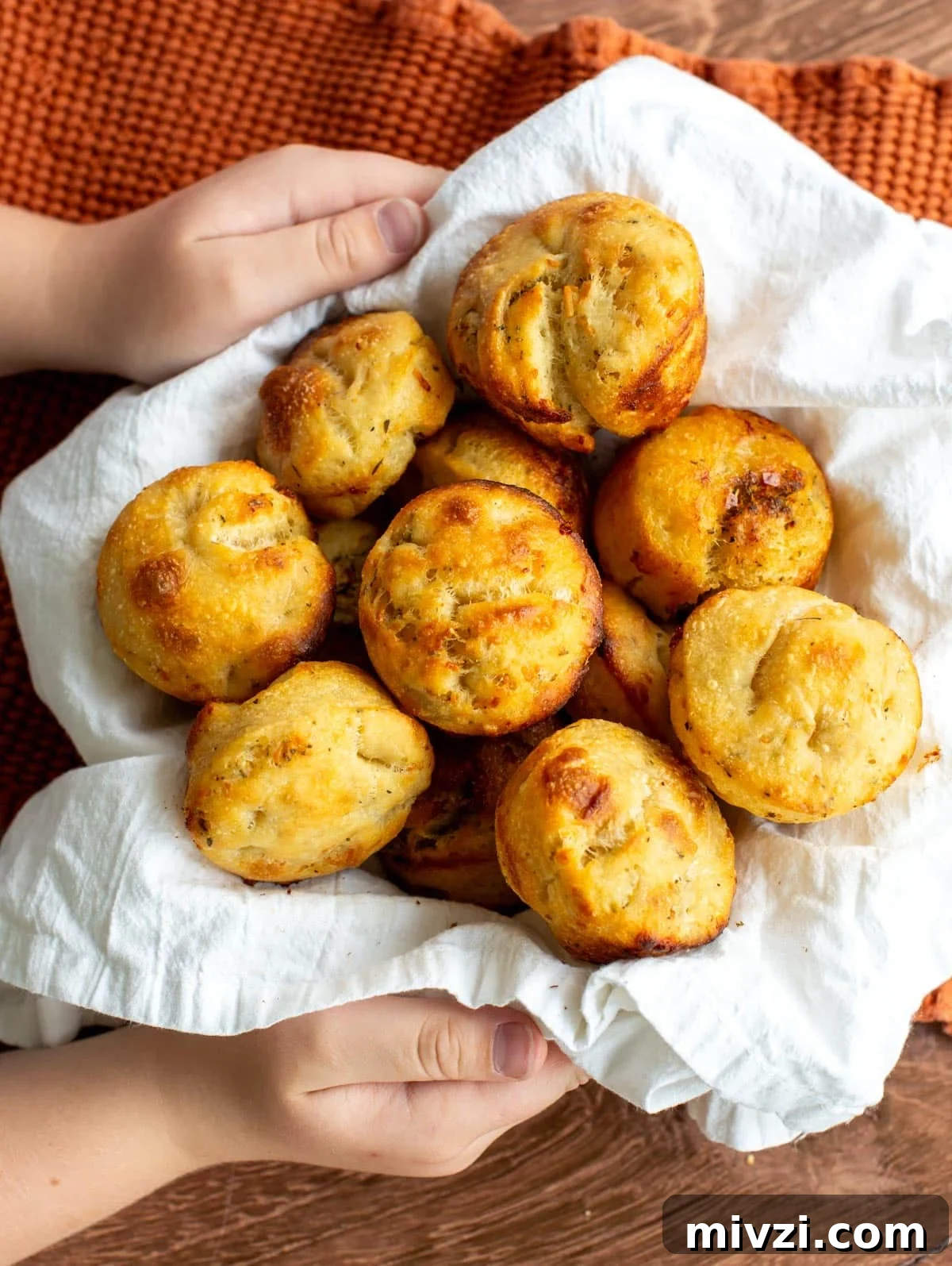
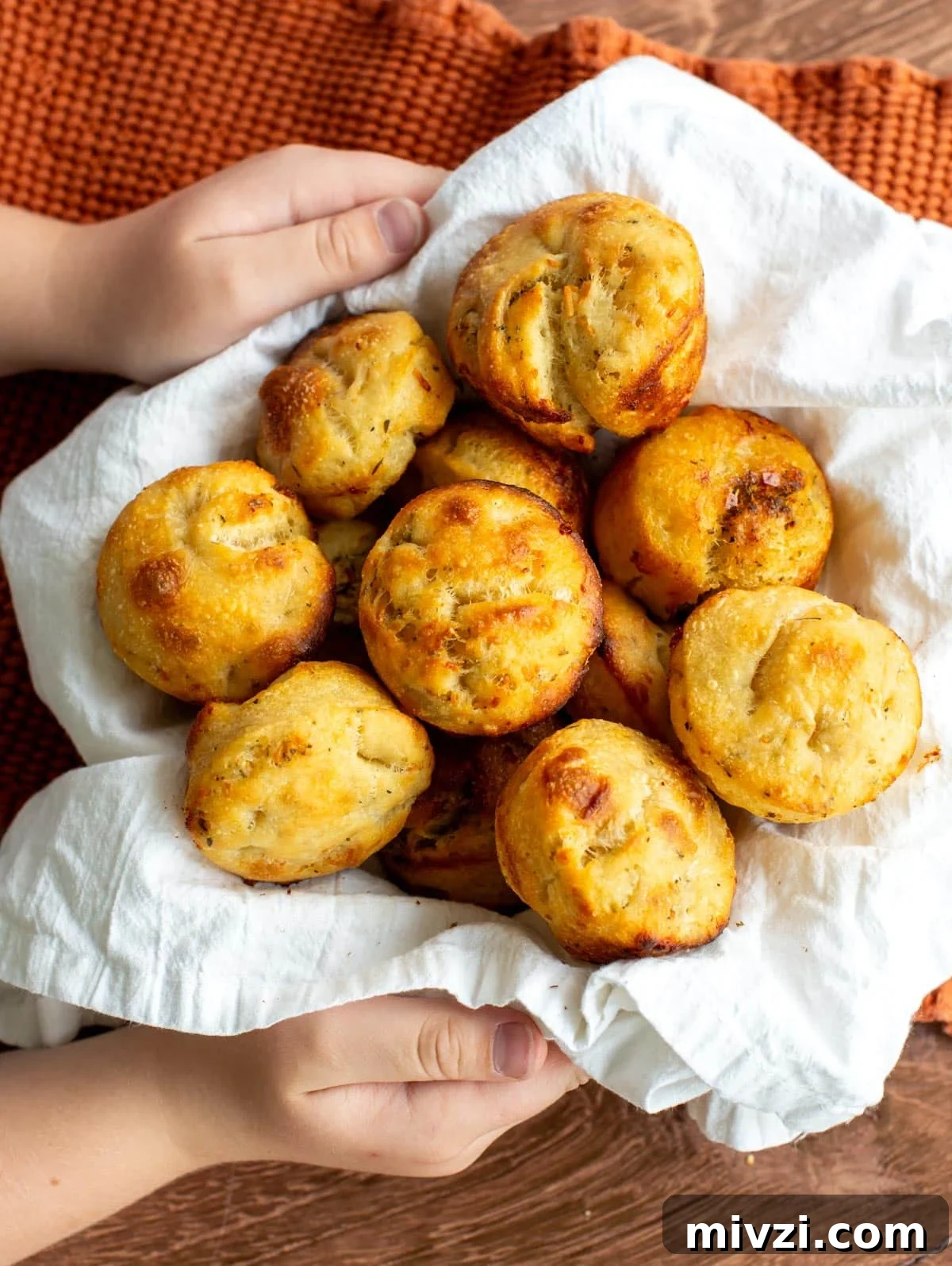
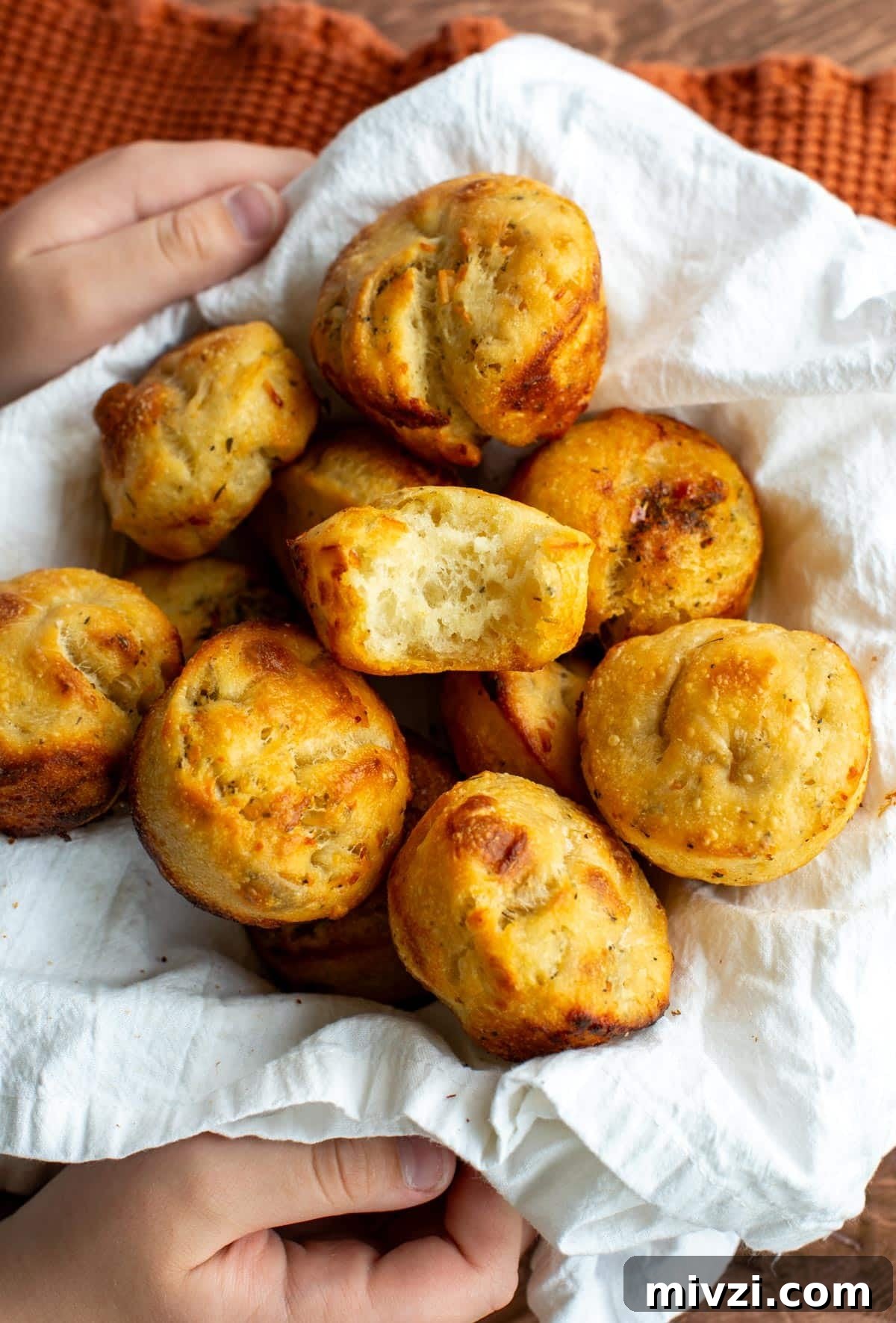
I’ve made many focaccias, but these Sourdough Focaccia Rolls are a new favorite. They capture the soft, airy crumb and crisp, golden edges you expect from classic sourdough focaccia and transform it into individual rolls baked in a muffin tin. Each roll puffs up with a tender interior and the characteristic chew of focaccia.
They’re essentially a hybrid of my Parmesan Herb Sourdough Dinner Rolls and my favorite Sourdough Focaccia: soft and fluffy like a dinner roll but flavored and finished like focaccia. Each portion is dipped in a garlic-herb butter and oil before baking, creating a savory, crisp crust. Serve them with a meal, alongside soup, or warm from the pan — they’re likely to become a go-to side dish.
Why You’ll Love Sourdough Focaccia Rolls
- Easy to make – The dough uses simple ingredients and a few gentle folds. If you’ve made sourdough dinner rolls or a basic loaf before, this method will feel familiar and straightforward.
- Outstanding texture – These rolls combine a pillowy interior with crispy, golden edges and open, airy crumb. They hold mix-ins and toppings well while keeping a tender crumb inside.
- Highly versatile – The recipe pairs beautifully with herbs, cheeses, or sweet toppings. You can adapt the mix-ins for savory versions like jalapeño-cheddar or sweet citrus-herb variations.
- 100% naturally leavened – These focaccia rolls rely on an active sourdough starter rather than commercial yeast, producing a flavorful, bubbly dough with the fermentation benefits of sourdough.
New to sourdough? If you’re just starting, learn to build a reliable starter and consult beginner sourdough guides. Naturally fermented dough takes more time but rewards you with depth of flavor and texture.
Important Ingredients
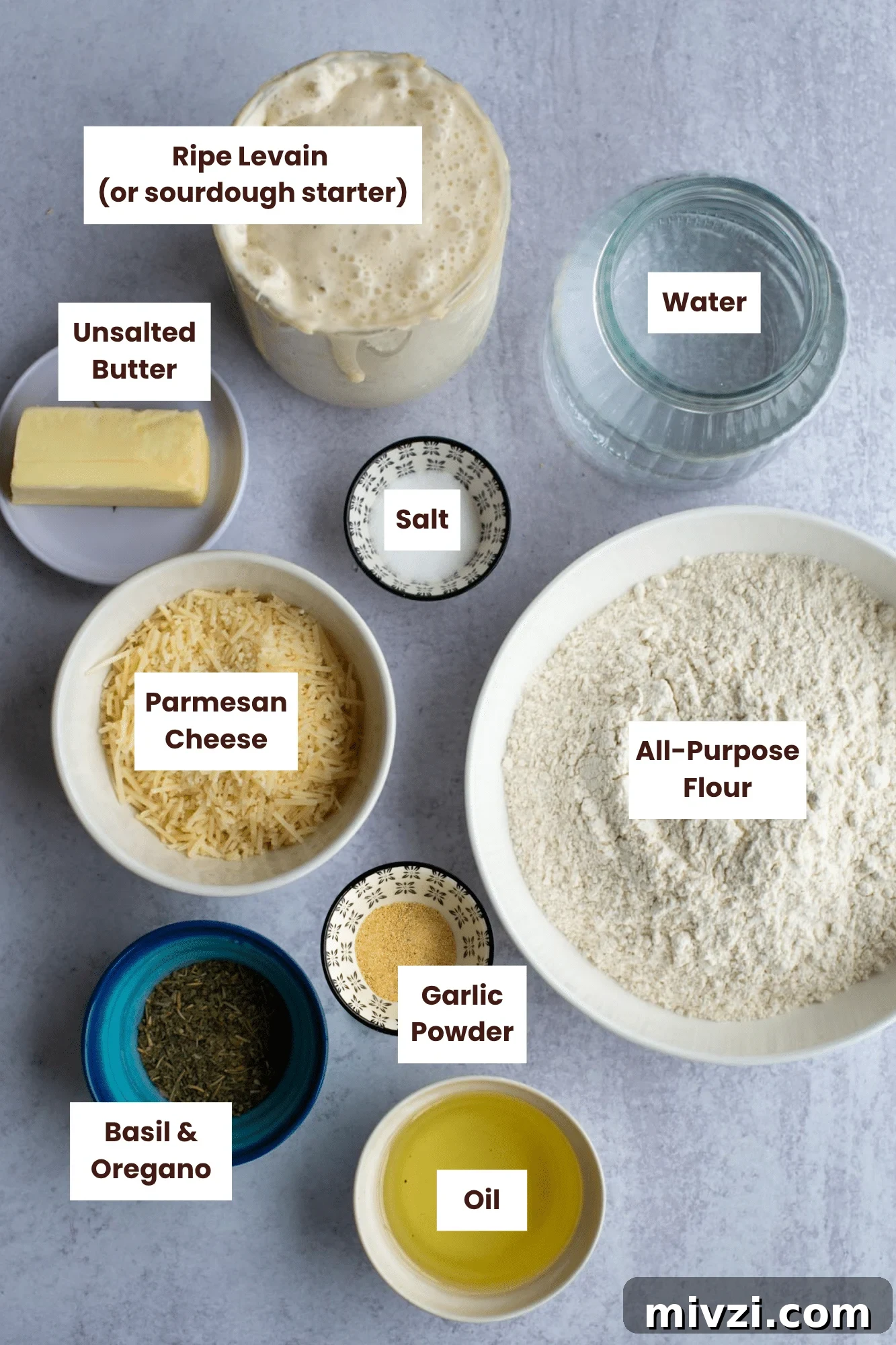
- Sourdough Starter – Use an active, ripe starter that’s doubled and bubbly. It’s used to build the levain, which gives the dough strength, rise and flavor.
- Bread Flour – A higher-protein bread flour (around 12.5% protein or more) gives structure and chew.
- Herbs – This recipe highlights oregano and basil, but fresh or dried herbs you enjoy can be used interchangeably.
- Garlic – Garlic powder provides balanced flavor in both the dough and the herb oil. If you prefer fresh garlic, add it only to the herb oil to avoid slowing fermentation in the dough.
- Parmesan Cheese – Shredded parmesan is folded into the dough and the herb oil for a savory, cheesy note.
- Olive Oil – Choose an olive oil with a flavor profile you enjoy; extra virgin for pronounced olive taste, or a lighter oil for a subtler note.
See the recipe card for detailed ingredient amounts and measurements.
Substitutions
- Sourdough Starter: You can substitute a ripe, active starter directly for the levain by weight if needed.
- Bread Flour: Swap for high-gluten flour (14% protein) if you want a taller, chewier roll.
- All-Purpose Flour: Use all-purpose with a slight water reduction or add a small amount of vital wheat gluten to mimic bread flour performance.
- Olive Oil: Any flavored olive oil works; pick one whose taste complements the final roll since the oil influences the flavor.
- Variations: Customize with olives, fresh rosemary, thyme, roasted garlic, or different cheeses to make savory or sweet adaptations.
Sourdough Baker’s Timeline
Use a timeline to plan your bake since sourdough ferments more slowly than yeasted bread. The example below assumes a dough temperature of about 78–80°F. Cooler dough will take longer; warmer dough will speed up the process.
Sample timeline (times approximate):
| Day 1 | Mix Levain |
| Evening | Mix levain and let sit 10–12 hours at ~78°F until doubled and bubbly. |
| Day 2 | Mix & Make Rolls |
| Morning | Mix dough and begin bulk fermentation with periodic coil folds every 30 minutes. Add cheese and herbs during the third set of folds. |
| Afternoon | Divide dough, dip portions in the herb butter oil, place into a muffin tin, and proof for several hours until airy and jiggly. Dimple and bake in the evening. |
How to Make Sourdough Focaccia Rolls
Mix the Levain
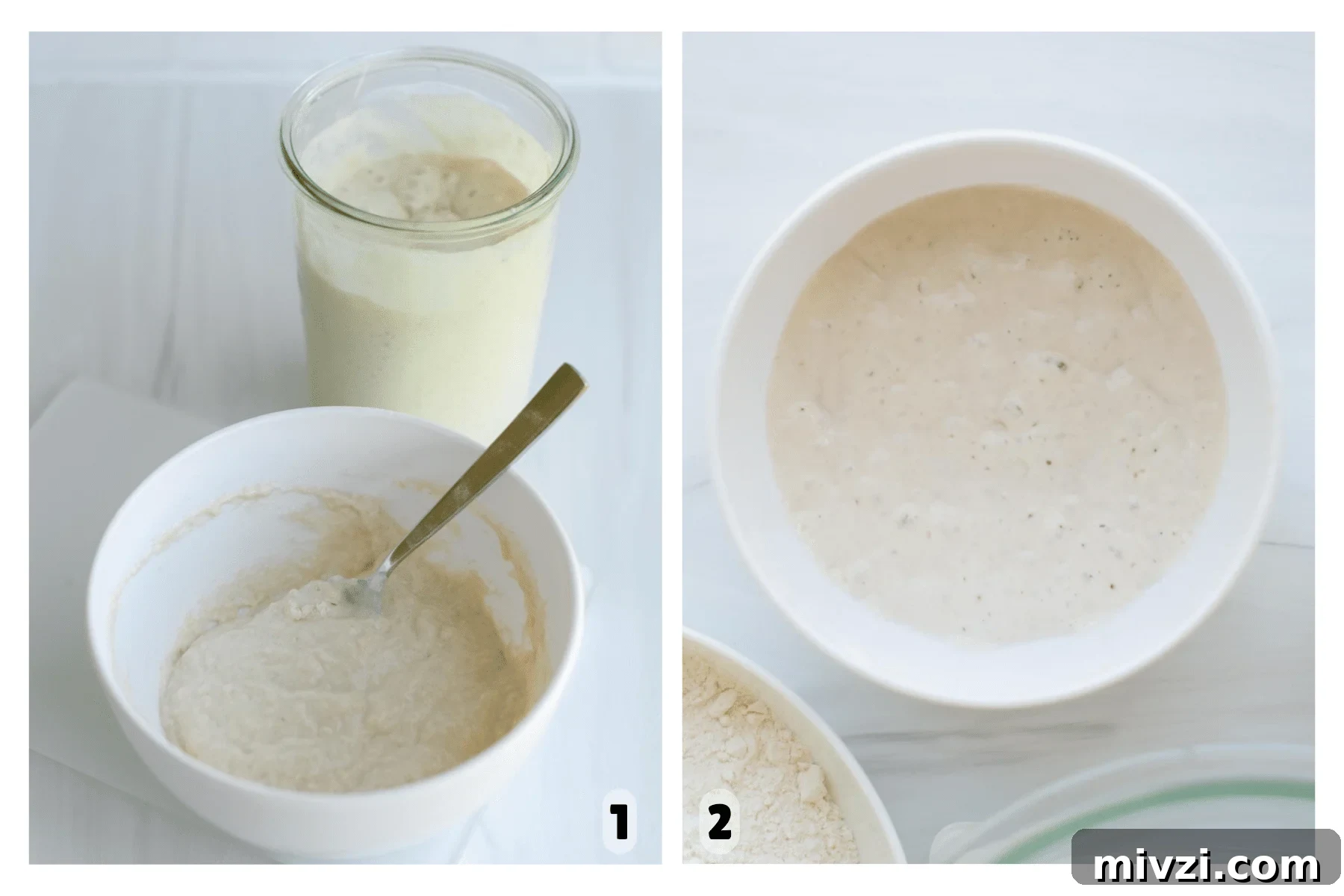
Step 1: Mix the levain. Combine ripe sourdough starter with water and flour, then let it rise until bubbly and active. If you already have a ripe starter, you can substitute a measured amount of starter for the levain.
Mix the Dough
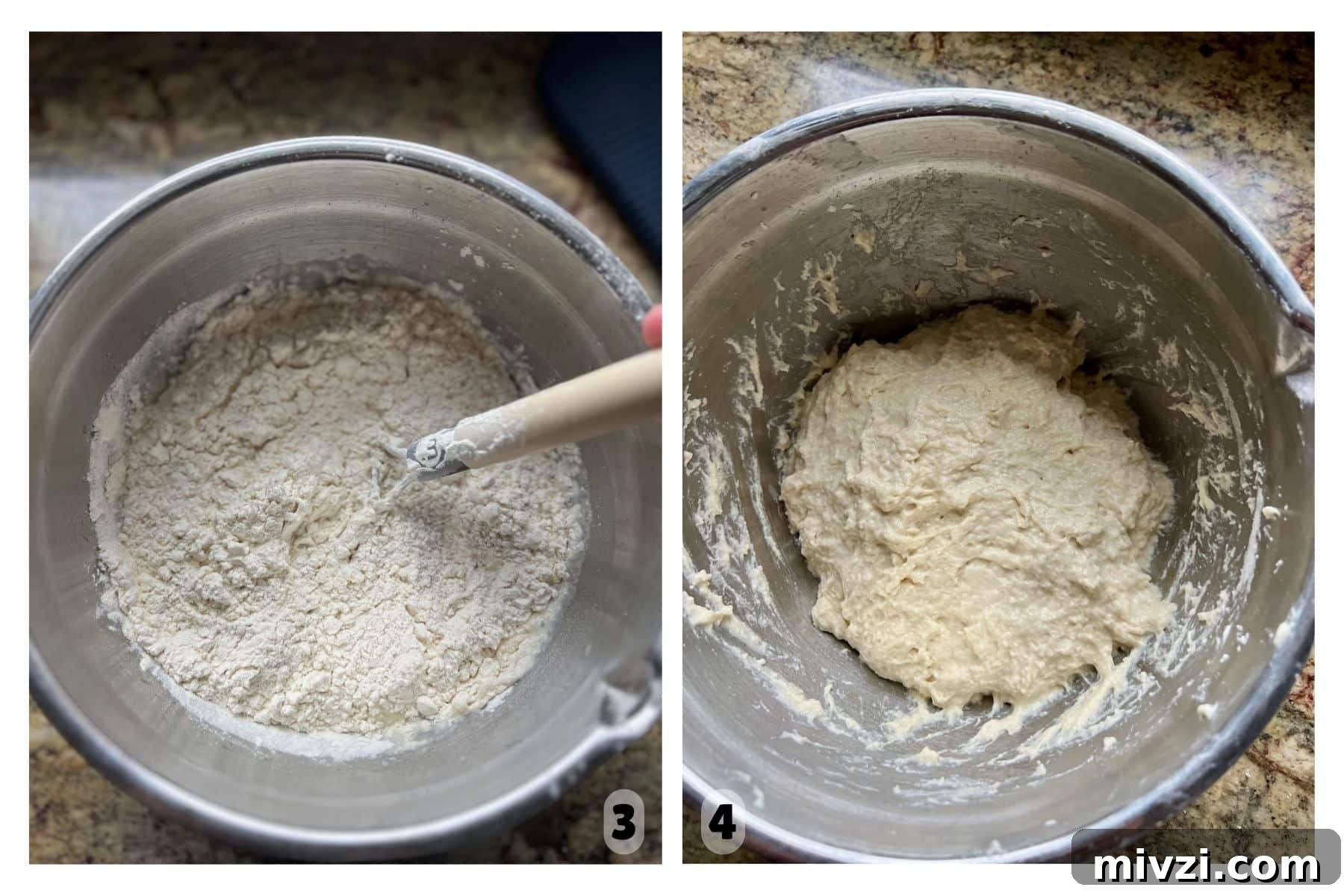
Step 2: Mix the dough. Combine levain, water, salt and bread flour until a shaggy, sticky dough forms. Cover and rest for about 30 minutes. You can use a stand mixer on low to bring the dough together, then proceed with gentle coil folds.
Bulk Fermentation and Coil Folds
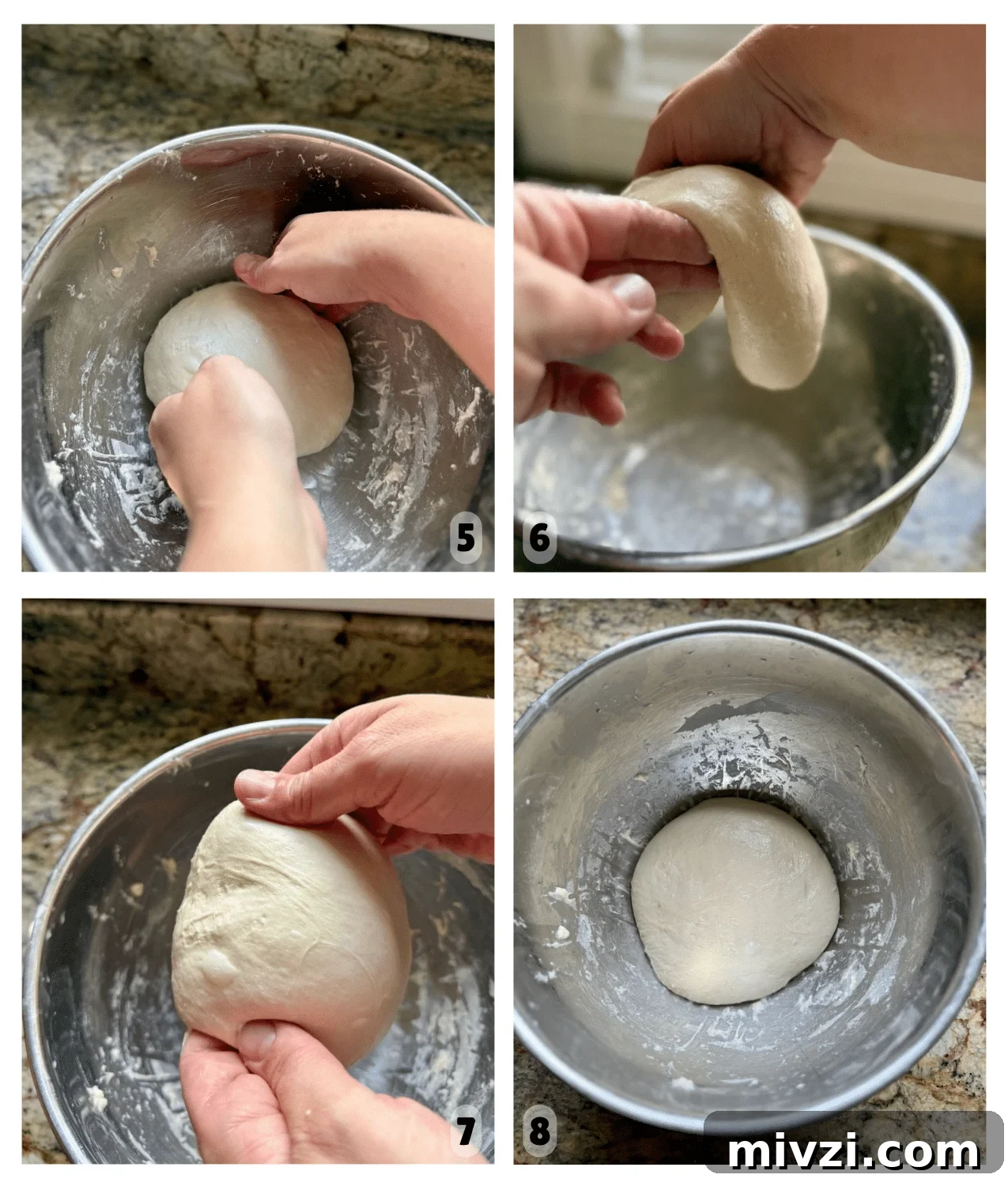
Step 3: Strengthen the dough with coil folds. During 4–5 hours of bulk fermentation, perform sets of coil folds every 30 minutes (4 sets total). The dough will be sticky at first but will strengthen and become more elastic with each set. Add parmesan, garlic powder, oregano and basil before the third set so they incorporate as you fold. After the final set, rest the dough until it shows small bubbles and has risen about a third.
Tip: Coil folds are gentle and work especially well with high-hydration focaccia dough. If you prefer, stretch-and-fold will also work but may feel different with a wet dough.
Shaping the Dough
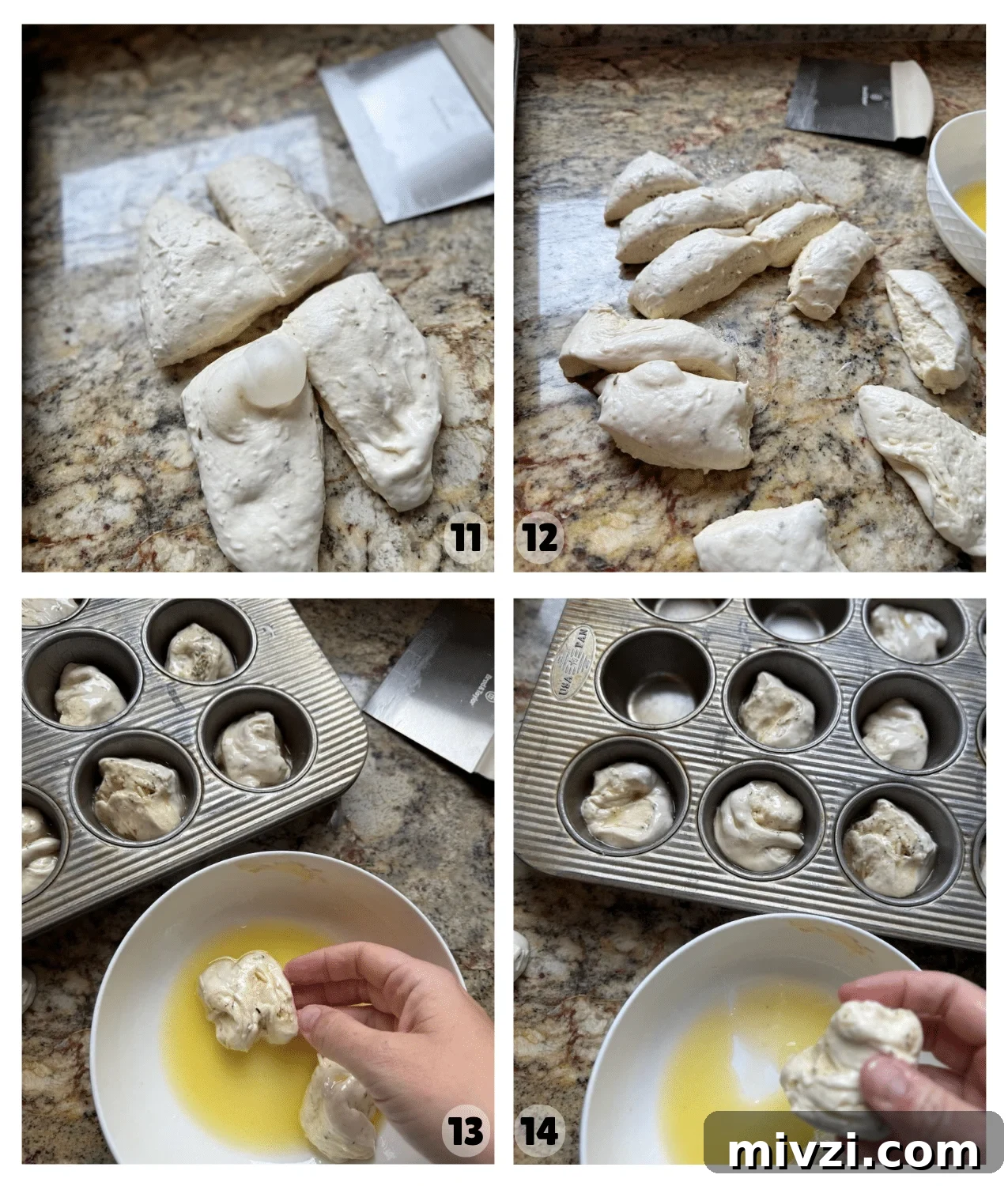
Step 4: Shape rolls. Make the herb butter oil by mixing melted butter, olive oil, garlic powder, oregano, basil and salt. Divide the dough into 12 equal pieces (about 40–45 g each). Dip each piece into the herb oil so it’s well coated, then place it into a muffin tin well. Using a metal nonstick tin produces the nicest release and crust.
Note: While a simple butter-and-oil mix works, a Parmesan herb oil intensifies flavor and is recommended if you prefer a cheesier finish.
Proofing the Focaccia Rolls
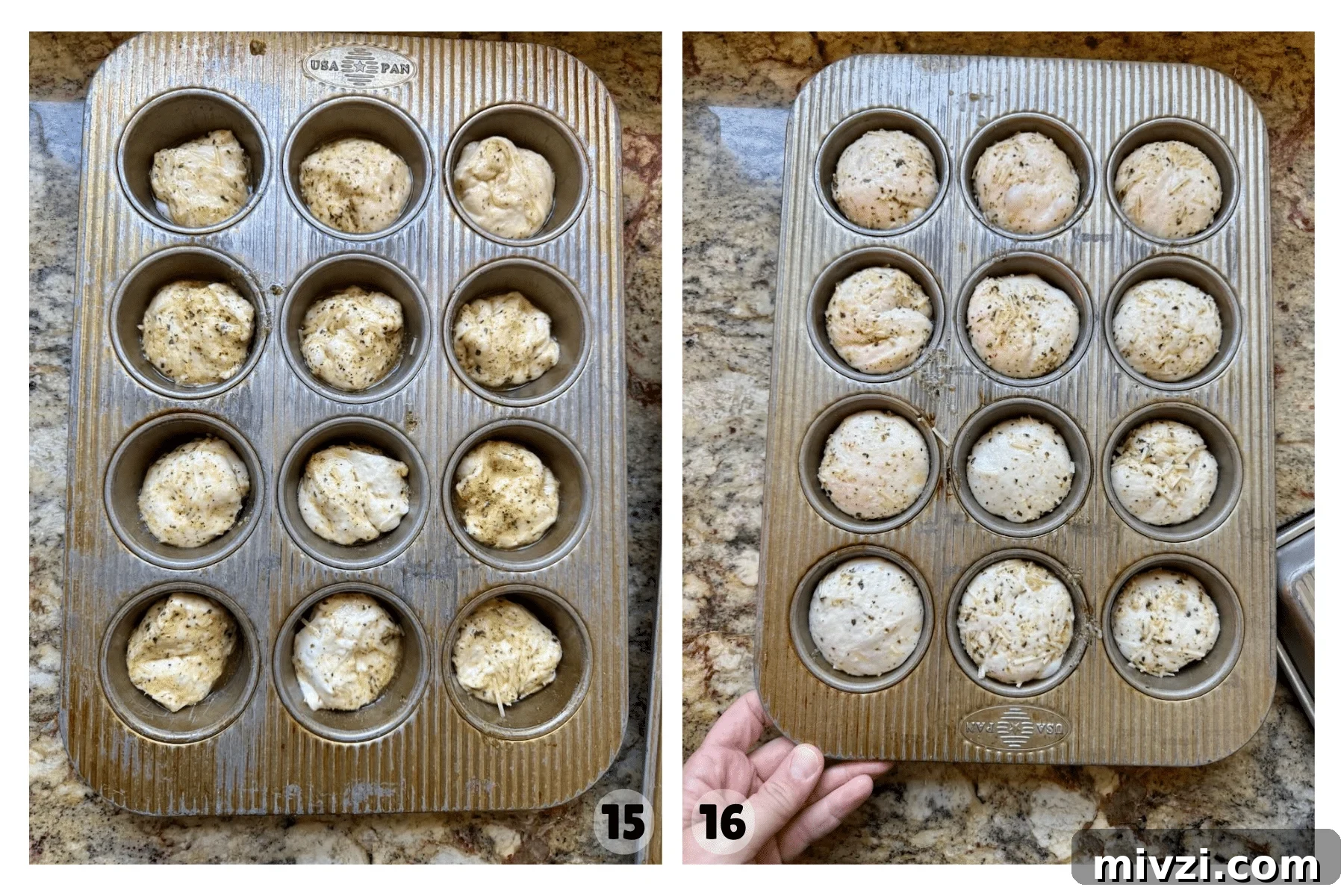
Proof: Cover the tin and proof in a warm spot until the rolls are puffed and slightly jiggly, roughly 2–3 hours at 78–80°F. Alternatively, you can refrigerate the prepared tin for up to 48 hours for a cold proof; bring back to a warm proof for several hours before baking.
Baking Sourdough Focaccia Muffins
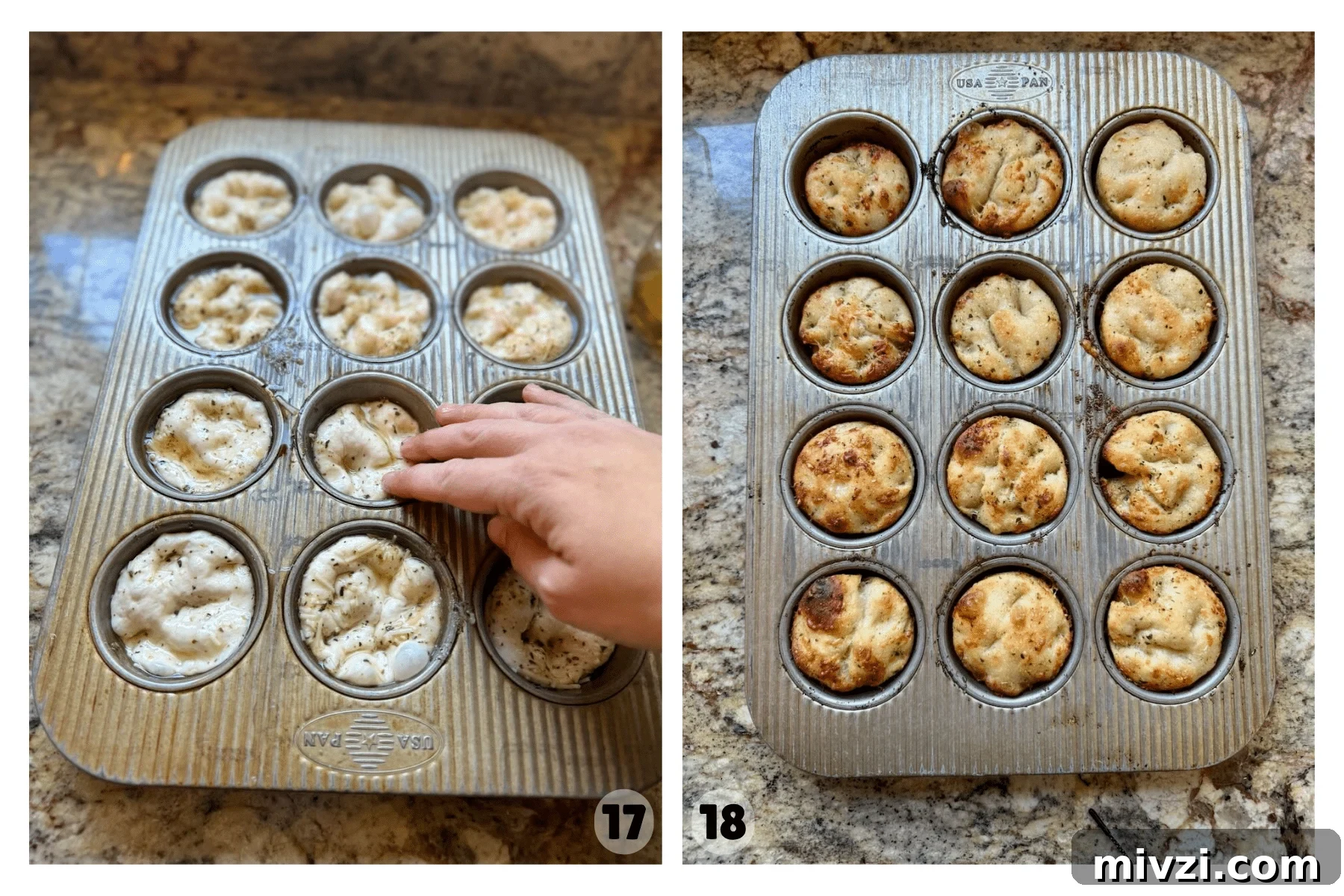
Bake: Preheat the oven to 450°F. Drizzle a little more oil over each roll if desired and use your finger to dimple the tops. Bake for about 20 minutes, until golden and the internal temperature reaches 205–210°F. Let the rolls rest in the pan for a few minutes, then remove and enjoy warm.
How to Store Leftovers
Keep rolls at room temperature up to 24 hours, then refrigerate in an airtight container. They freeze well for a couple of months. Reheat in a 300°F oven for 5–8 minutes to restore crisp edges, or microwave for a quick warm-up (the crust won’t be as crisp).
Amy’s Recipe Tip
A metal nonstick muffin tin gives the best results; the dough releases easily and the bottoms brown nicely. If you don’t have a nonstick metal pan, use parchment liners. I haven’t fully tested silicone pans with this dough.
Frequently Asked Questions
This focaccia dough is intended to be high hydration, which creates the open crumb and crisp edges. If it feels challenging, reduce water slightly or wet your hands during folds to prevent sticking. Over a few rounds of coil folds the dough will strengthen and become easier to handle.
Yes. The recipe yields 12 rolls; doubling requires two muffin tins and proportional ingredient adjustments. If using an automated recipe card, ensure gram measurements are doubled for the most accurate scaling.
This version works best with an active starter. If you want to use discard, follow a discard-focused focaccia recipe designed for faster rises.
Yes. Parmesan adds savory depth, but you can omit it or substitute Asiago, Romano, or shredded mozzarella to suit your preferences.
Popular Sourdough Roll recipes
One Hour Sourdough Discard Rolls
Honey Butter Sourdough Discard Rolls
Soft & Fluffy Sourdough Discard Dinner Rolls
Soft Sourdough Dinner Rolls
If you made these Sourdough Focaccia Rolls, leave a star rating and a comment to share how they turned out. Happy baking!

Sourdough Focaccia Rolls
Rate Recipe
Print Recipe
Equipment
-
muffin tin
-
mixing bowl
-
dough whisk
Ingredients
Levain (1:10:10)
- 3 grams sourdough starter, ripe and active
- 30 grams all-purpose or bread flour
- 30 grams water
Focaccia Roll Dough
- 50 grams ripe levain
- 200 grams water
- 7 grams salt
- 250 grams bread flour
Inclusions
- 20 grams Parmesan, shredded
- 3 grams garlic powder
- 1 gram dried oregano
- 1 gram dried basil
Herb Butter Oil
- 25 grams unsalted butter, melted
- 25 grams olive oil
- 3 grams garlic powder
- 1 gram dried oregano
- 1 gram dried basil
- 2 grams salt
- extra reserved olive oil for the pan
Instructions
Mix the Levain
-
Combine 3 g ripe starter with 30 g water and 30 g flour. Cover and ferment 10–12 hours at ~78°F until doubled and bubbly. Alternatively, use 50 g active starter in place of the levain.
Sourdough Focaccia Rolls
-
Mix the dough: In a bowl combine 50 g levain, 200 g water, 7 g salt and 250 g bread flour. Mix until a sticky dough forms. Cover and rest 30 minutes.
-
Coil fold sets: Perform 4–6 coil folds after each 30-minute rest, repeating for four sets. The dough strengthens with each set. Add the parmesan, garlic powder, oregano and basil before the third set so they incorporate as you fold. After the last set, rest 1.5–2 hours until small bubbles appear and the dough is jiggly.
-
Prepare the herb butter oil: Whisk melted butter, olive oil, garlic powder, oregano, basil and salt together and set aside.
-
Shape: Divide dough into 12 pieces (~40–45 g each). Dip each piece in the herb oil, then place into a muffin well. Cover and proof in a warm spot until puffed and slightly jiggly, about 2–3 hours at 78–80°F (or cold ferment up to 48 hours).
-
Bake: Preheat oven to 450°F. Drizzle a little oil on the tops if desired, dimple gently, and bake 20 minutes until golden and internal temperature reaches 205–210°F. Let cool briefly in the pan, then enjoy warm.
Notes
Starter: Use a ripe, bubbly starter for best results. You can substitute it directly for the levain if it’s at peak activity.
Doubling: Double the ingredients to make 24 rolls; adjust pans and proofing space accordingly.
Make ahead: After dividing and oiling the portions, refrigerate the covered tin overnight. When ready to bake, remove and proof at a warm temperature until puffed (about 4–5 hours at 78°F), then bake as directed.
Nutrition
Nutrition information is automatically calculated and should be used as an approximation.