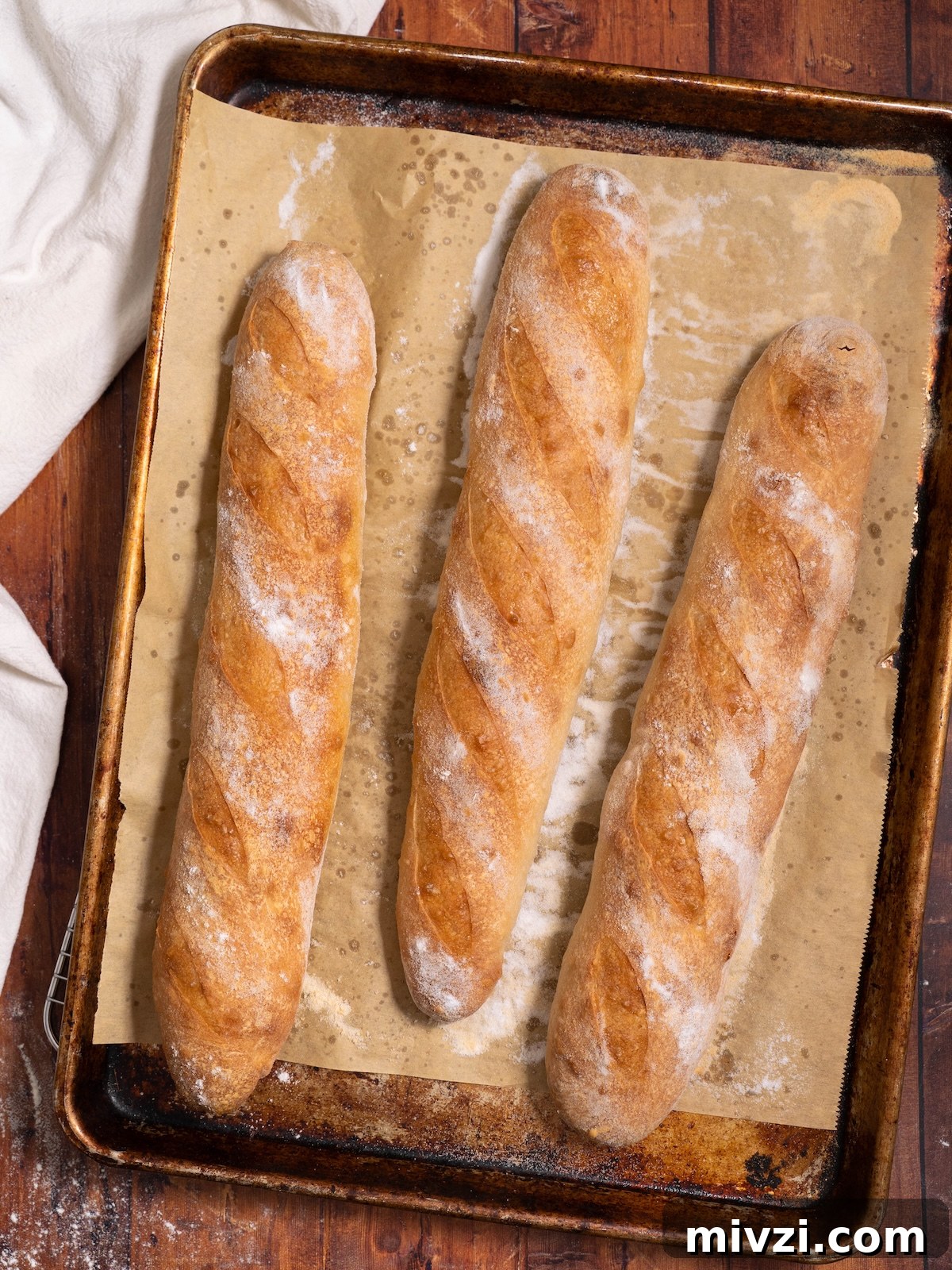
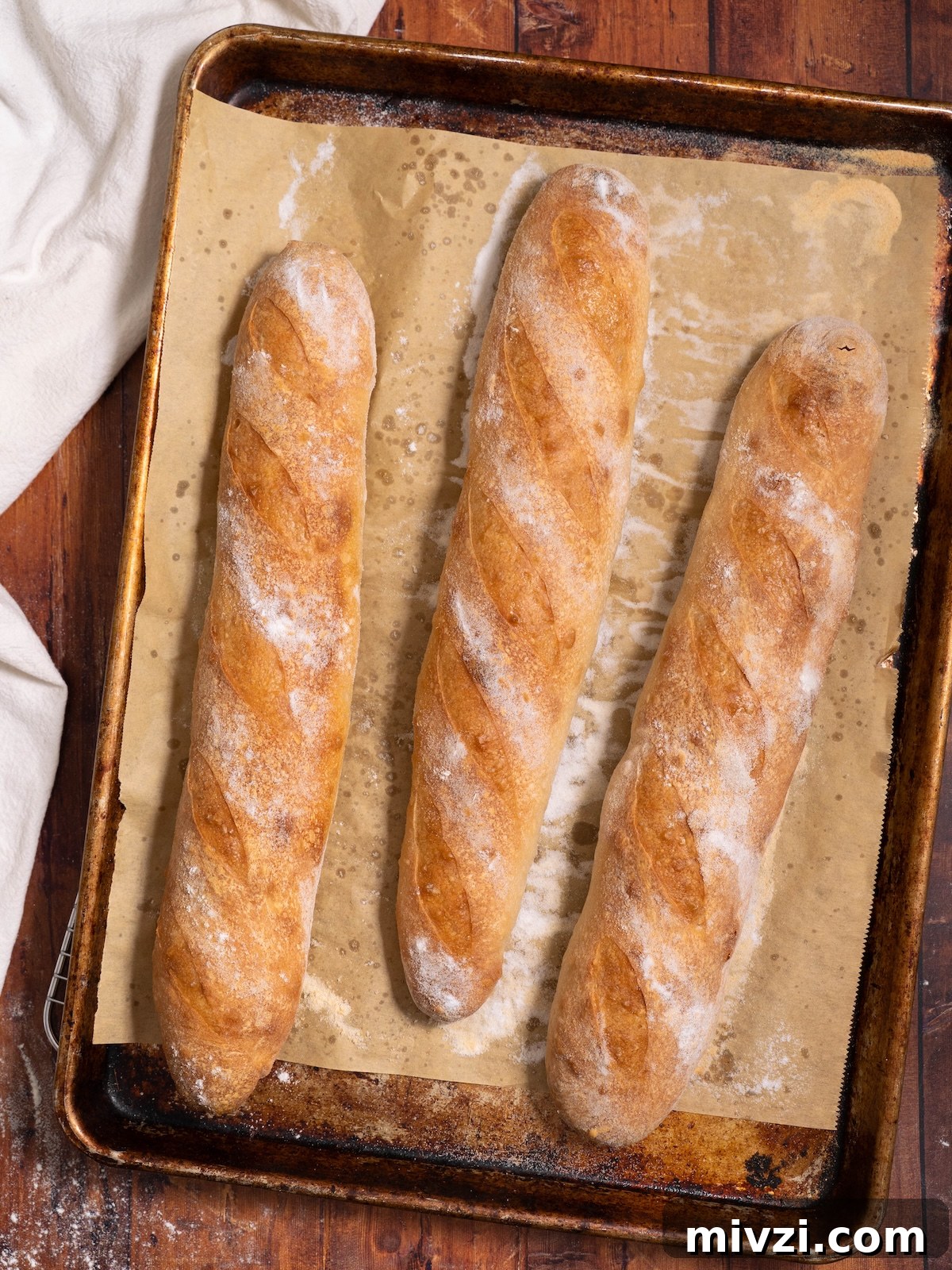
Sourdough baguettes can feel intimidating, but they reward patience and proper technique with a crisp, crackling crust and a soft, airy interior — ideal for slicing, dipping, or assembling a classic French sandwich.
This sourdough baguette recipe is straightforward in its ingredients yet demands attention to structure and timing. Even with professional baking experience, every bake can feel a little nerve-wracking, but you don’t need complicated steps to make excellent baguettes. With a few key techniques you can achieve bakery-quality results at home.
Follow the steps below and you’ll be able to make beautiful sourdough baguettes with confidence.
Recipe highlights
- Crispy exterior, soft and open crumb inside
- Chewy texture with a tangy sourdough flavor
- Only 4 ingredients: flour, water, salt, and active starter
- Great for crostini, charcuterie, sandwiches, and more
Recipe overview
⏱️ Prep: ~35 minutes active • Bulk ferment: 3–4 hours plus overnight in the fridge • Bake: 25–30 minutes
Yield: 3 demi baguettes
Skill level: Intermediate
Flavor notes: Classic French sourdough. Pairs well with olive oil, balsamic, soft cheeses, charcuterie, butter, and fresh tomatoes with basil.
If you’re new to sourdough, consider starting with a simpler loaf first to build confidence.
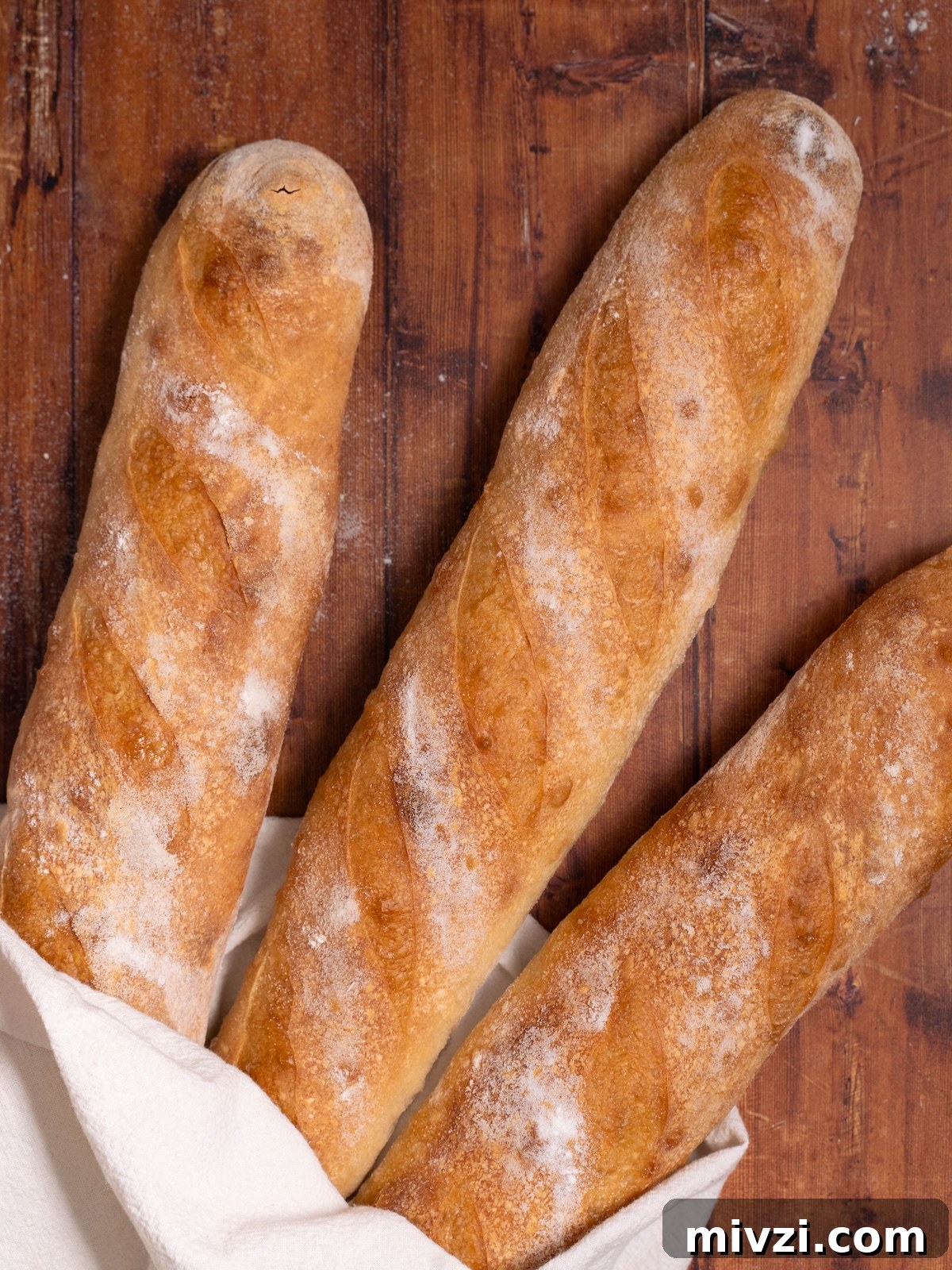
How to make sourdough baguettes
The dough itself is simple; the challenge is building enough structure so the loaves hold their shape and develop that signature crust and open crumb. Below is a concise step-by-step overview; full instructions are in the recipe card further down.
- Mix the dough: Combine warm water, salt, active sourdough starter, and bread flour until a shaggy, cohesive dough forms. Cover and rest 30 minutes.
- Build structure: Give the dough a brief knead, then perform stretch-and-folds every 30 minutes (at least four rounds) until the dough becomes smooth, elastic, and slightly springy.
- Bulk ferment: Let the dough rest at room temperature for about an hour after the final stretch-and-fold.
- Refrigerate overnight: Cover and chill the dough overnight to develop flavor and make shaping easier.
- Shape: Divide into three equal pieces, form rounds, bench rest 30 minutes, then shape each into a tapered cylinder to form a baguette.
- Proof: Proof the shaped baguettes between well-floured towels or a couche for 1–2 hours until slightly puffy but still resilient.
- Bake: Transfer to a prepared baking sheet, score with diagonal slashes, and bake at 425°F until deeply golden and crisp.
Shaping sourdough baguettes
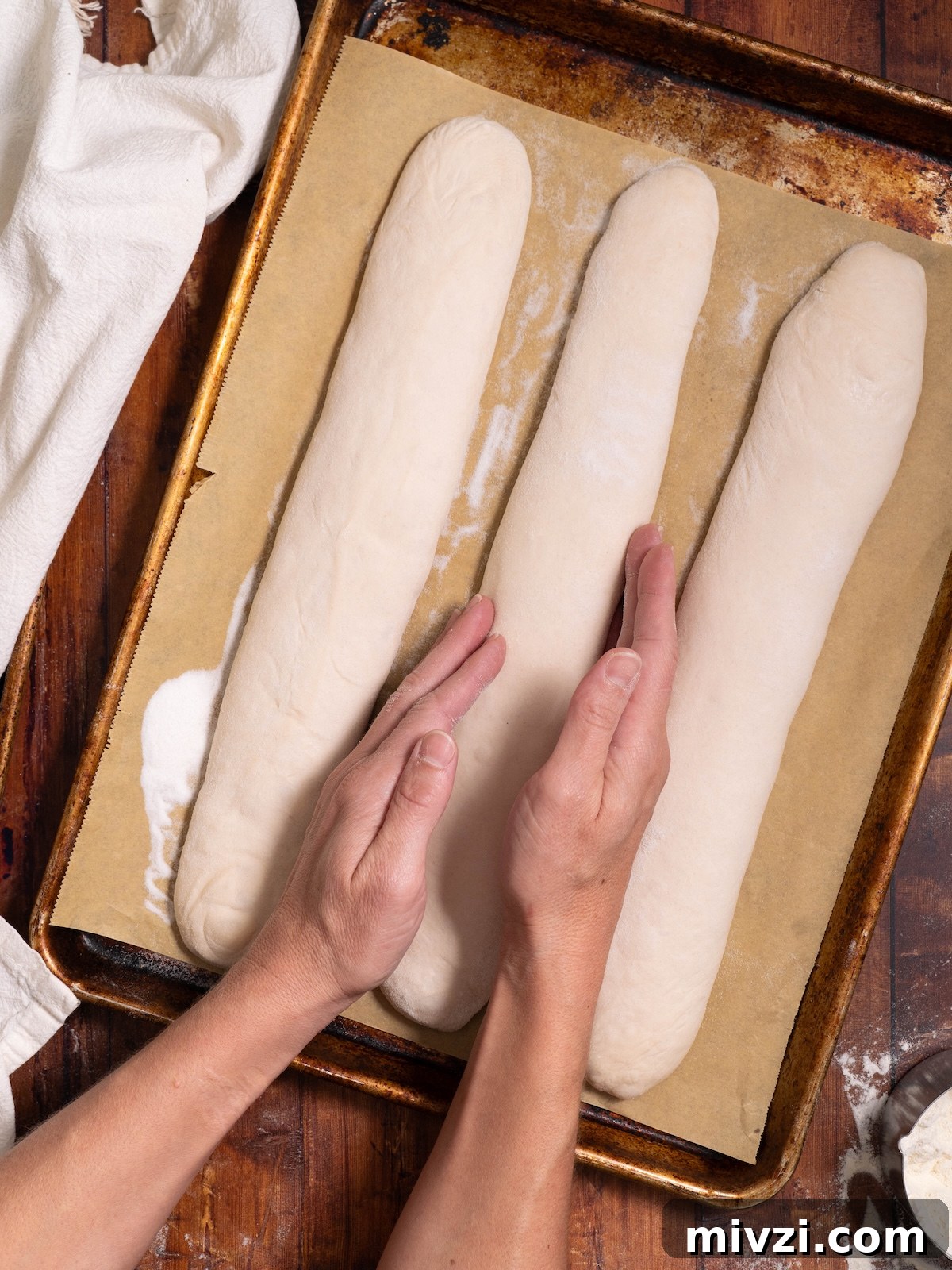
Shaping creates the tension and surface that allow baguettes to rise and bloom in the oven. The photos below show a reliable shaping method you can follow.
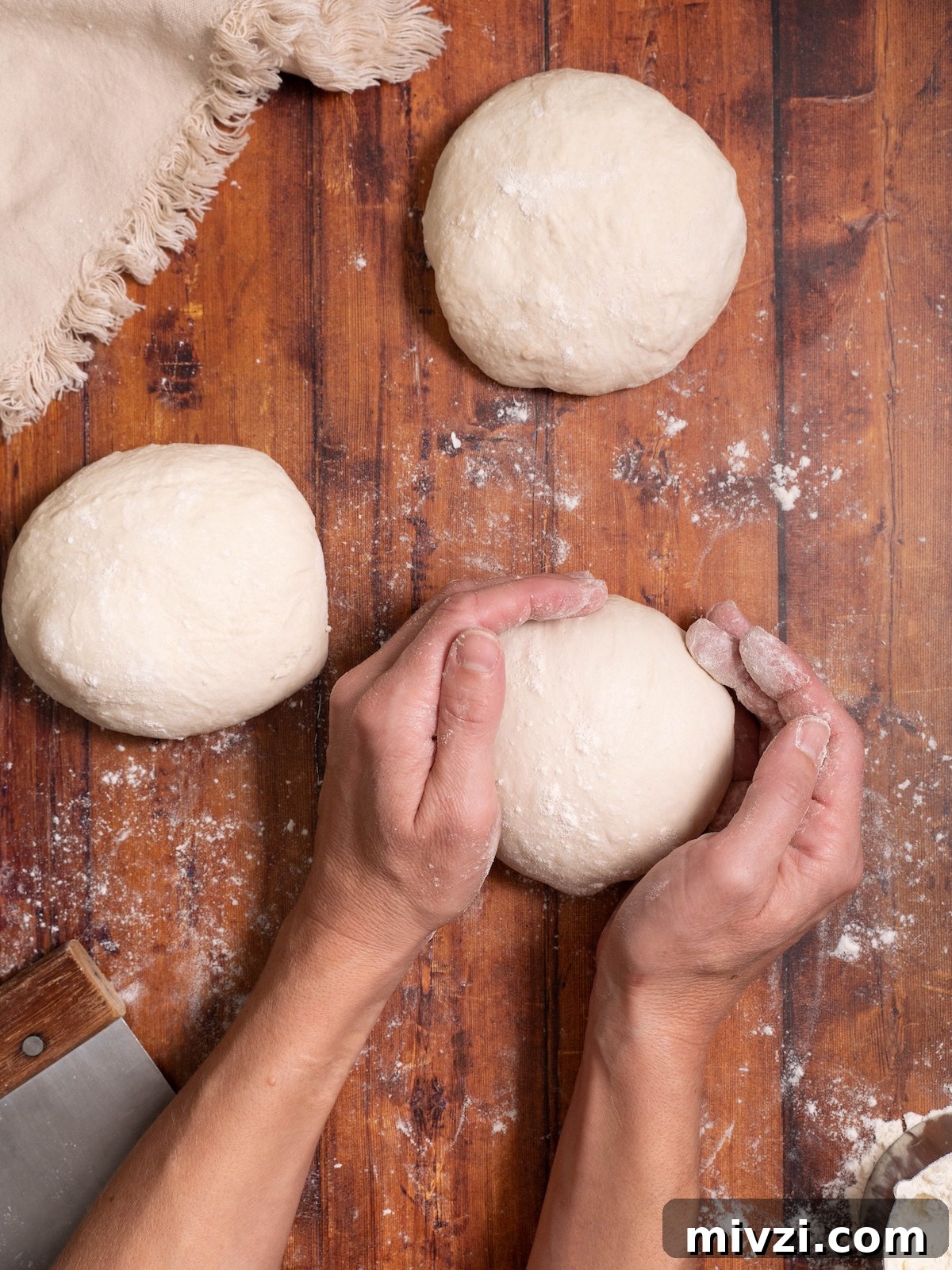
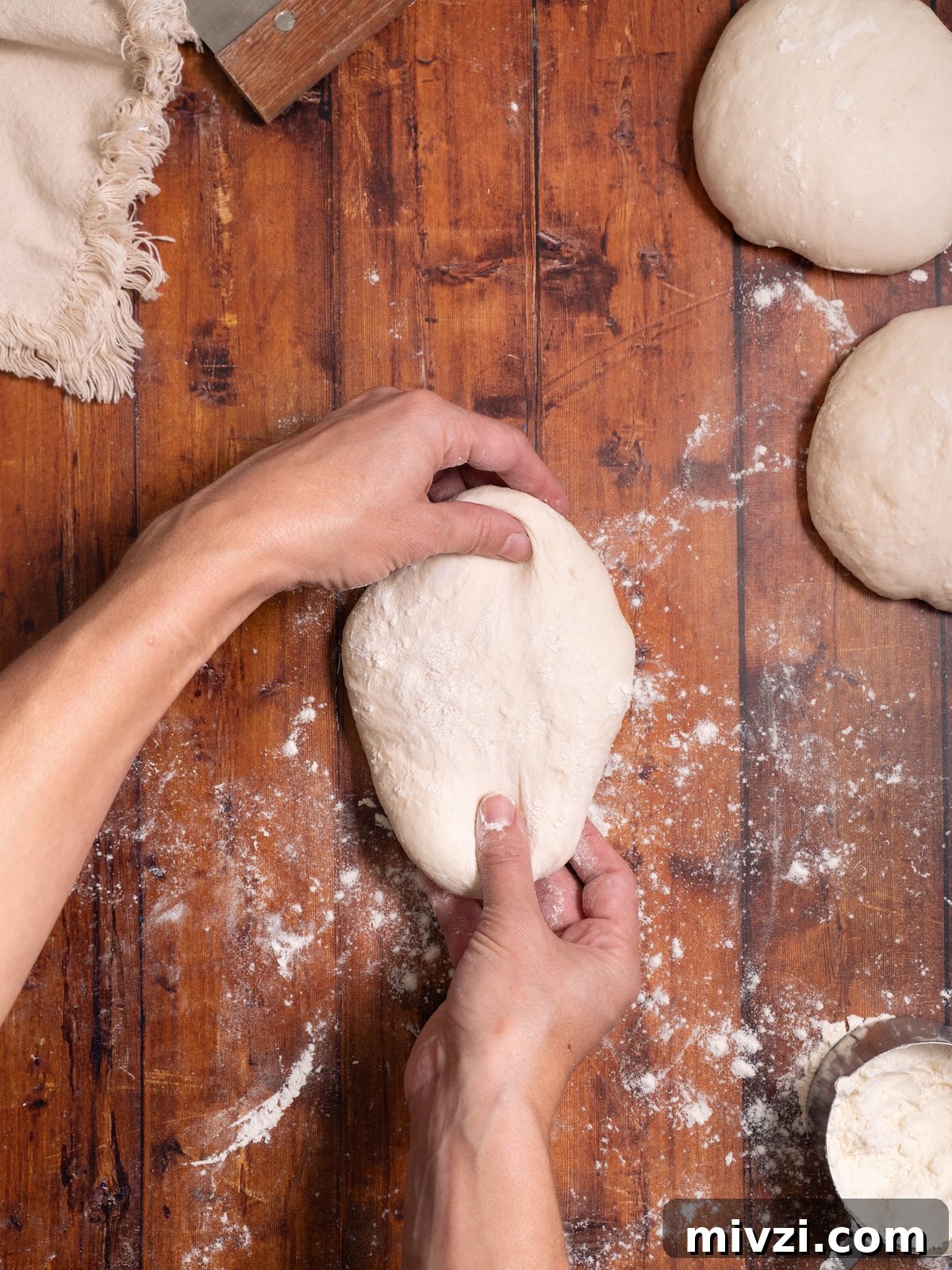
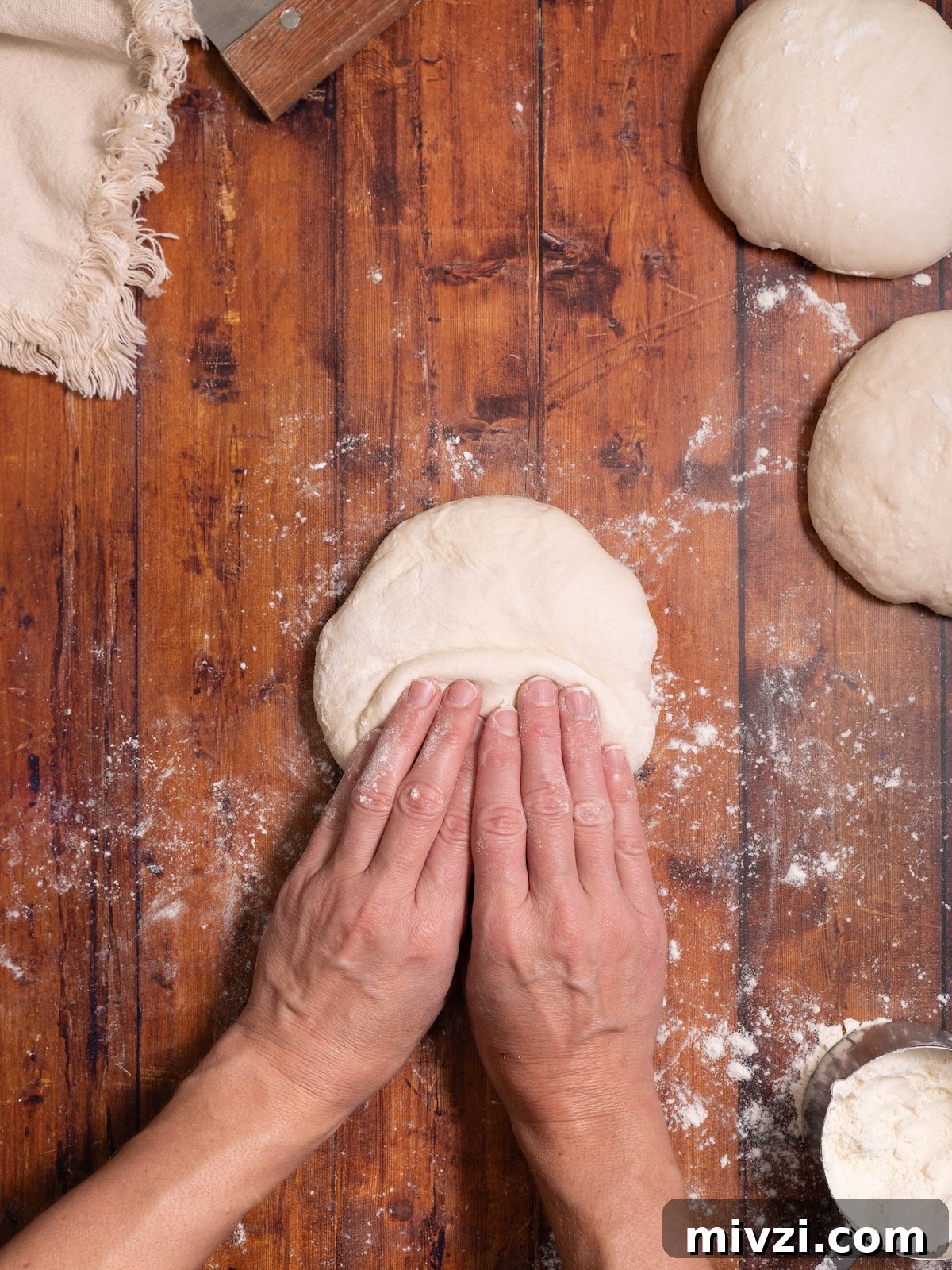
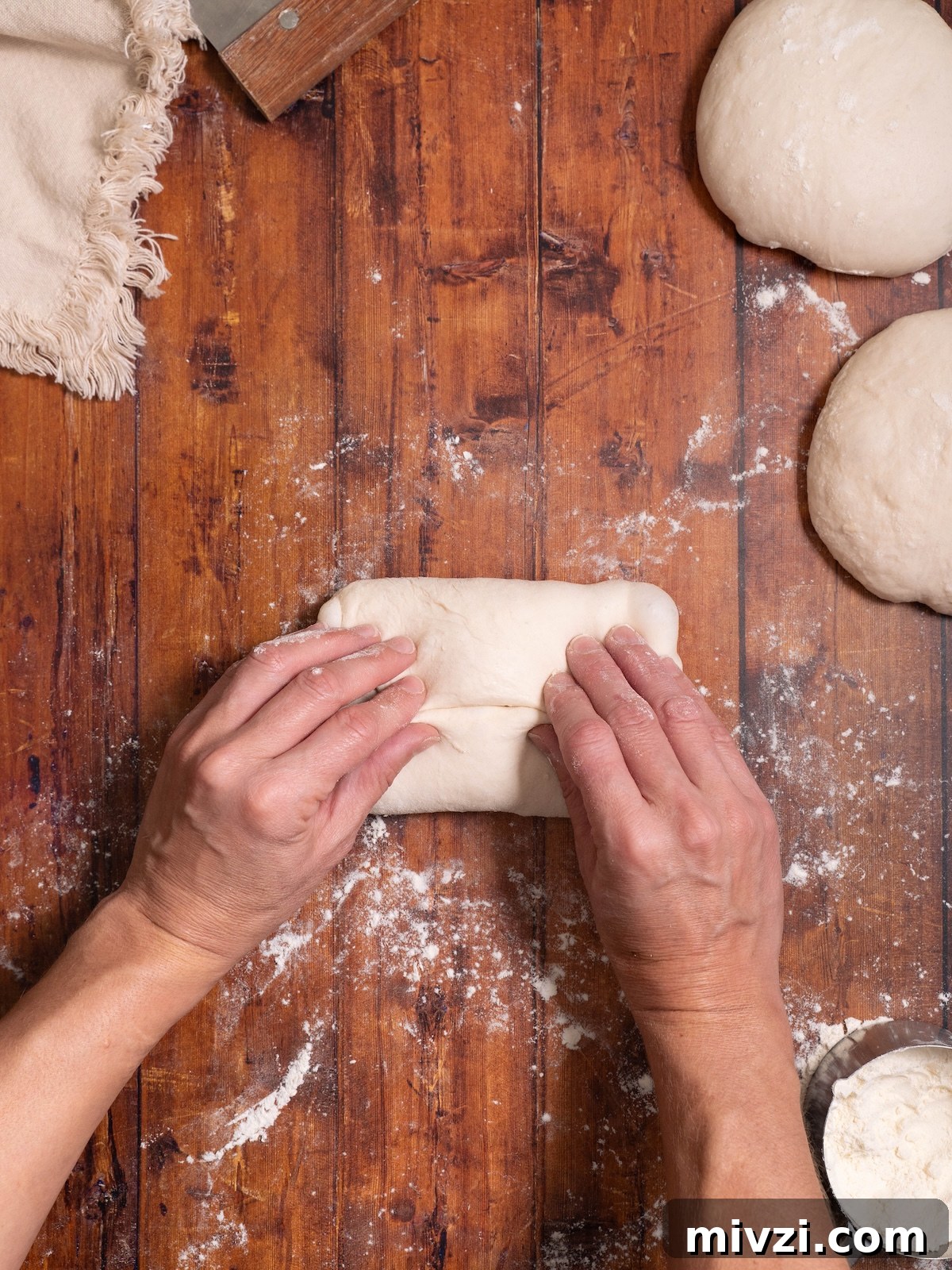
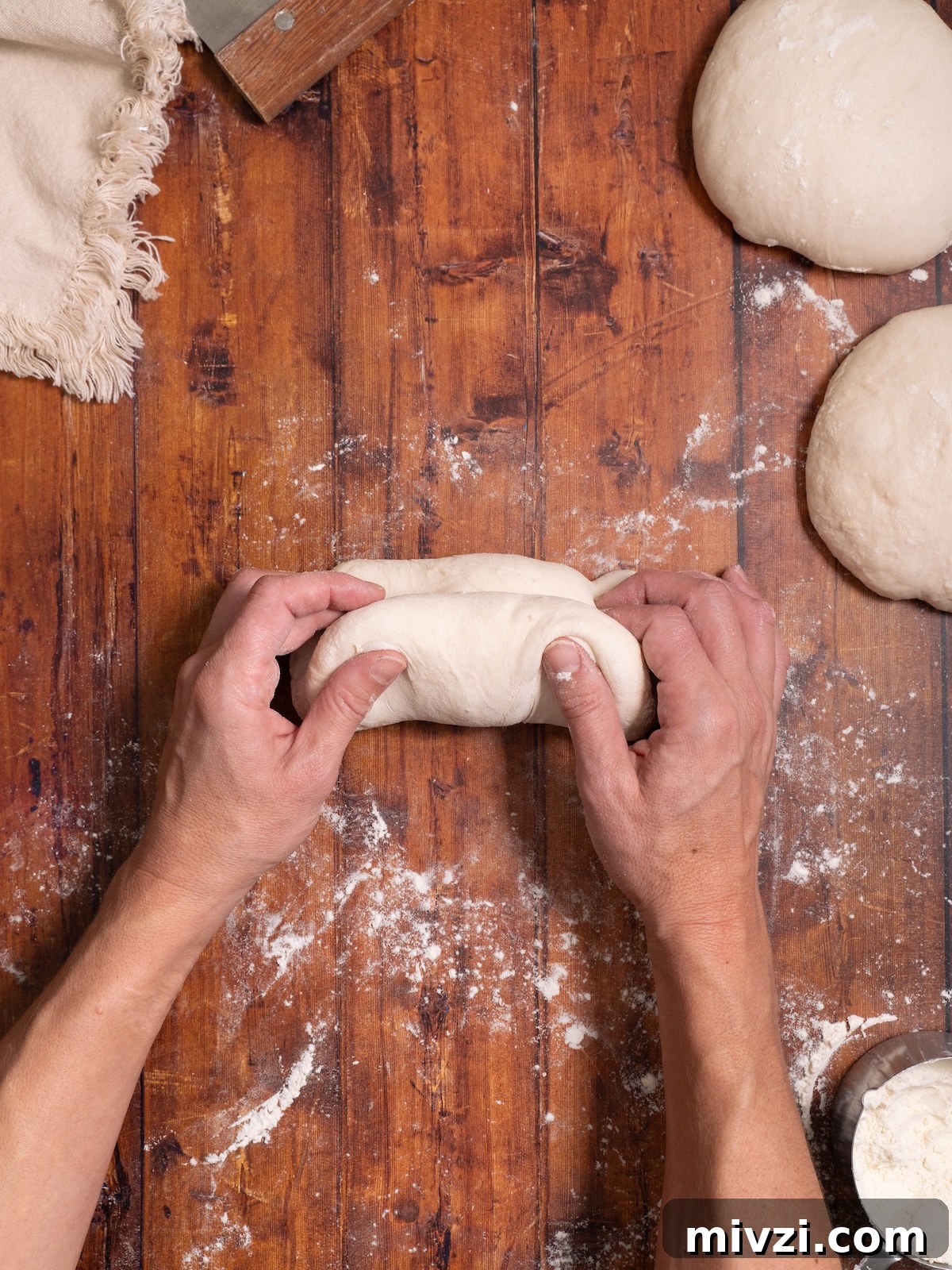
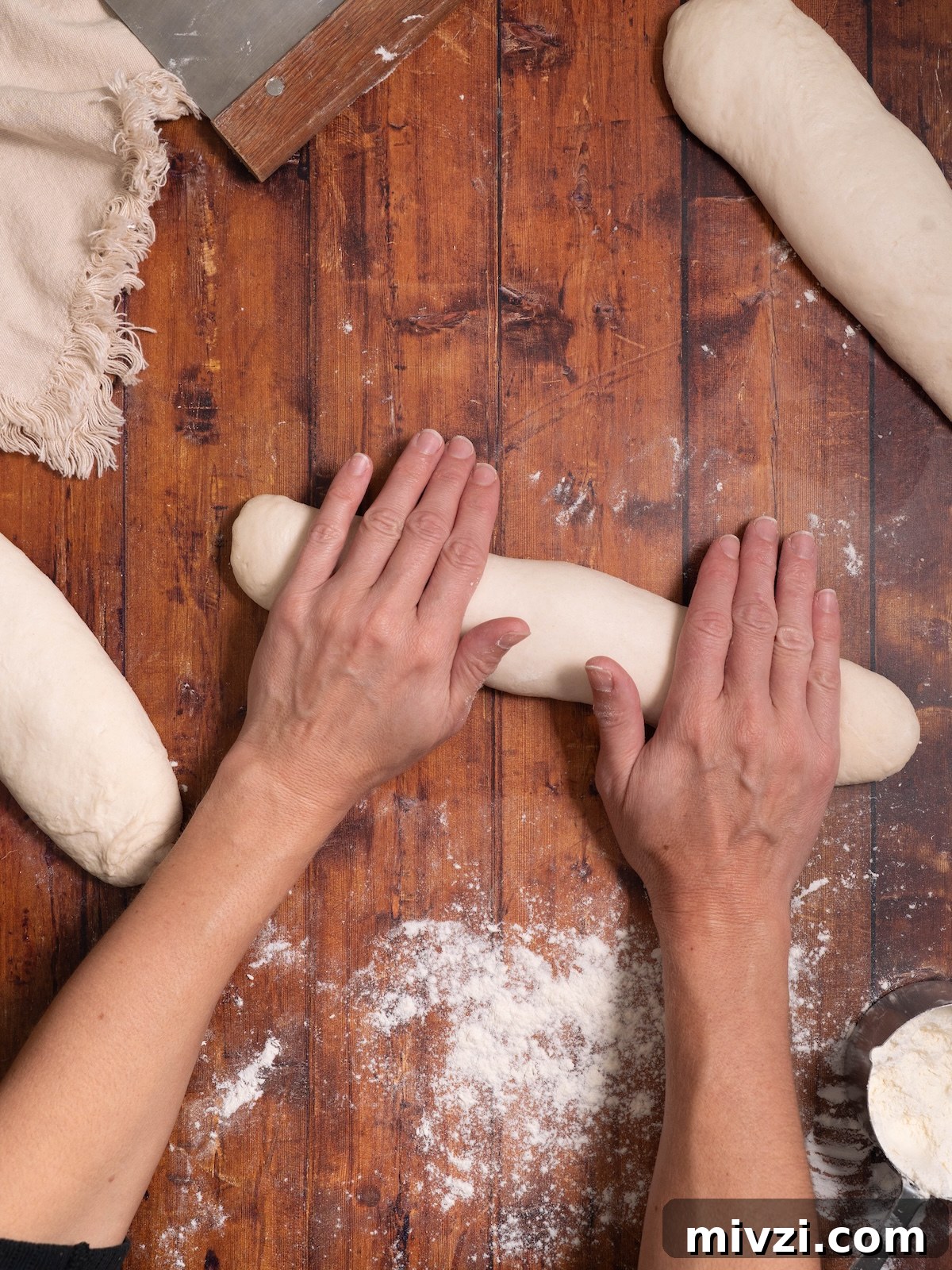
Make baguettes as long or short as you like — the examples shown are about 14 inches long and 3 inches wide. Tip: keep them no longer than your baking sheet so they transfer easily.
Pro baking tips for perfect baguettes
Success comes down to gluten strength, timing, and confident shaping. Key tips:
Build strong gluten structure. Use stretch-and-folds to develop strength so the dough traps air and holds its shape. The finished dough should feel smooth and elastic.
Avoid over-proofing. Baguette dough should be airy but still resilient. Over-proofed dough becomes fragile and won’t shape or score well. Look for a dough that springs back gently when touched.
Shape with intention but gently. Create a tight outer skin to maintain structure while preserving the interior air pockets.
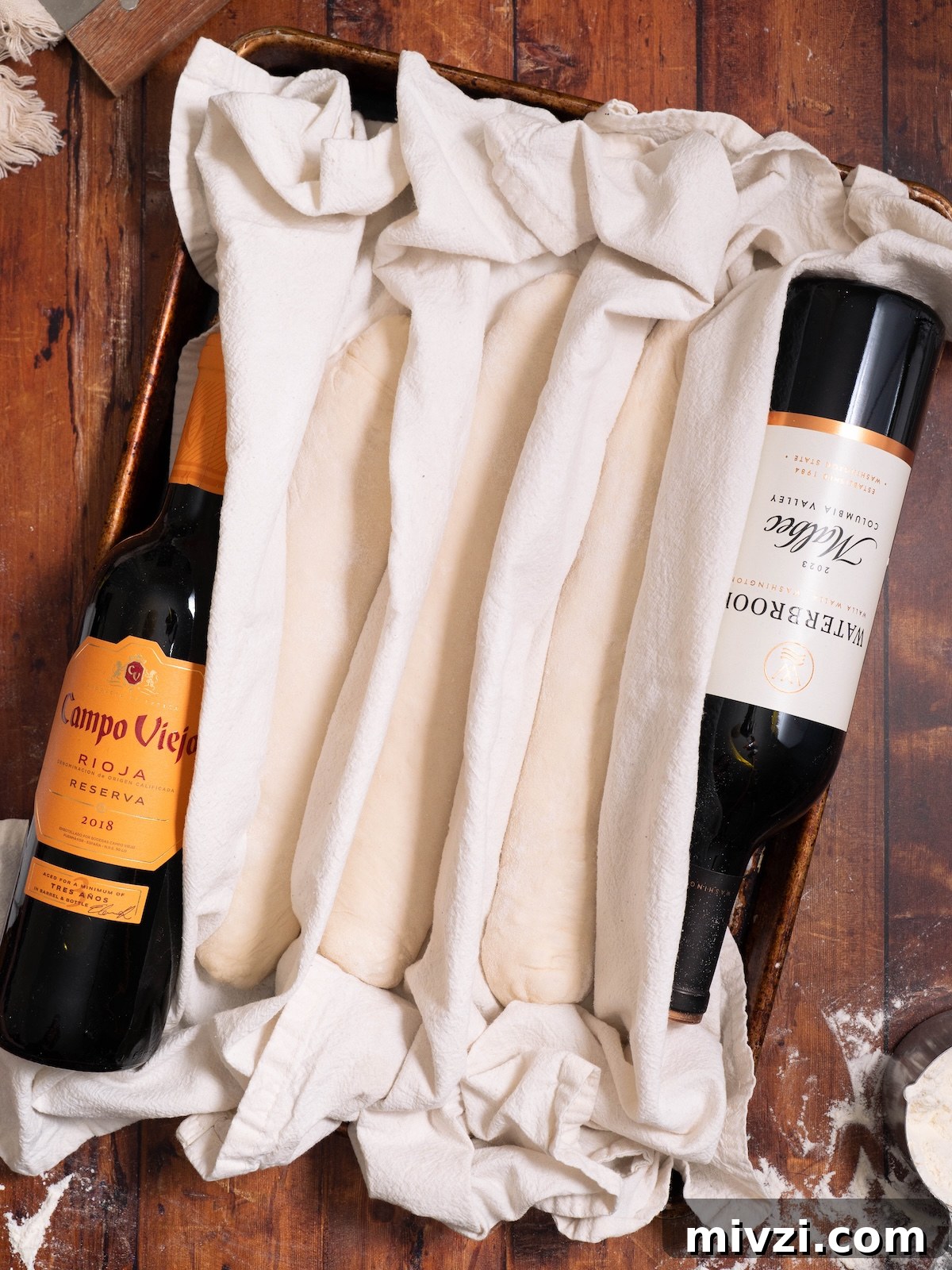
Support during proofing. Flour-lined towels or a couche keep loaves upright and separated. Use bottles or books to support the folds if needed.
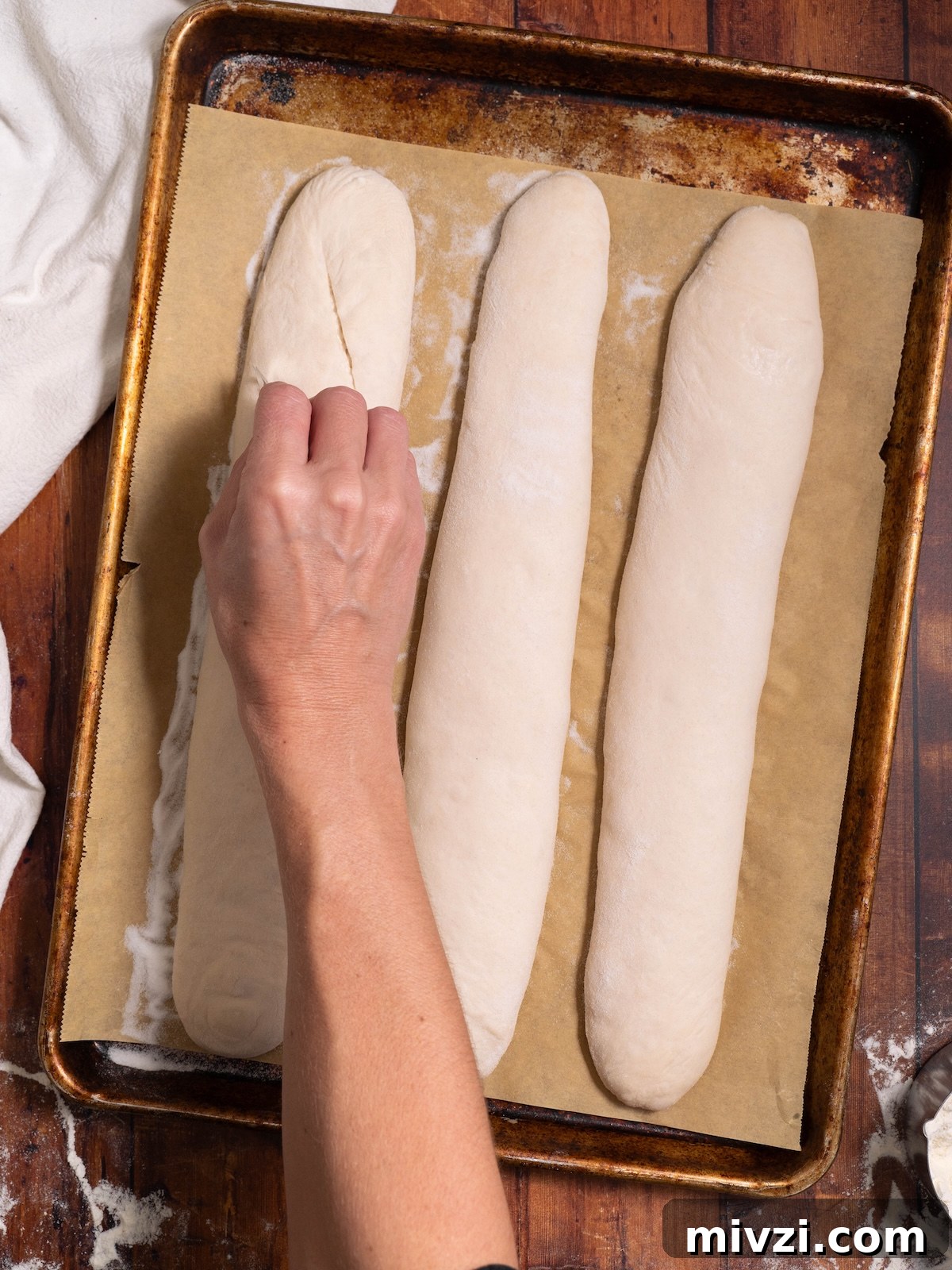
Score decisively. Quick diagonal slashes at a 45° angle guide the oven spring and create the classic appearance.
Introduce steam. Steam in the first minutes of baking helps the crust expand before it sets. Add ice to a hot pan in the oven or use another steam method you prefer.
Bake until deeply golden. A rich golden crust equals better flavor and texture — don’t be afraid to bake until the color is developed.
Serving & storing sourdough baguettes
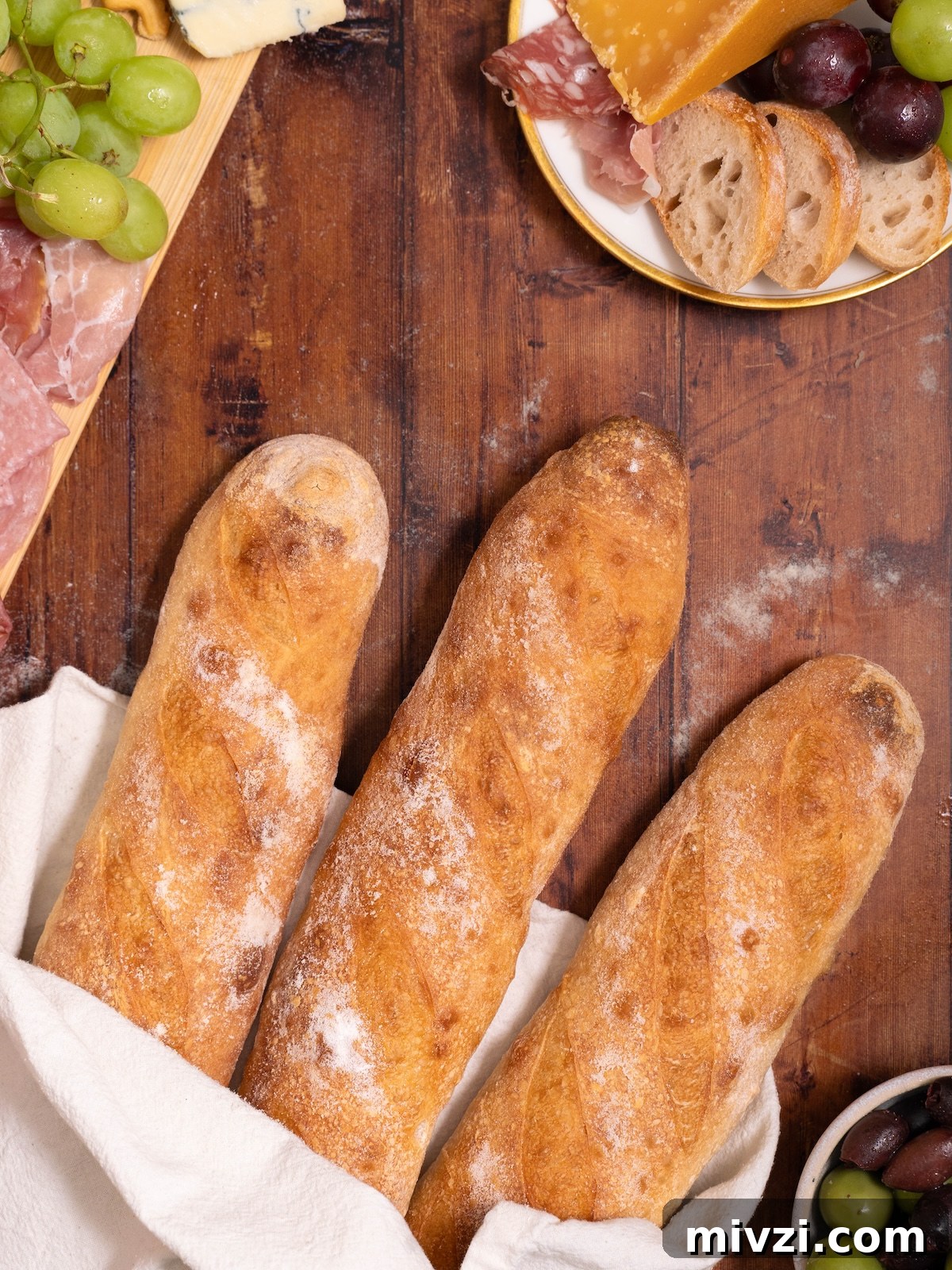
Baguettes have a high crust-to-crumb ratio and can stale faster than other loaves, so they’re best enjoyed the day they’re baked. They can be stored for a couple of days when handled properly.
To store: Keep at room temperature, loosely wrapped or in a paper bag for up to 2 days. For longer storage, wrap tightly and freeze; thaw at room temperature and reheat.
To refresh: Warm briefly in a 350°F oven or toaster oven to return the crisp crust and soft interior.
Serving ideas:
- Charcuterie: slice and serve with cheeses, cured meats, olives, and fruit
- Crostini: toast and top with ricotta, herbs, or roasted vegetables
- Sandwiches: split horizontally for classic French-style sandwiches
- Bruschetta: top toasted slices with fresh tomatoes, basil, garlic, and olive oil
- Soups & stews: perfect for dipping and soaking up broths
- Simple: warm with salted butter or dipped in olive oil and balsamic
Use baguettes as a base for seasonal toppings — thinly sliced vegetables, fresh herbs, soft cheeses, or spreads all work beautifully.
FAQs
This usually indicates insufficient gluten development or over-proofing. Make sure you perform enough stretch-and-fold rounds and avoid letting the dough become too soft before shaping.
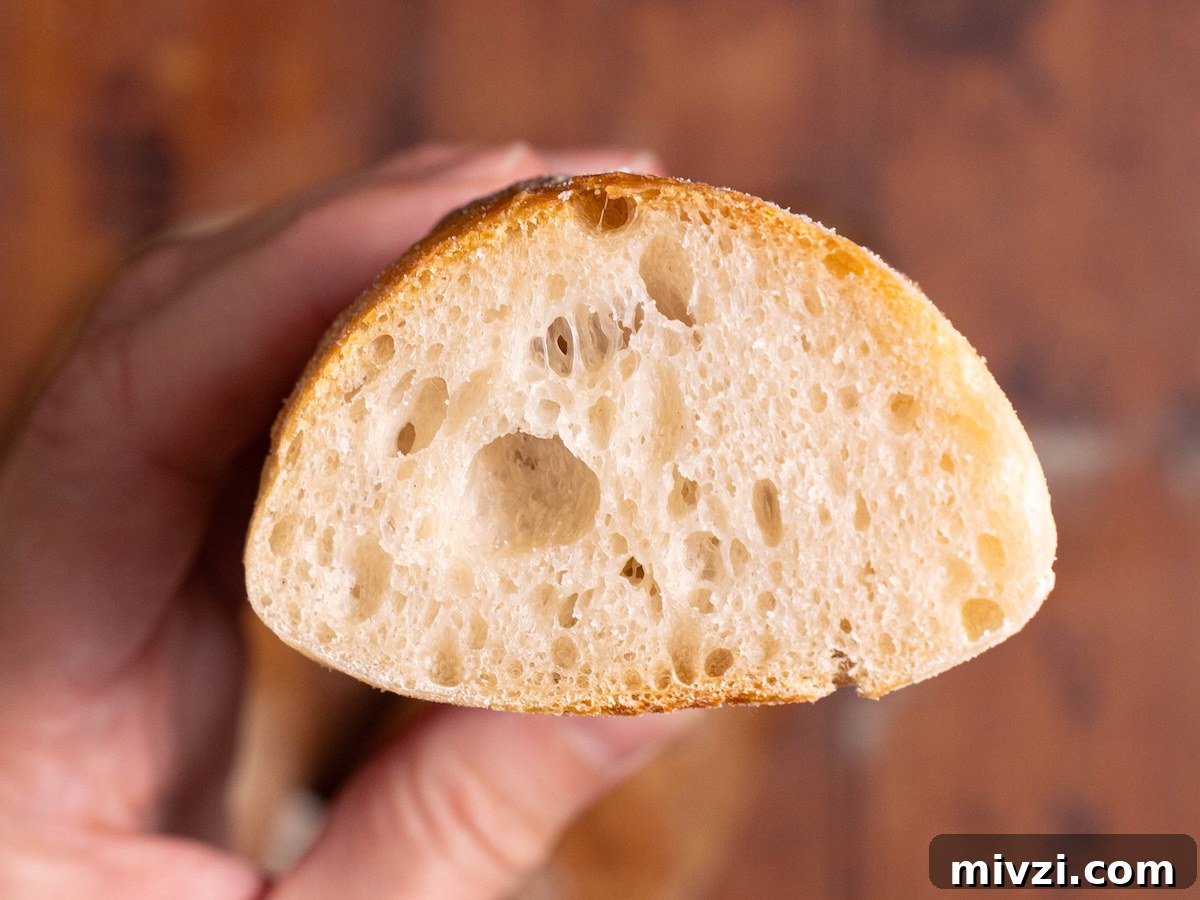
An open crumb results from strong gluten structure and proper fermentation. Ensure your starter is active and that you develop elasticity during the stretch-and-fold phases.
They help but aren’t essential. A well-floured tea towel and a few supports like bottles or books can hold the shape during proofing.
Lack of steam or underbaking are common causes. Create steam at the start of the bake and bake until the crust is deeply golden.
You can, but the overnight chill improves flavor and handling. A same-day bake is possible with a shorter fridge rest, though flavor will be less developed.
If you try this sourdough baguette recipe, please leave a comment and rating — your feedback helps others find the recipe and supports this work. Thank you!

Sourdough Baguette Recipe
Equipment
-
Baking sheets
-
Tea towels or couche
-
Digital kitchen scale
Ingredients
- 330 grams warm water
- 10 grams salt
- 150 grams active, bubbly sourdough starter
- 500 grams bread flour
Instructions
-
Mix the dough: In a large bowl combine 330 grams tepid water, 10 grams salt, 150 grams active sourdough starter, and 500 grams bread flour. Mix until a cohesive, shaggy dough forms. Cover and rest 30 minutes to hydrate the flour and start gluten formation.
-
Build structure: Knead briefly (3–5 minutes) by hand or on low in a stand mixer until the dough begins to smooth. Perform a series of stretch-and-folds every 30 minutes: gently lift one side and fold it over the center, rotating and repeating 3–4 times per set. Do at least four sets total, about 2–3 hours; the dough should end up smooth, strong, and elastic.
-
Bulk ferment: After the final set of stretch-and-folds let the dough rest at room temperature for about 1 hour. It should look slightly puffed but still hold strength.
-
Refrigerate overnight: Cover tightly and transfer to the fridge for 8–24 hours to develop flavor and improve handling for shaping.
-
Shape: Turn chilled dough onto a lightly floured surface and divide into three equal pieces. Shape each into a round, building some tension, dust lightly with flour, and rest uncovered for 30 minutes. Turn each piece so the floured side is down, stretch into an oval, fold the bottom third up and the top third down, then fold in half and place seam-side down. Roll into a cylinder, sealing the seam and tapering the ends to form baguettes.
-
Proof: Place shaped baguettes between well-floured towels or a couche, creating supportive folds. Cover and proof at room temperature for 1–2 hours until slightly puffy but still springy when touched.
-
Bake: Preheat oven to 425°F. Transfer baguettes carefully to a parchment-lined or floured baking sheet. Score with several diagonal slashes. For steam, place a separate baking sheet on the lower rack while preheating and add a handful of ice cubes to that hot pan immediately after loading the loaves. Bake 25–30 minutes until deeply golden and crisp. Cool on a wire rack before slicing.
Notes
Did you try this recipe?
Be sure to leave a comment below!