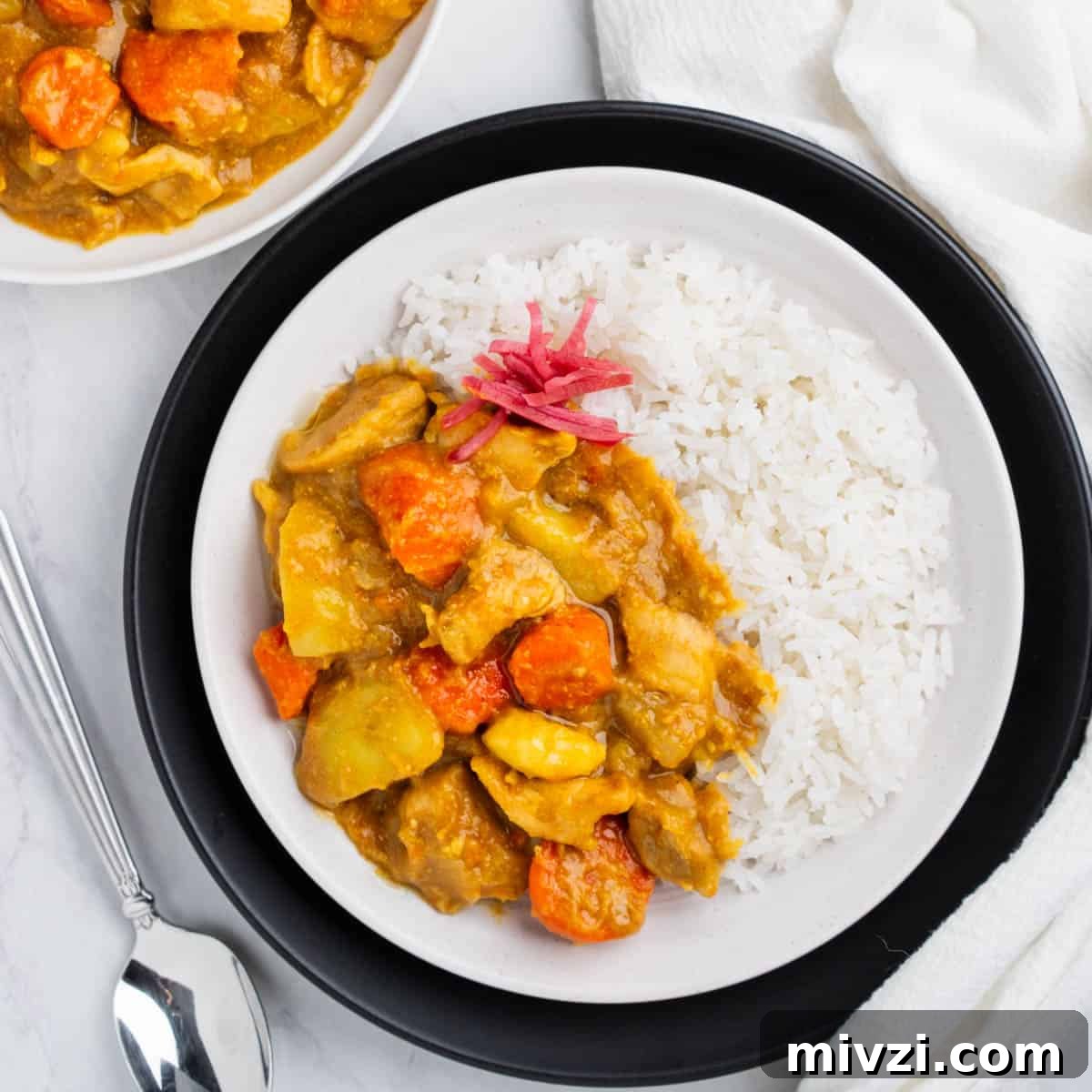
Get ready to fall in love with Japanese Chicken Curry—comfort food at its finest. Tender pieces of chicken and hearty vegetables are simmered in a silky, savory curry sauce that’s slightly sweet and deeply satisfying. This versatile dish can be made mild or spicy, with chicken or another protein, and works equally well for quick weeknight dinners or weekend meal prep.
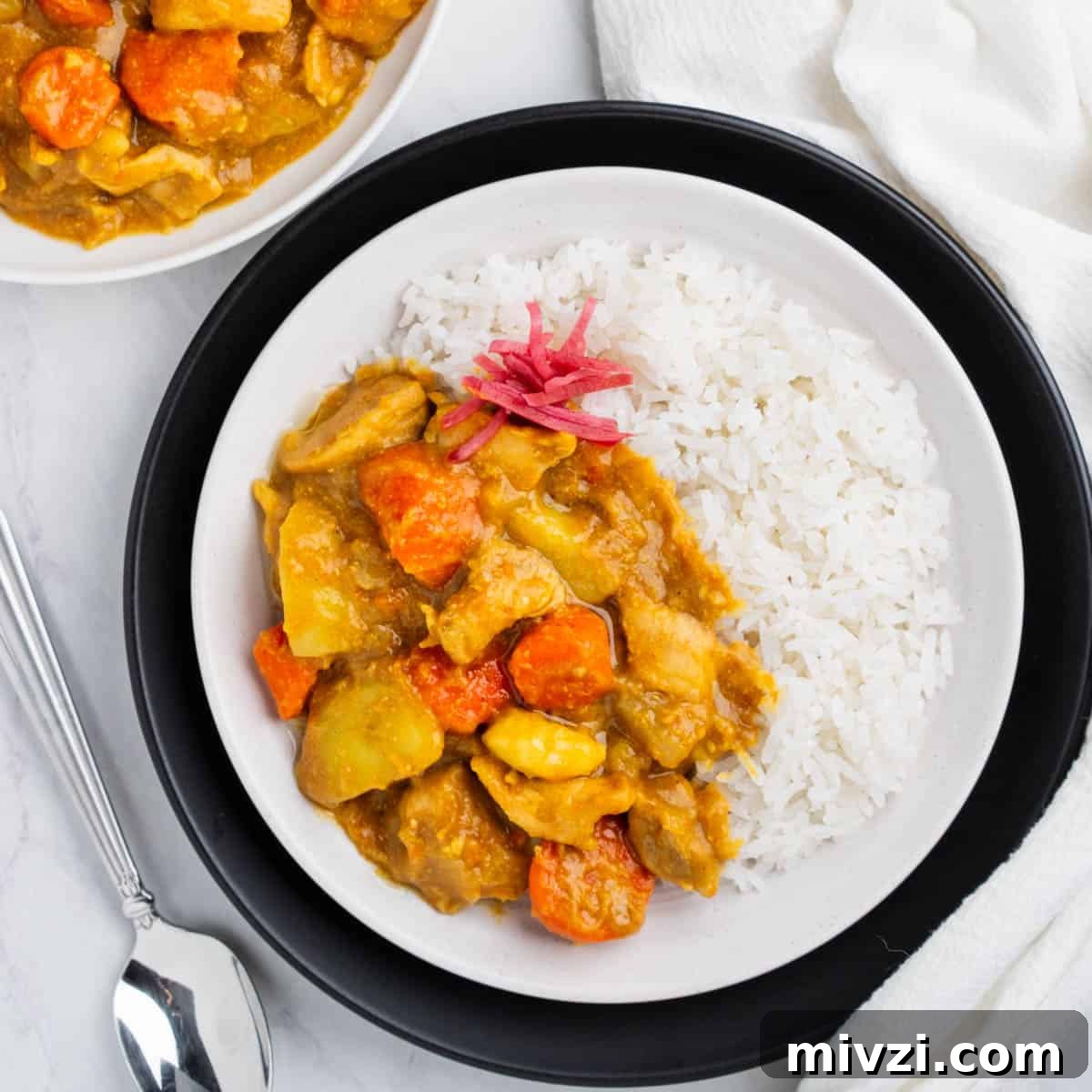
Japanese curry often tastes even better the next day, making it ideal for leftovers. Serve it over steamed rice, with chicken katsu, or even with udon noodles. The home-cooked version is comforting, customizable, and reliably delicious.
What is Japanese Curry?
Japanese curry is a mild, richly flavored stew-like dish that’s become a staple of home cooking in Japan. It differs from Indian and Southeast Asian curries by offering a thicker, slightly sweet, and deeply savory sauce that coats every morsel. Typical additions include potatoes, carrots, and onions, and the texture is comforting and hearty—perfect for family meals.
Japanese Curry Roux – Which is Best?
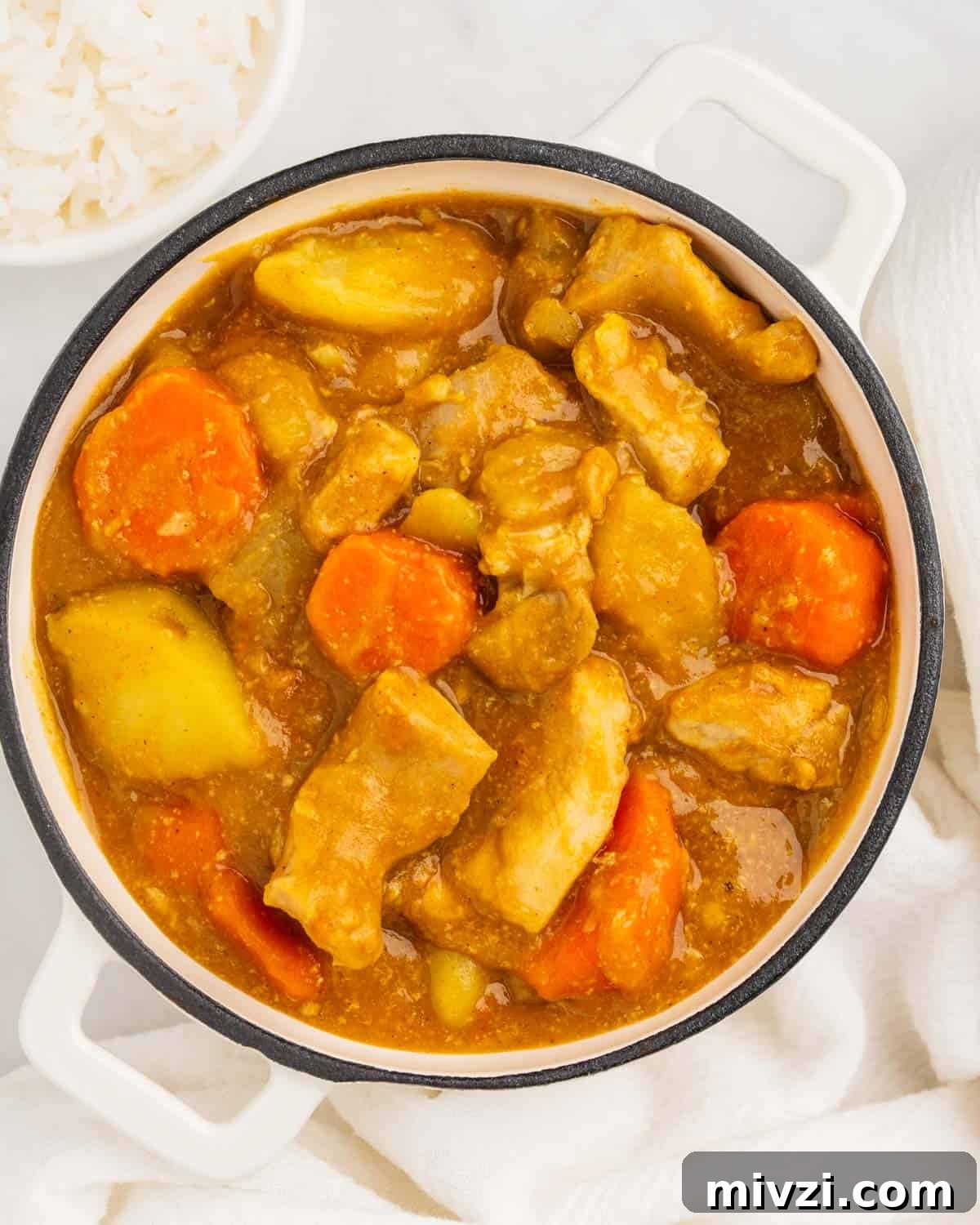
Curry roux blocks make Japanese curry fast and dependable. These concentrated blocks bring the characteristic flavor and texture without complicated spice blends. Popular options include:
- Golden Curry: A classic choice with three spice levels—mild, medium hot, and hot. Bold and traditional, it’s widely available and convenient.
- Vermont Curry: Sweeter and milder, with notes of apple and honey that make it kid-friendly.
- Java Curry: Rich with more heat for those who prefer a spicier curry.
Ingredients for Japanese Curry
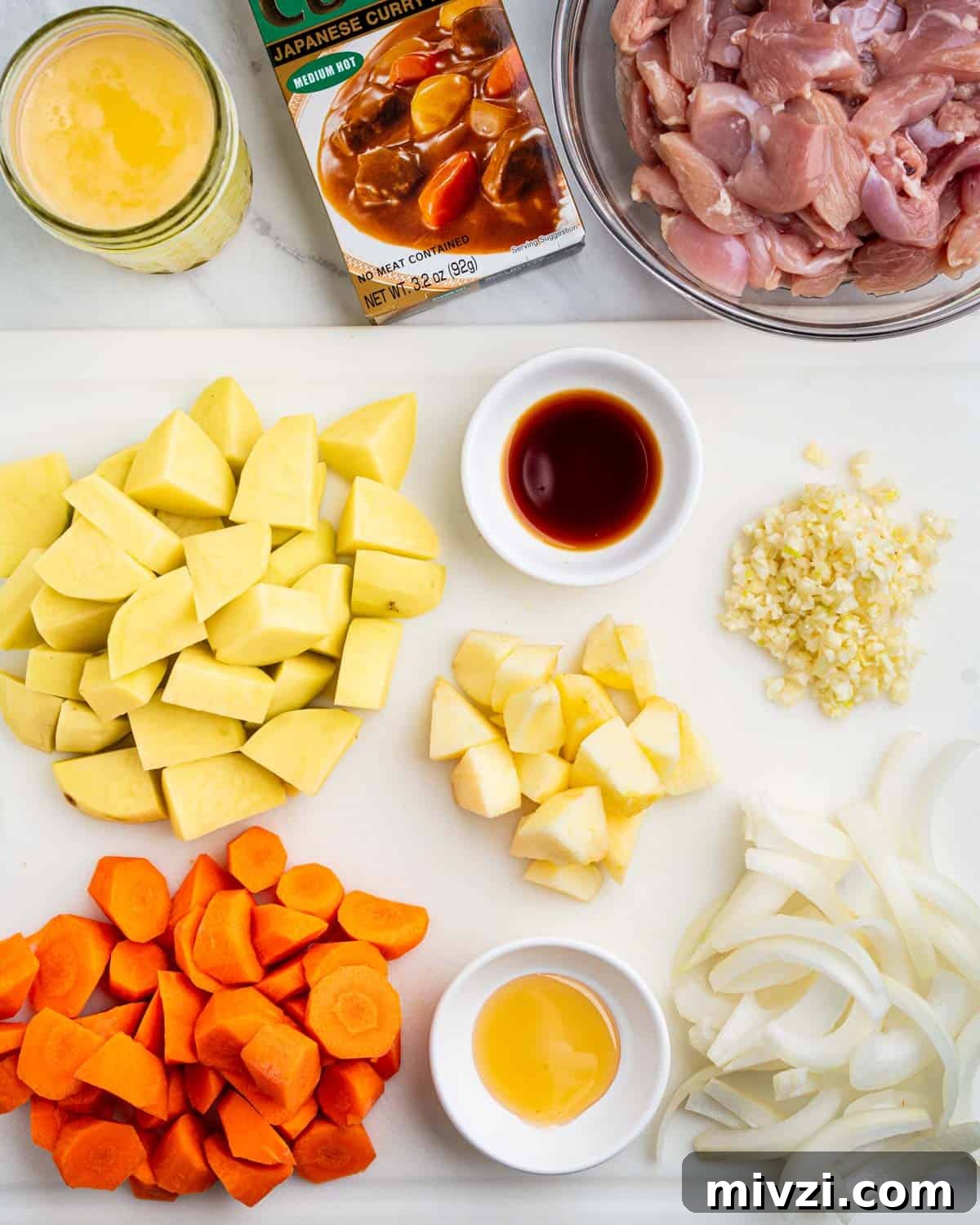
Please scroll ⬇️ to the recipe card for the full ingredient amounts and instructions.
- Chicken thighs: Juicy and forgiving during simmering—preferable to breasts for a tender result.
- Japanese curry roux: The concentrated base that gives the curry its authentic flavor and thickness.
- Chicken broth: Adds depth to the sauce; low-sodium broth lets you control seasoning.
- Onion and garlic: The aromatic foundation that builds savory sweetness.
- Honey or a touch of sugar: Balances heat and umami with gentle sweetness.
- Soy sauce: Provides additional umami and rounds the flavor profile.
- Vegetables: Potatoes and carrots are classic. You can also add peas, corn, mushrooms, zucchini, or squash depending on preference.
How to Make Japanese Curry
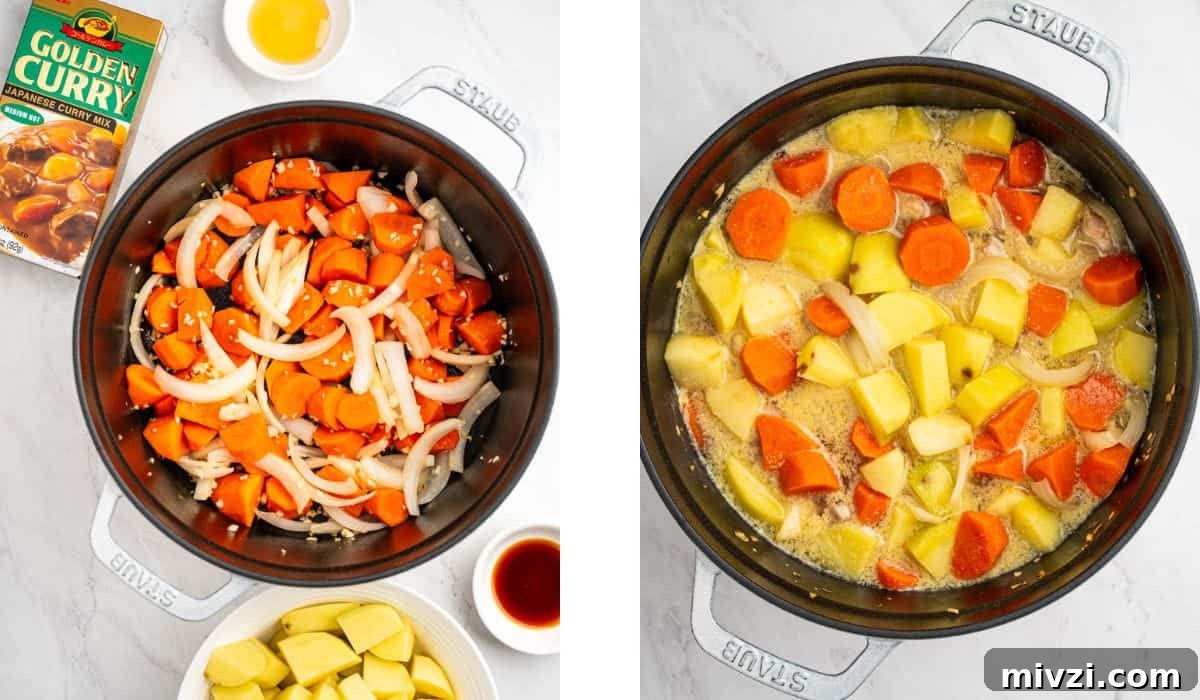
- Sauté the chicken: Heat a large pot or skillet over medium heat, add a drizzle of oil, and brown the cubed chicken thighs for 1–2 minutes per side.
- Cook the aromatics: Add sliced onion and minced garlic and cook 2–3 minutes until onions are translucent and fragrant.
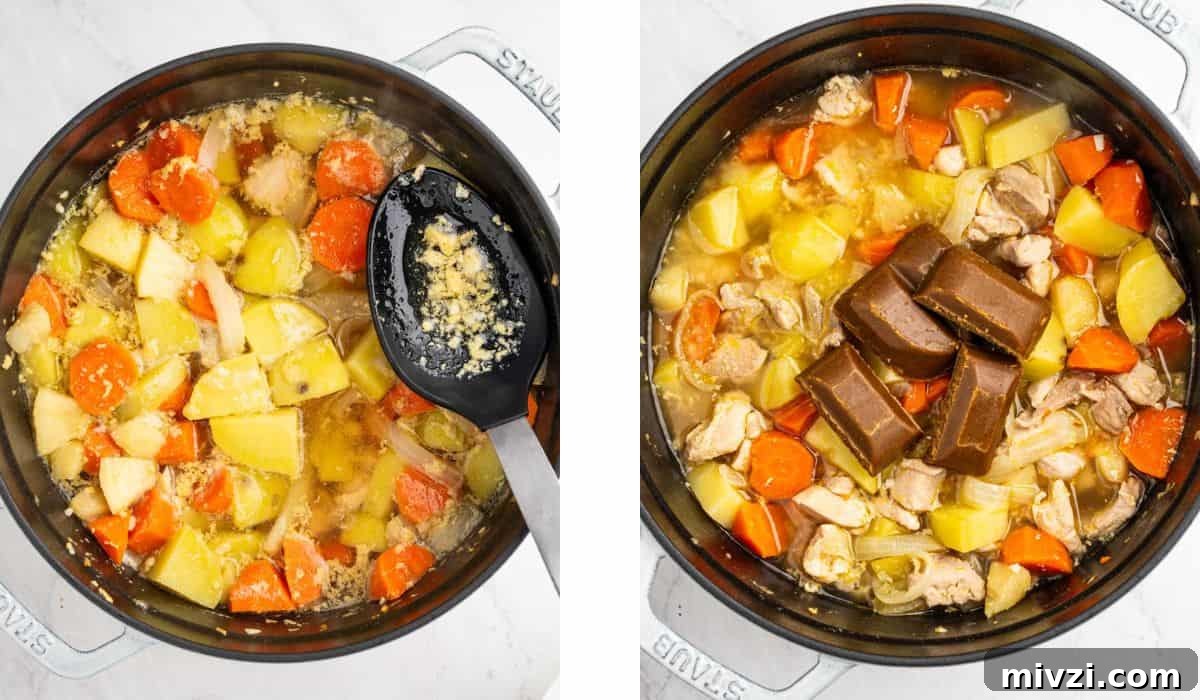
- Add vegetables and simmer: Add carrots, apple (optional), chicken broth (or water), soy sauce, and honey. Bring to a gentle boil, reduce to a simmer, cover and cook 5 minutes. Add potatoes, then simmer, covered, another 12–14 minutes until vegetables are fork-tender.
- Skim the surface: Remove any excess fat or impurities with a spoon for a cleaner sauce.
- Stir in the roux: Break the curry roux into pieces, add to the pot, and stir until fully dissolved and the sauce has thickened to your liking.
- Serve: When the curry is thick and the vegetables are tender, remove from heat and serve hot over steamed rice.
What to Serve It With
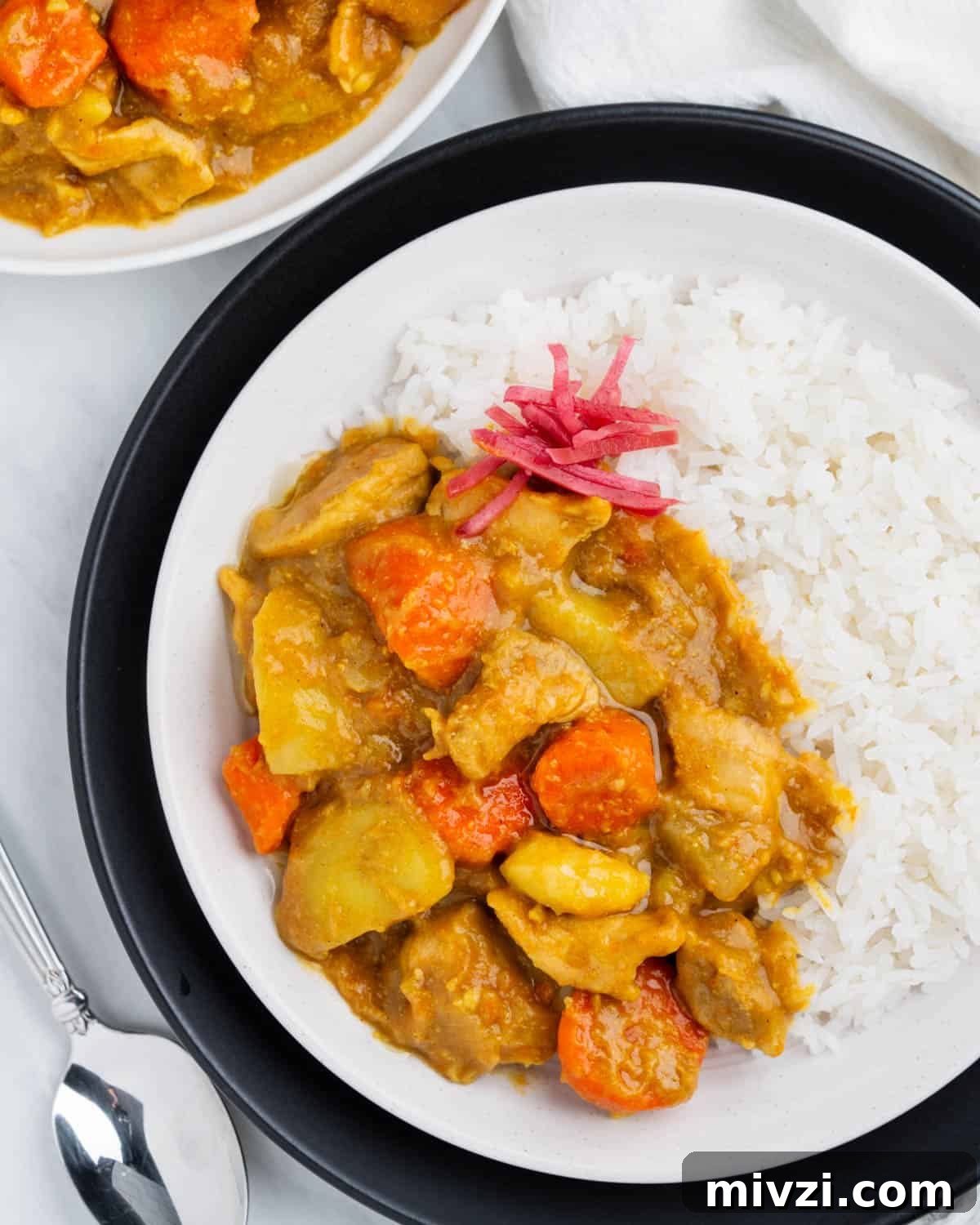
Steamed rice is the traditional accompaniment, soaking up the rich sauce. Add Japanese pickles like fukujinzuke or rakkyo for a bright, tangy contrast. A soft-boiled egg with a creamy yolk, or a crispy pork or chicken katsu on top, turns this simple curry into a restaurant-style meal.
Storage and Reheating
Japanese curry keeps and reheats exceptionally well:
- Storage: Cool completely, store in an airtight container in the refrigerator for up to 3 days, or freeze for up to 3 months.
- Reheating: Reheat on the stovetop over low–medium heat, stirring often. Add a splash of water or broth if the sauce has thickened too much. Thaw frozen curry overnight in the fridge before reheating.
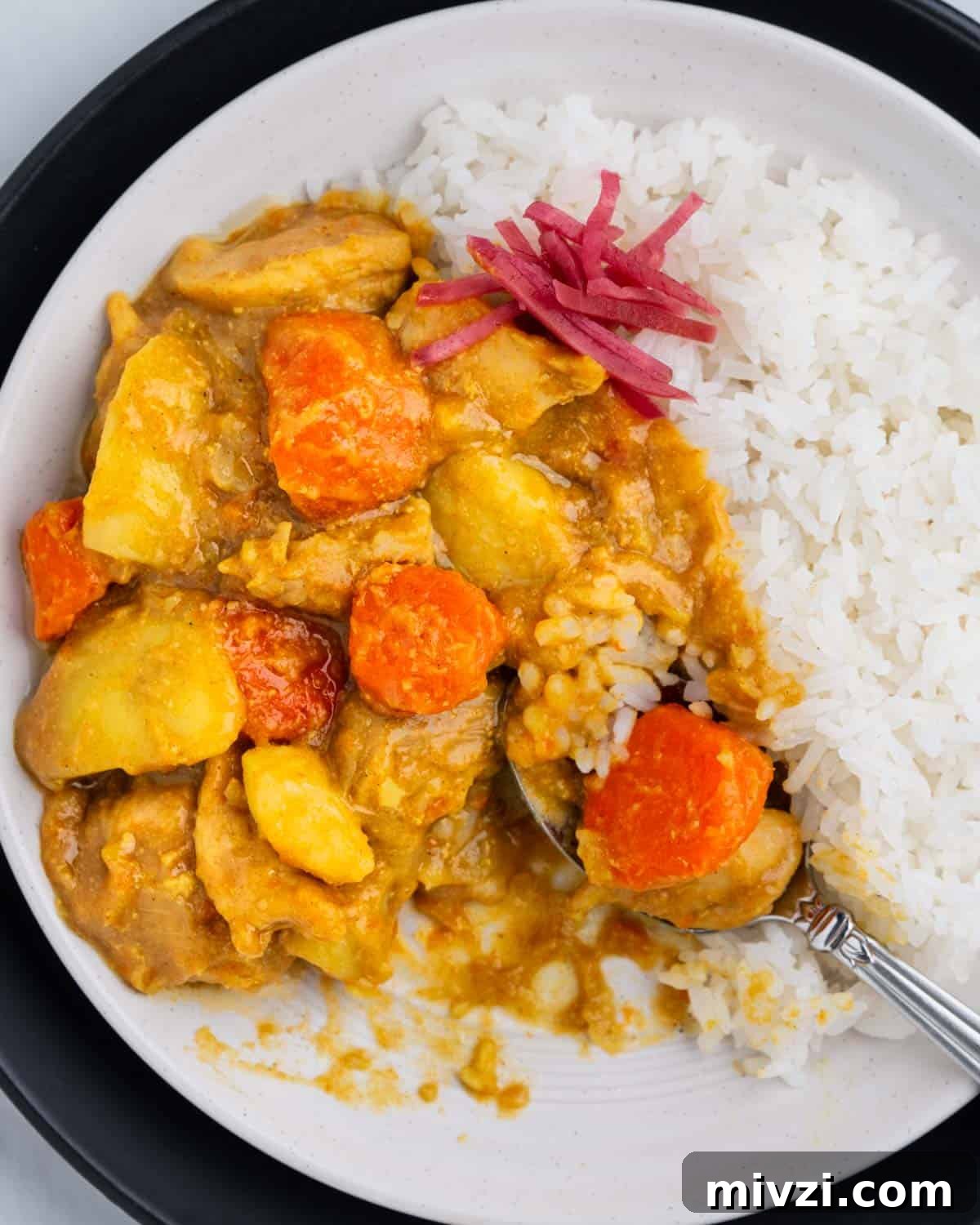
This Japanese chicken curry is straightforward, comforting, and easy to adapt. Try it with your favorite curry roux and customize the spice level and vegetables to suit your taste.
RECIPE
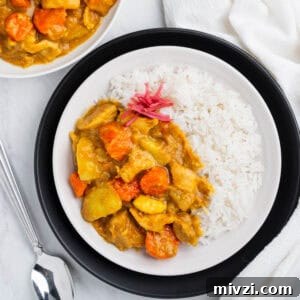
Japanese Chicken Curry
Ingredients
- 1 pound chicken thighs, cubed
- 1 medium yellow onion, sliced
- 2 cloves garlic, minced
- 2 medium carrots, peeled and cut into chunks
- ½ apple, peeled and cubed (optional)
- 2 medium potatoes, peeled and cubed
- 4 cups chicken broth or water
- 2 tablespoons soy sauce
- 1 tablespoon honey
- 1 (3.2 oz) box Japanese curry sauce mix
Instructions
- Sauté the chicken: Heat a large pot or skillet over medium heat, add a drizzle of oil, and sauté the cubed chicken thighs 1–2 minutes per side until beginning to brown.
- Cook aromatics: Add sliced onion and minced garlic, cooking 2–3 minutes until onions are translucent and fragrant.
- Add vegetables and simmer: Stir in carrots, apple (if using), chicken broth, soy sauce, and honey. Bring to a gentle boil, reduce to a simmer, cover and cook 5 minutes. Add potatoes, then simmer covered another 12–14 minutes until vegetables are tender.
- Skim the fat: Remove any excess fat or impurities that rise to the surface.
- Mix in the curry roux: Break the roux into pieces, add to the pot, and stir until fully dissolved and the sauce thickens.
- Serve: Remove from heat and serve hot over steamed rice.
Nutrition
Leave a rating and let us know how it turned out!