We occasionally link to goods offered by vendors to help the reader find relevant products. Some of these may be affiliate based, meaning we earn small commissions (at no additional cost to you) if items are purchased.
My sister has always been the family’s miso enthusiast.

She didn’t eat miso at every meal or smear it in her hair, but she could confidently finish a cloudy, salty bowl of miso soup at any restaurant.
I tended toward bright, crunchy starters — crisp greens or a carrot-ginger salad — but I was always curious about that steaming bowl she loved. Being the older sibling, she often let me taste hers, and those savory spoonfuls stayed with me.
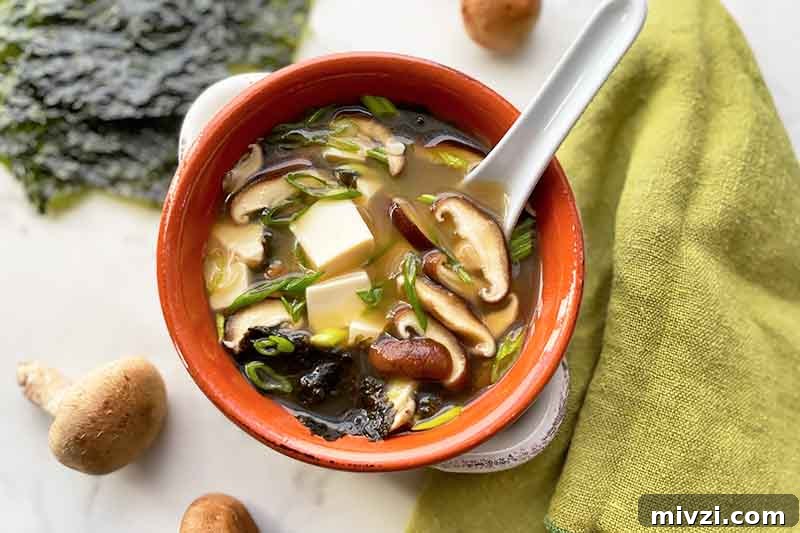
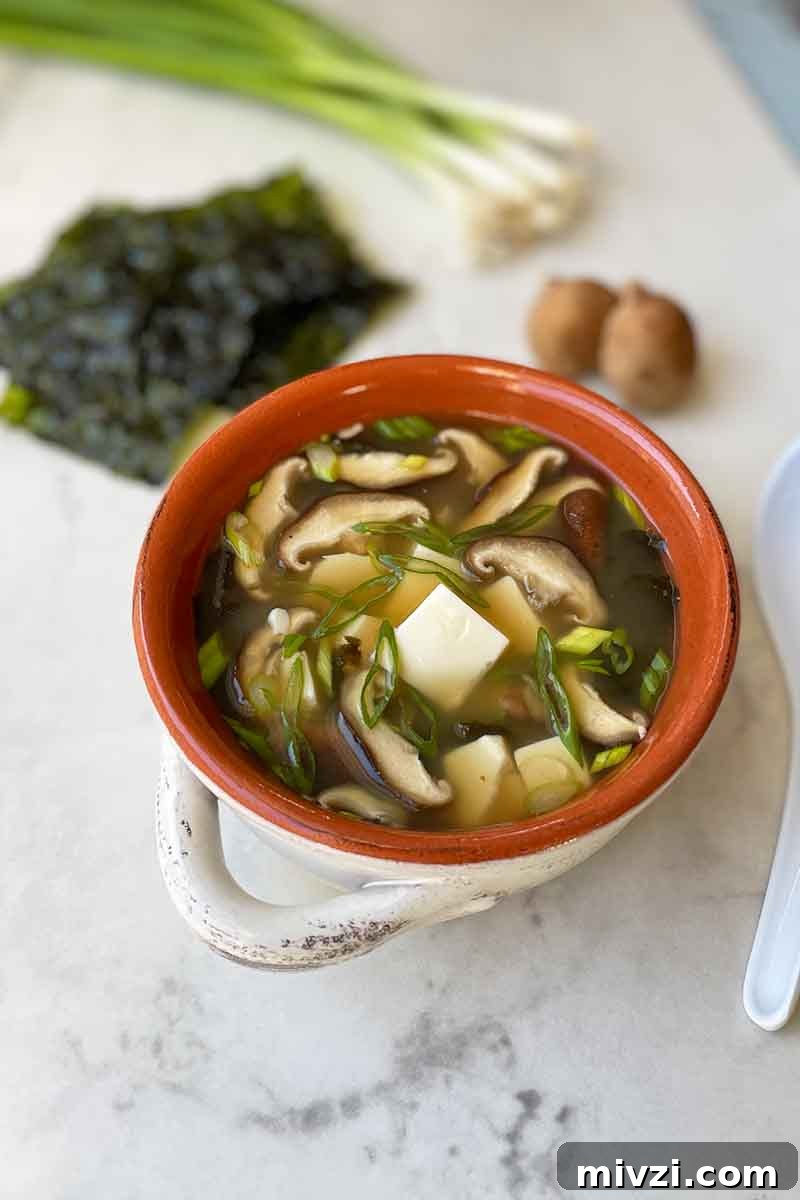
The first time I tried it, the flavor was unlike anything I knew: pungent, salty, and deeply savory. The soft white cubes of tofu bobbing in the broth melted on my tongue.
If we’re talking flavor, one important word comes to mind:
Umami.
Fun to say and rich in meaning, umami describes savory taste in addition to the four basic tastes (salty, sweet, bitter, and sour). Its compounds often appear in protein-rich foods and trigger strong salivary responses — which explains why some dishes make your mouth water instantly.
Miso paste, made from fermented soybeans, is a concentrated source of umami. Rather than delve into fermentation science here, know that a little paste goes a long way and is an excellent tool for boosting savory depth in many dishes.

Miso is bold and versatile. If you’re new to it, start with white miso. It’s milder and slightly sweet, making it an easy introduction to umami. Darker misos such as red are more assertive and can overpower a delicate palate if used too liberally.
Wakame is the seaweed traditionally used in miso soup, but nori sheets work well and are usually easier to find. Nori is sold in flat, dried sheets and can be added directly to the soup, while wakame is usually rehydrated first and has a satiny, slightly shriveled appearance.
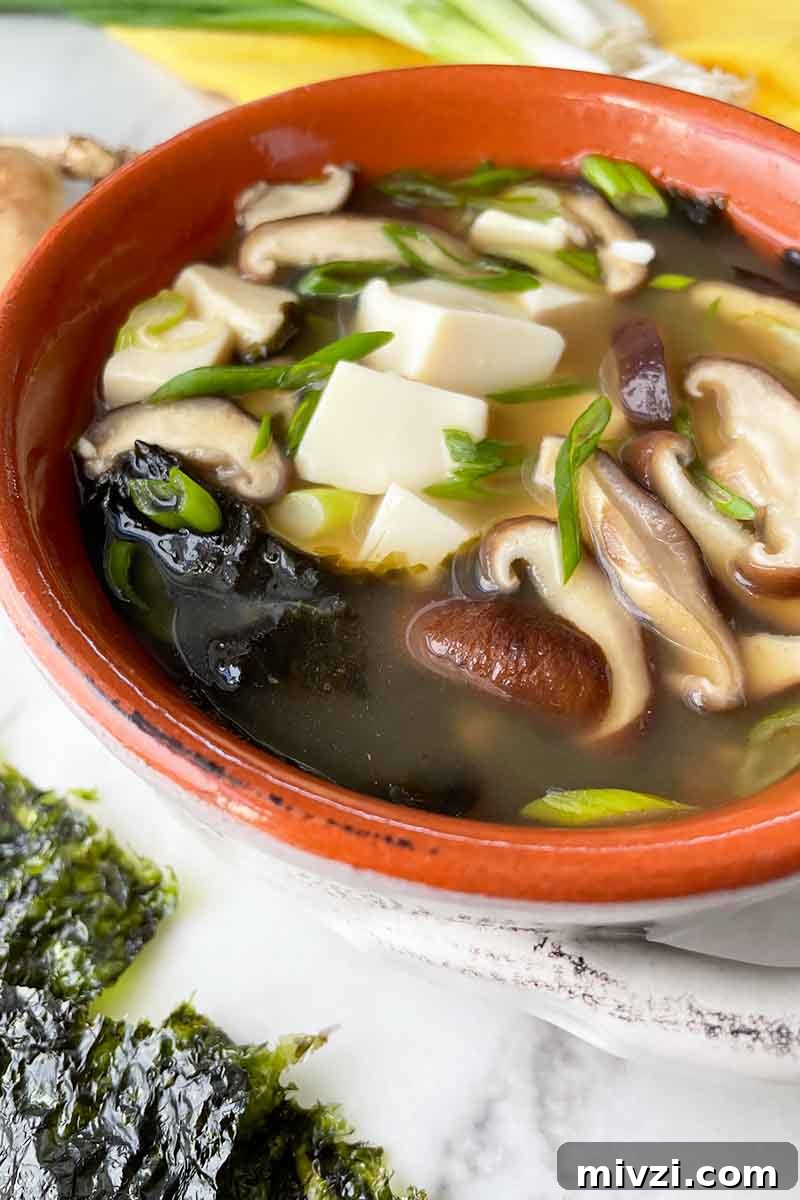
Mushrooms aren’t required, but they add extra umami and a pleasant, meaty texture — shiitakes are a particularly good choice. Chopped green onions provide a crisp, sweet bite that balances the mostly slurpable components in the bowl.
After perfecting this quick, flavor-packed broth — which comes together in under thirty minutes — I no longer have to beg my sister for a taste. Make a batch yourself and enjoy.

Easy Miso Soup
No reviews
- Author: Fanny Slater
- Total Time: 25 minutes
- Yield: 4 servings
Description
Delicate tofu, tender shiitakes, and green onions grace a simple miso broth that comes together in under thirty minutes.
Ingredients
- 6 cups low-sodium vegetable stock
- 1 8-ounce package silken tofu, cut into 1-inch cubes
- 1/2 cup shiitake mushrooms, stemmed and sliced
- 1 sheet nori (dried seaweed), chopped into large pieces (about 1/2 cup)
- 4 tablespoons white miso paste
- 4 medium green onions, chopped (about 1/2 cup)
Instructions
- In a large saucepot over high heat, bring the vegetable stock to a boil. Reduce heat to medium-low and add the tofu, mushrooms, and seaweed.
- Simmer, stirring occasionally, until the mushrooms soften, about 5 minutes.
- Meanwhile, put the miso in a small bowl and whisk in about 2 tablespoons of the hot stock until smooth to prevent lumps.
- Stir the miso mixture into the soup until fully incorporated. Add the green onions and simmer 3 more minutes. Taste and adjust seasoning with additional miso or a pinch of salt if desired.
- Divide the soup among bowls and serve hot.
- Prep Time: 15 minutes
- Cook Time: 10 minutes
- Category: Soup
- Method: Stovetop
- Cuisine: Vegetarian
Cooking By the Numbers…
Step 1 – Prep Soup Ingredients
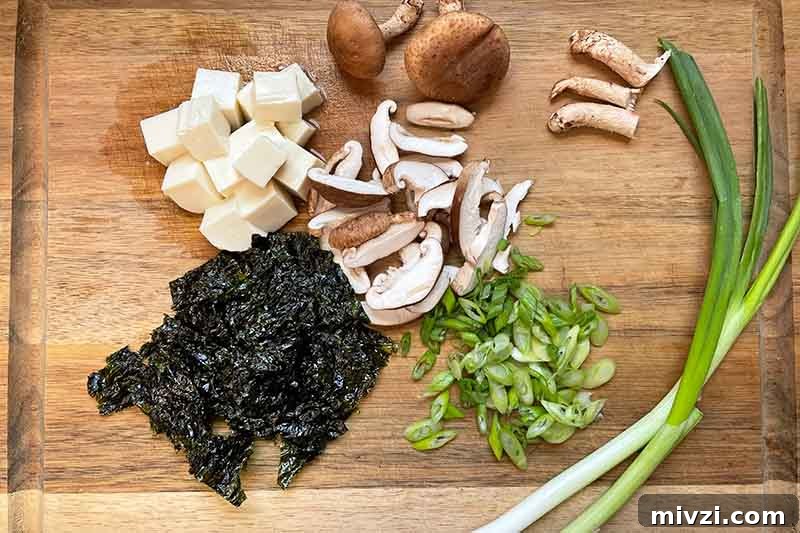
Drain the tofu and cut it into 1-inch cubes. Silken tofu works beautifully here because of its smooth texture — add it gently so it doesn’t break apart. Stem and thinly slice the shiitake mushrooms. You can substitute oyster or enoki mushrooms; add enokis later in cooking since they’re delicate. Chop the nori and green onions.
Step 2 – Boil the Stock and Build the Soup
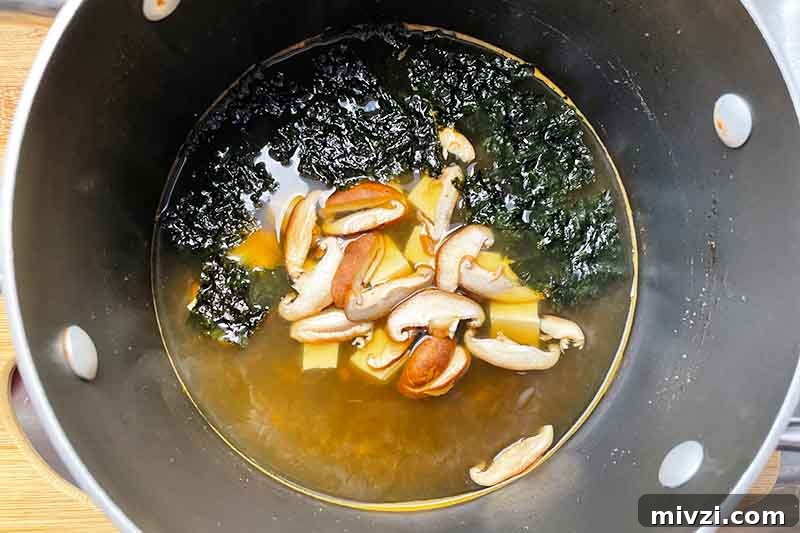
Bring the vegetable stock to a boil in a large pot, then reduce to medium-low and add the tofu, mushrooms, and seaweed. Simmer about 5 minutes until the mushrooms soften.
Step 3 – Prep and Add the Paste
White miso (also called sweet or mellow) is the mildest option, but you may use any variety. To avoid lumps, whisk about 2 tablespoons of hot stock into the miso in a small bowl to form a smooth slurry, then stir it into the pot and add the green onions.

Step 4 – Simmer and Serve
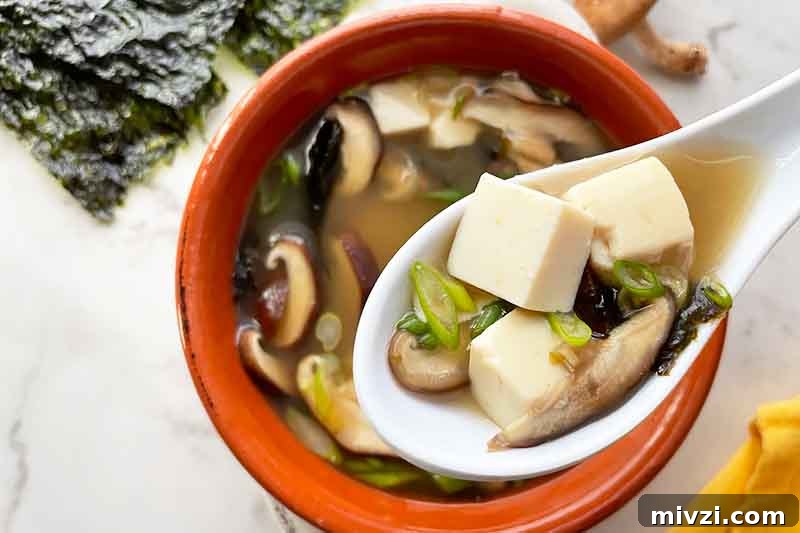
Simmer for 3 more minutes, then taste and adjust seasoning with more miso, a pinch of salt, or a splash of soy sauce or tamari if you prefer. Divide into bowls and serve hot.
All Hail Mighty Miso
A little extra miso at the end can help fine-tune seasoning. Some people like a few drops of toasted sesame oil for warmth and complexity. Traditional miso soup often uses dashi; this quick version uses vegetable stock for a vegetarian option. If you eat fish, dashi powder can boost umami for a more classic profile. Homemade stock, even a simple vegetable version, will elevate the soup — keep a batch frozen for quick miso nights. For a heartier meal, add soba or another noodle.
Will you serve this as a light starter or turn it into a main? Try variations with different mushrooms, miso types, or add-ins and see what you prefer.
Photos by Fanny Slater, © Ask the Experts, LLC. ALL RIGHTS RESERVED.
Nutritional information is an approximation and was not compiled by a registered dietitian or submitted for laboratory testing.