This post may contain affiliate links, which won’t change your price but will share some commission.
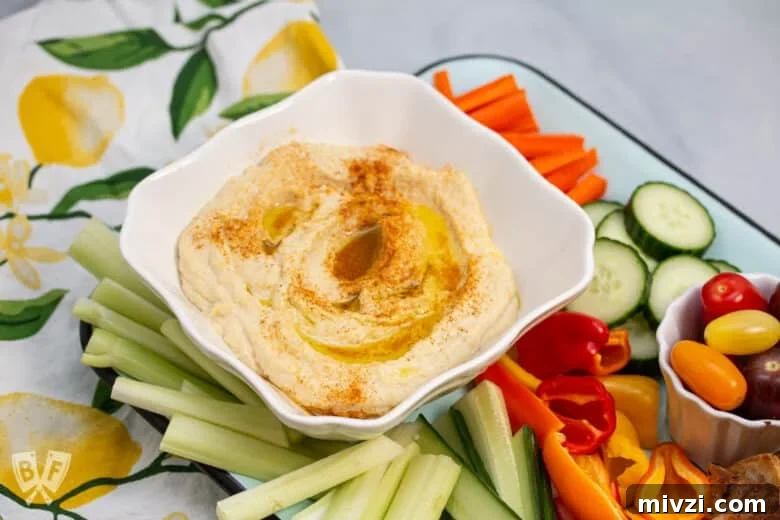
Smooth, flavorful homemade hummus made with canned chickpeas comes together in minutes with only a few pantry ingredients. It’s a simple appetizer, snack, or sandwich spread that everyone will enjoy.
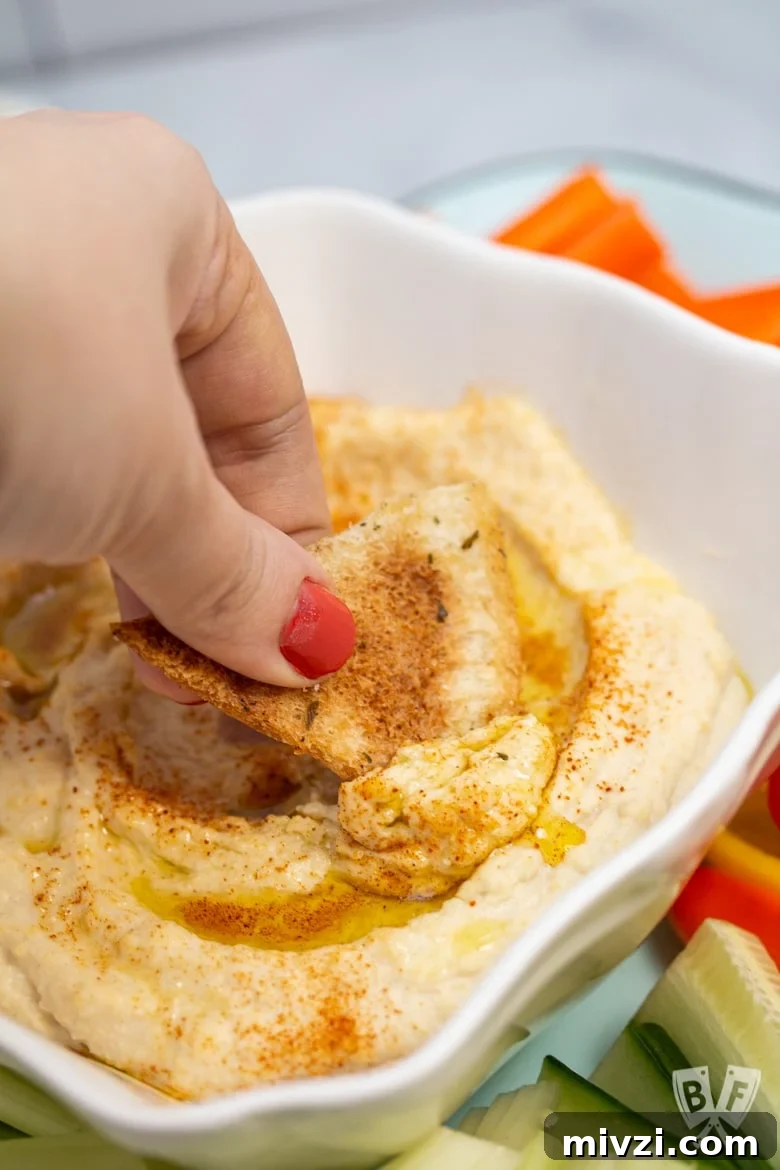
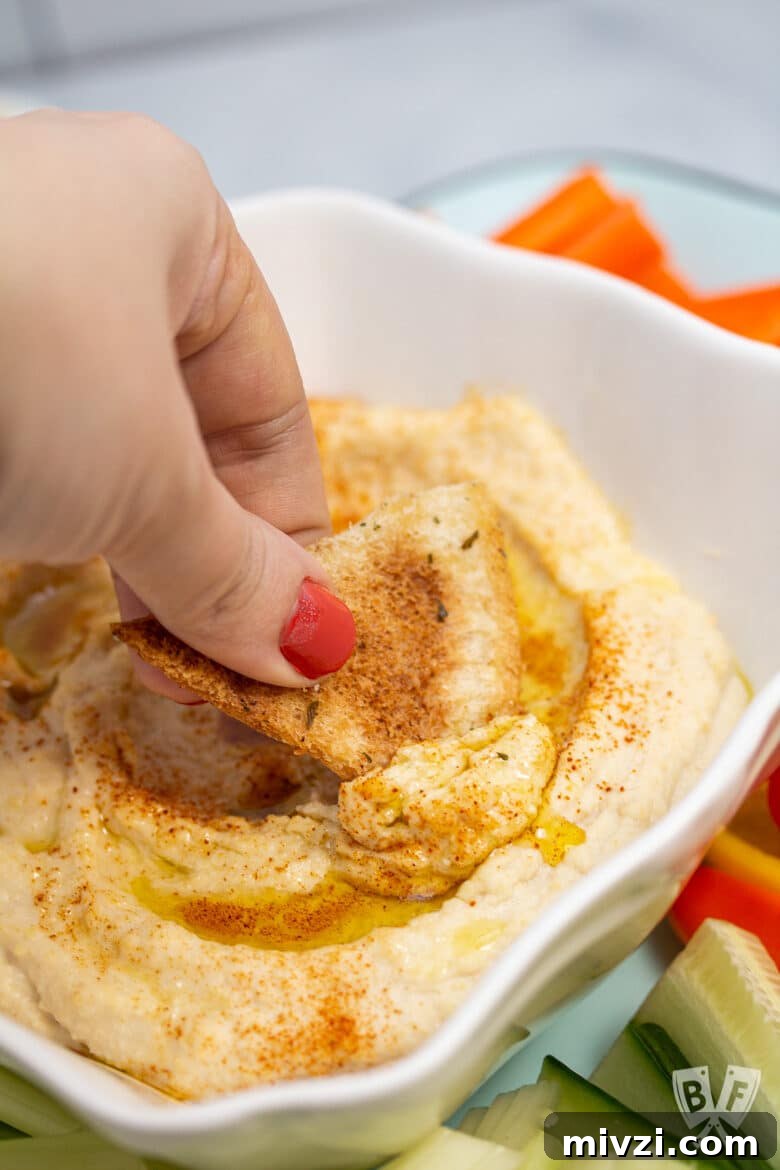
This hummus has been a favorite in my cooking classes for many years and pairs perfectly with homemade seasoned pita chips. It’s easy enough for kids to make and versatile enough for entertaining.
Jump To:
- 🧡 Why we love this recipe
- 📝 Ingredients
- 🥣 Ingredient spotlight: tahini
- ✅ How to make this recipe
- 🧄 Top tip: quickly mince garlic
- 💡 What to serve with hummus
- 🍴 Finishing tips
- 🥡 Storage recommendations
- 📖 Recipe
🧡 Why we love this recipe
- Homemade hummus is economical and fresher than many store-bought options.
- The recipe scales easily to feed a crowd or to prep ahead for gatherings.
- It’s a healthy choice for lunches, snacks, and family-friendly meals.
- No soaking or stovetop cooking required — canned chickpeas make this fast and convenient.
- You control the texture and seasoning, so you can make it as smooth or rustic as you like.
- It stores well in the refrigerator for several days, so you can make it in advance.
📝 Ingredients
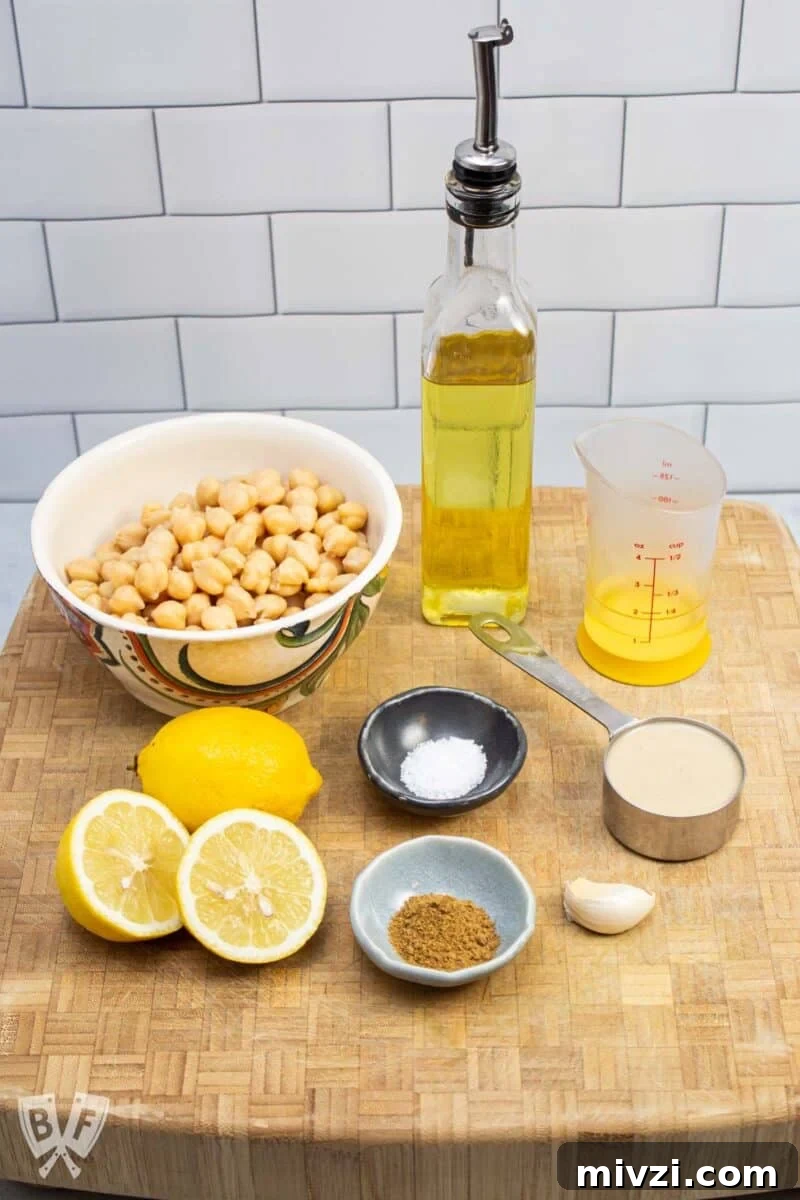
Everything you need for a classic, reliable hummus (see recipe card below for exact amounts):
- Canned chickpeas
- Garlic
- Freshly squeezed lemon juice
- Tahini
- Olive oil
- Kosher salt
- Ground cumin
- Cold water
Optional garnishes: a drizzle of extra-virgin olive oil, ground paprika, or ground sumac.
🥣 Ingredient Spotlight: Tahini
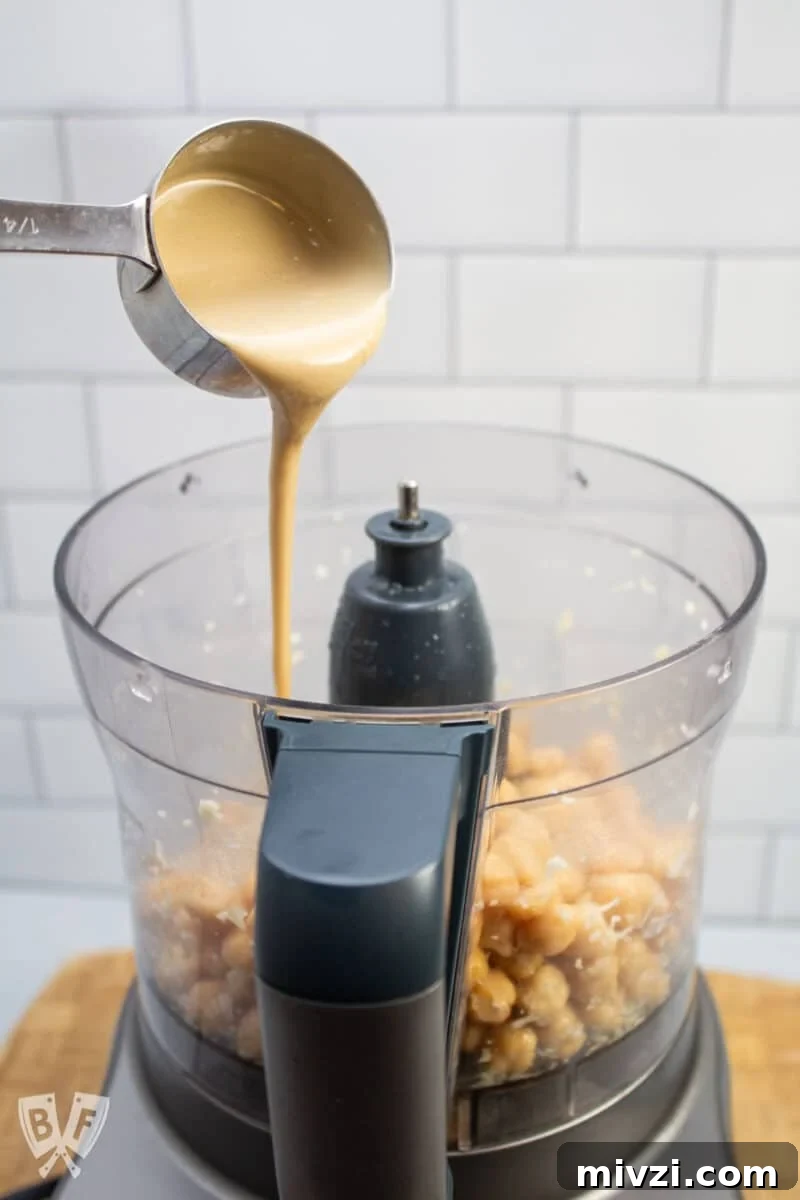
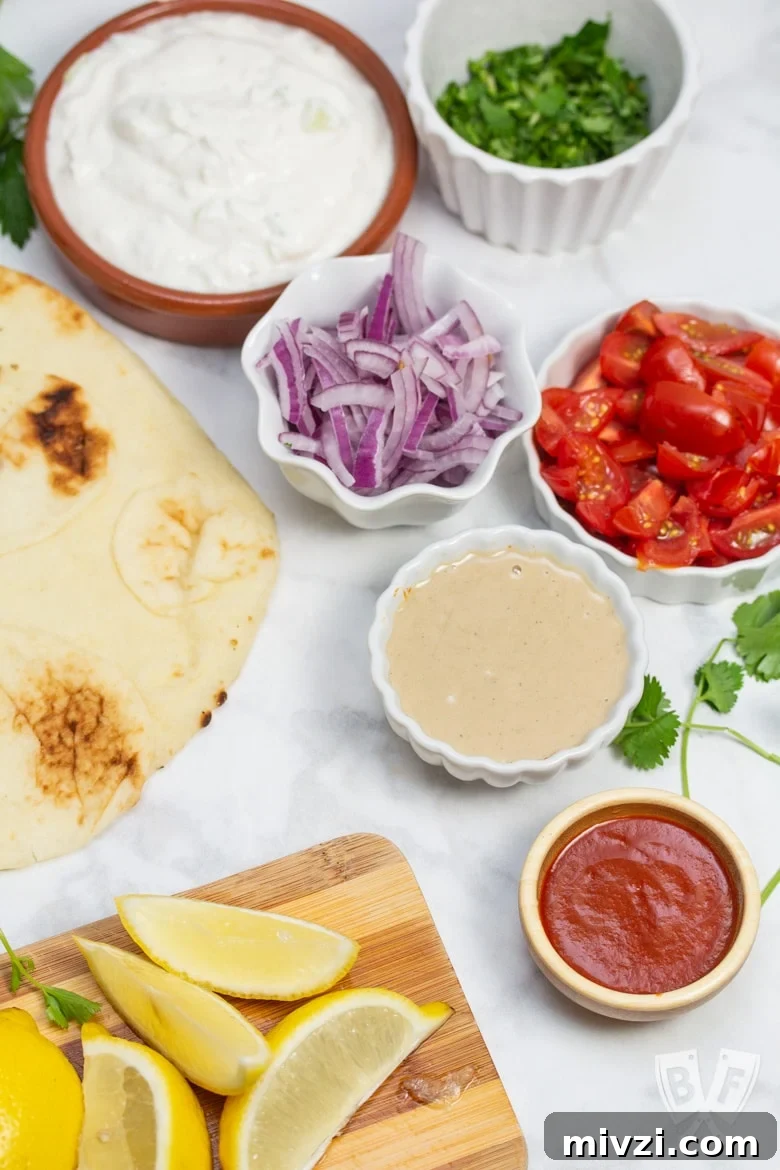
Tahini is a sesame-seed paste commonly used in Middle Eastern cooking and is an essential ingredient in traditional hummus. In groceries you’ll usually find it in condiments, the health foods aisle, or international foods.
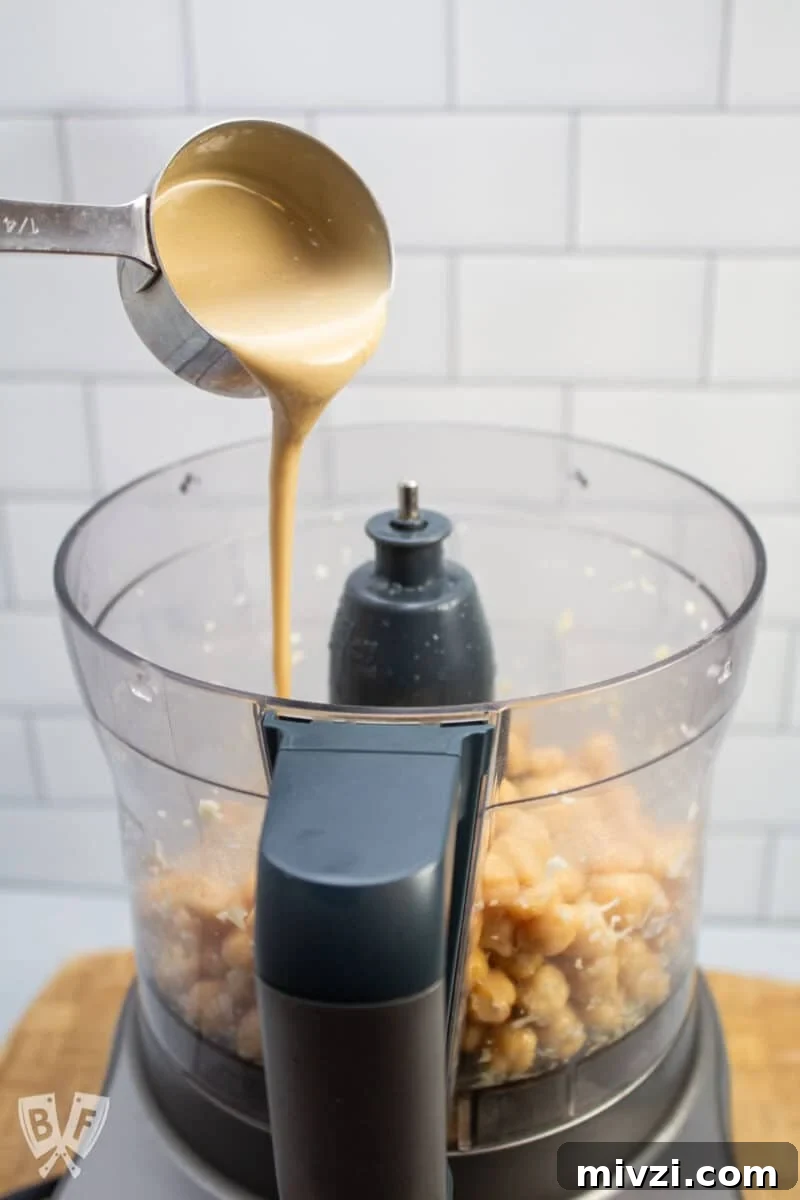
Tahini ranges from pourable to thick depending on brand and storage. If the oil separates, stir it back in before measuring. Refrigerating tahini can extend its shelf life; squeeze-bottle tahini is convenient because it doesn’t need stirring after separation.
Tahini adds a creamy, nutty depth to hummus and pairs beautifully with lemon and garlic. Keep a jar on hand for hummus, dressings, sauces, and spreads.
✅ How to make this recipe
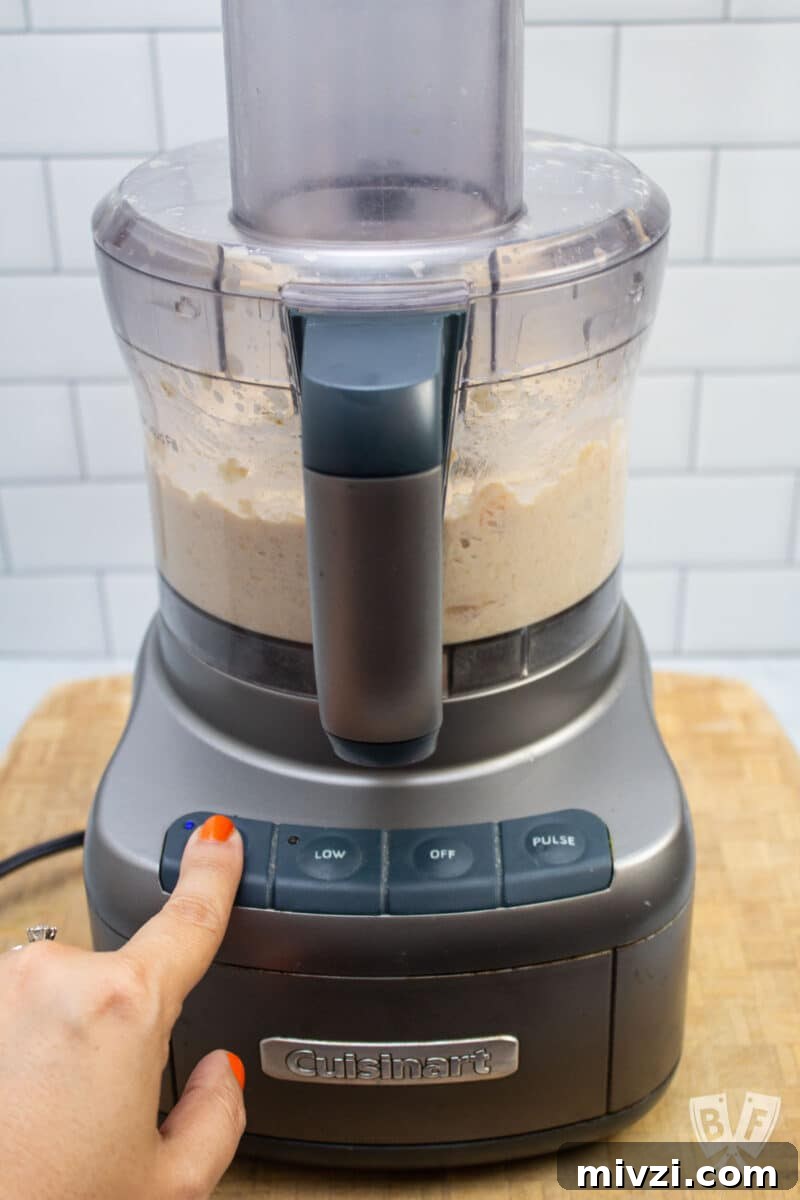
This hummus is easiest in a food processor or high-speed blender. The longer you process, the smoother it becomes. Basic steps:
- Rinse and drain the canned chickpeas thoroughly.
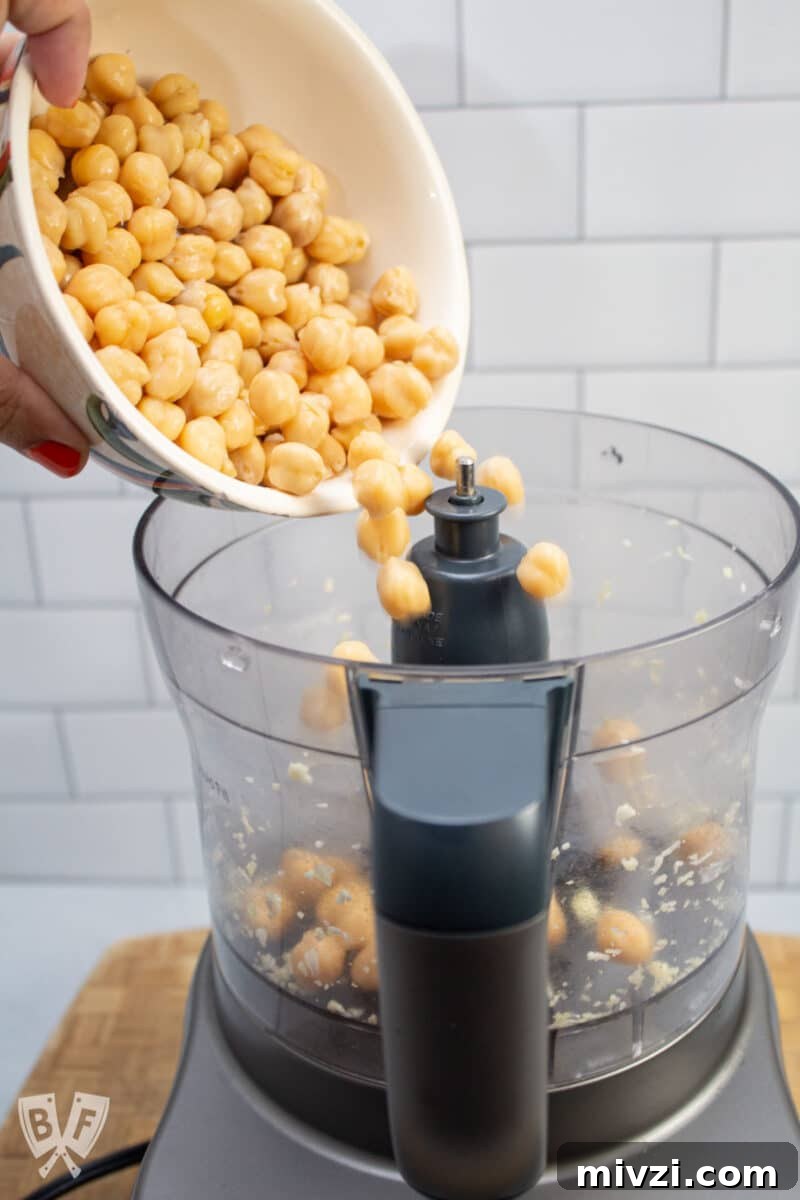
- Process garlic first until minced (see garlic tip below), then add chickpeas, lemon juice, tahini, olive oil, salt, cumin, and water.
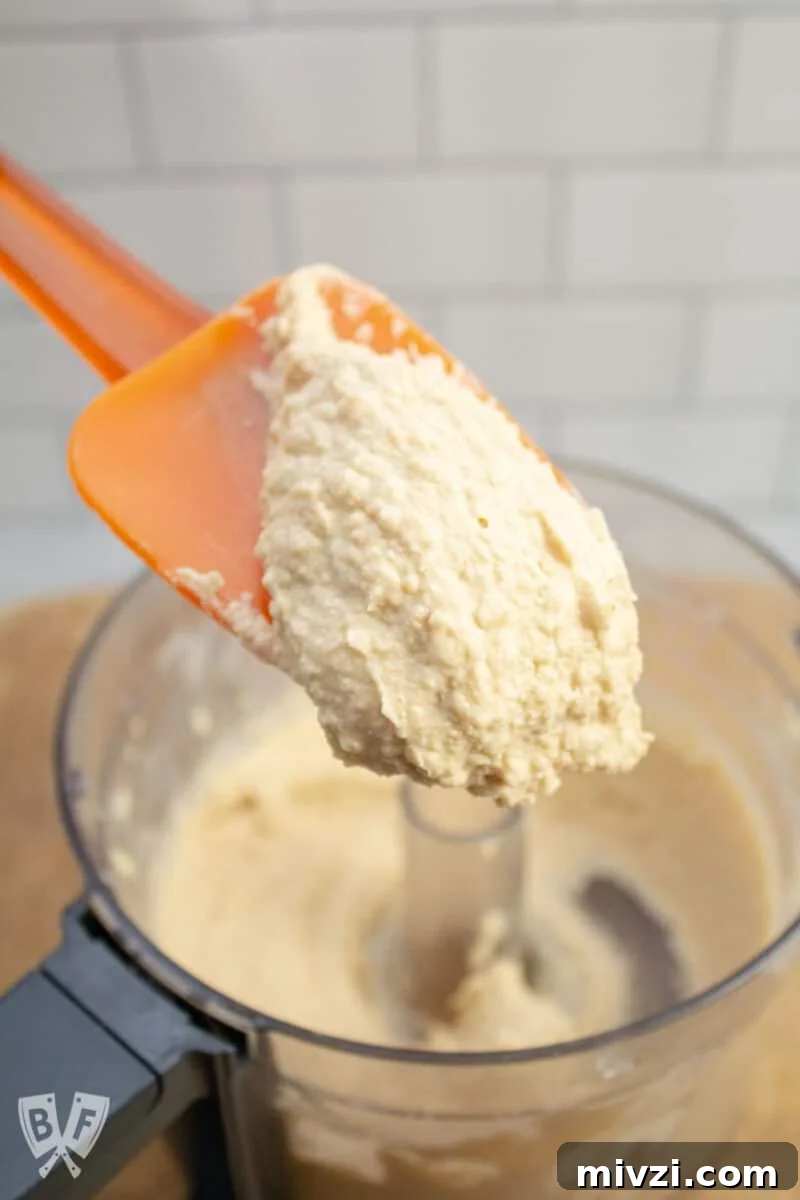
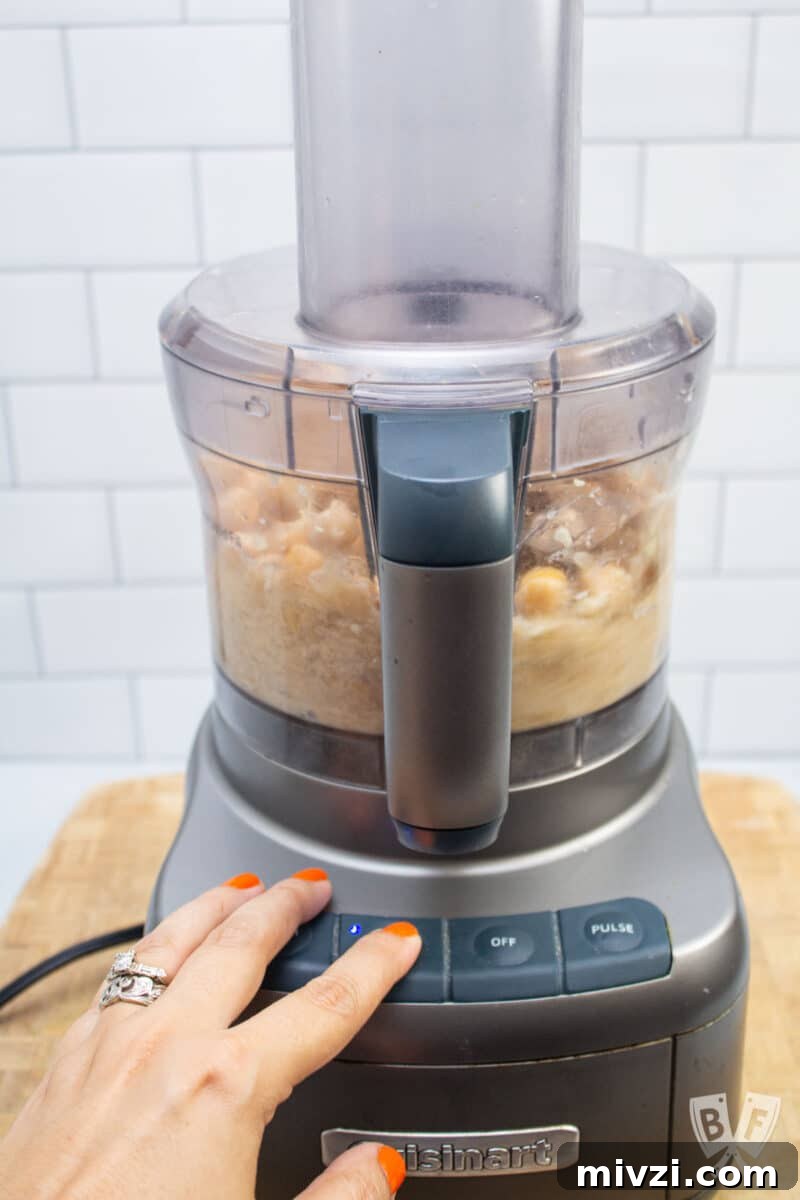
- Process until smooth, stopping to scrape the bowl as needed. Adjust water or oil for your desired texture.
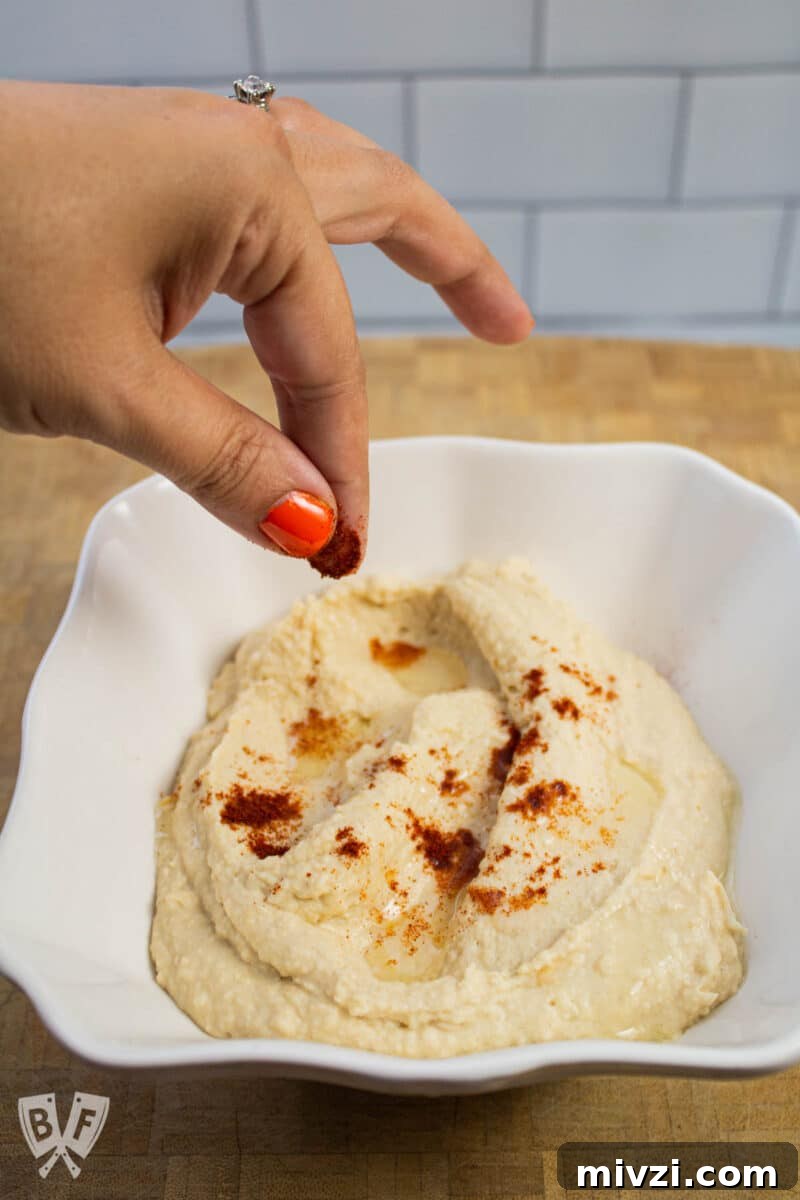
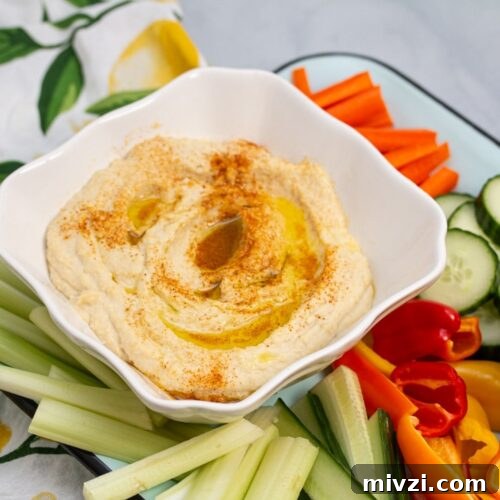
- Transfer to a serving bowl and garnish with a drizzle of extra-virgin olive oil and a sprinkle of paprika or sumac if desired.
See the recipe card below for precise measurements and full instructions.
🧄 Top Tip: Quickly Mince Garlic
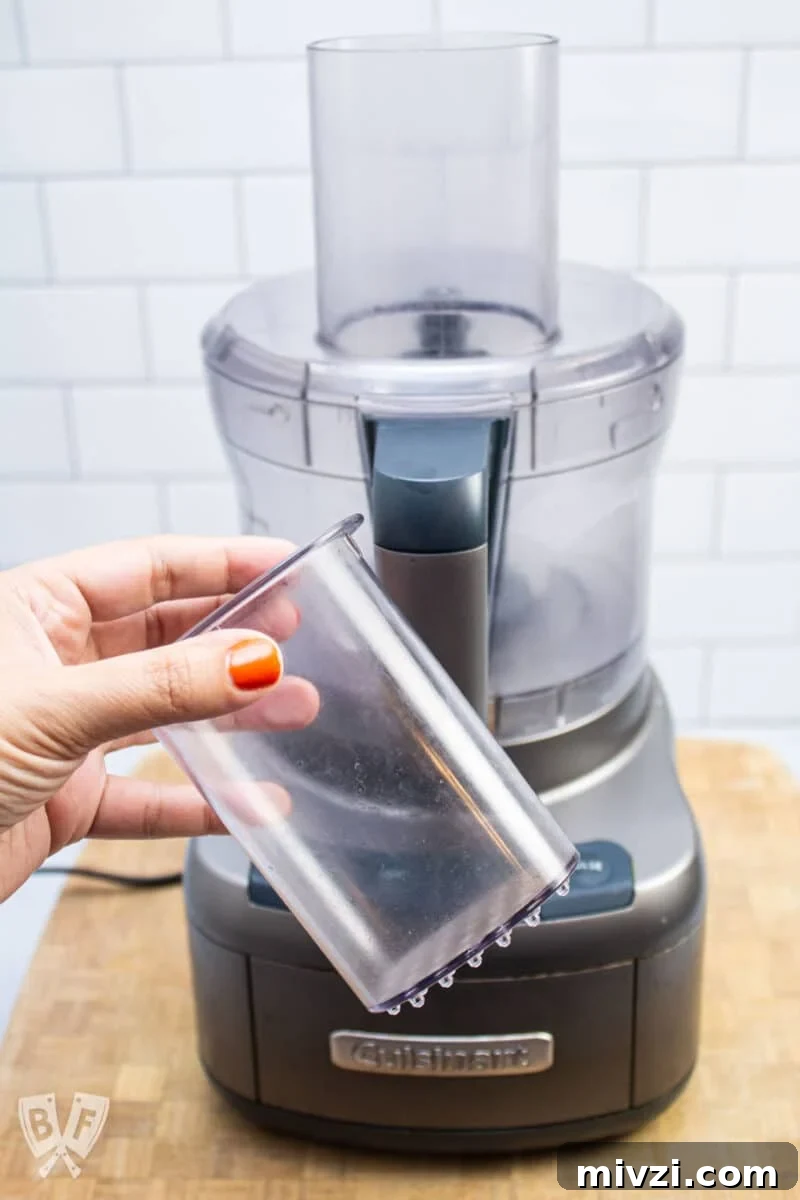
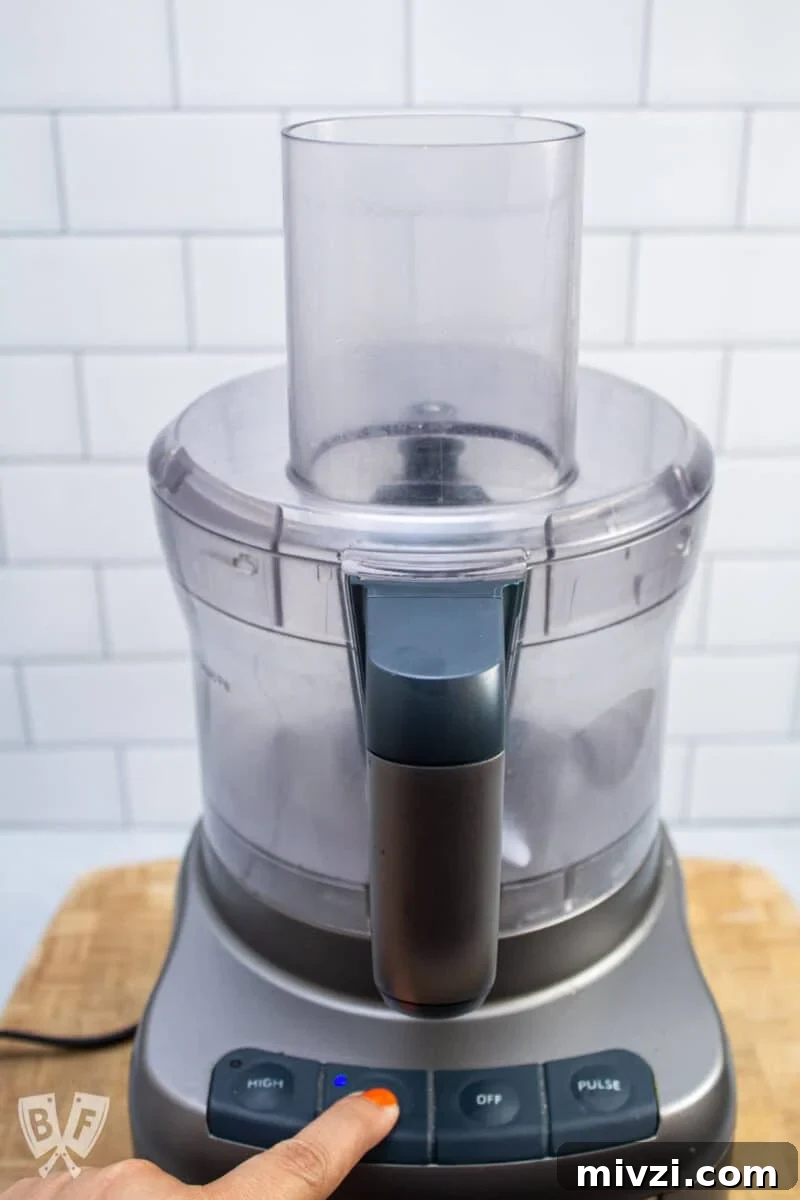
A food processor makes quick work of mincing garlic. Peel the clove, remove the pusher from the feed chute, run the processor on low, and drop the clove down the chute while it’s running. Replace the pusher if you like and increase speed briefly if needed. In a few seconds you’ll have evenly minced garlic with no knife work required.
💡 What to serve with hummus
Hummus is incredibly versatile. Try these ideas:
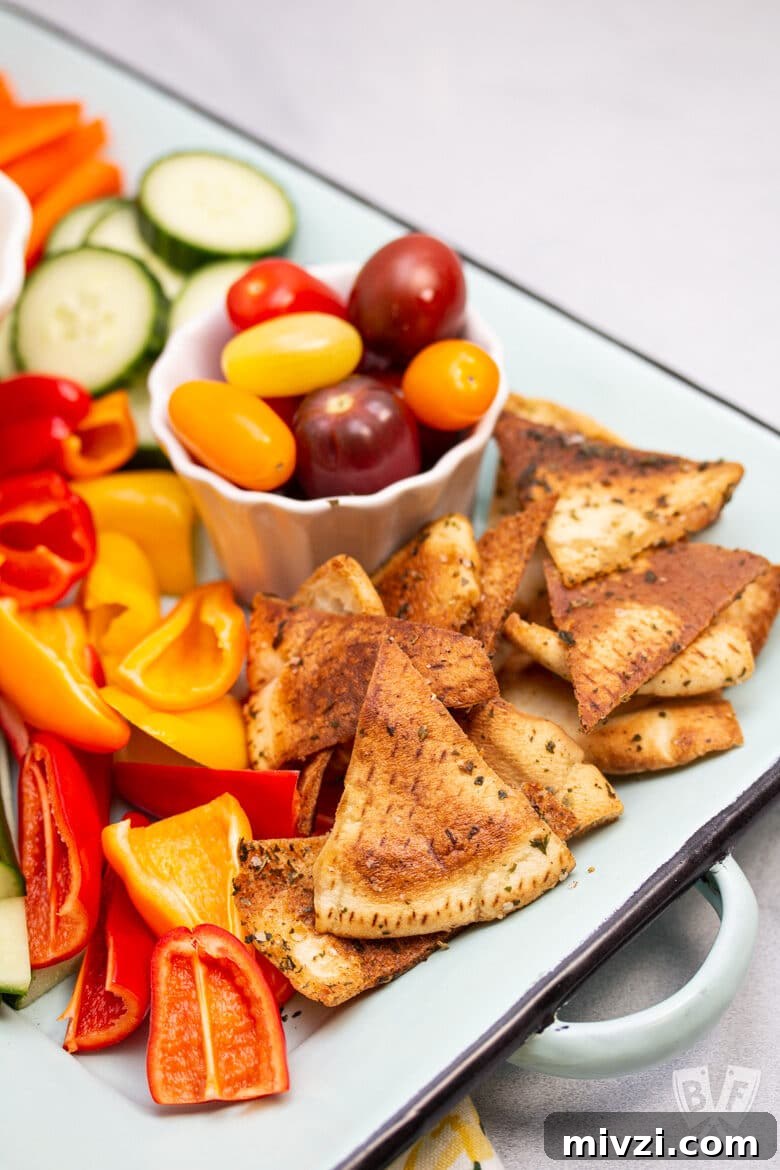
- Serve as a dip with fresh veggies: cucumber, carrots, bell peppers, cherry tomatoes, radishes, broccoli, or cauliflower.
- Use as a spread on pita, sandwich bread, or wraps.
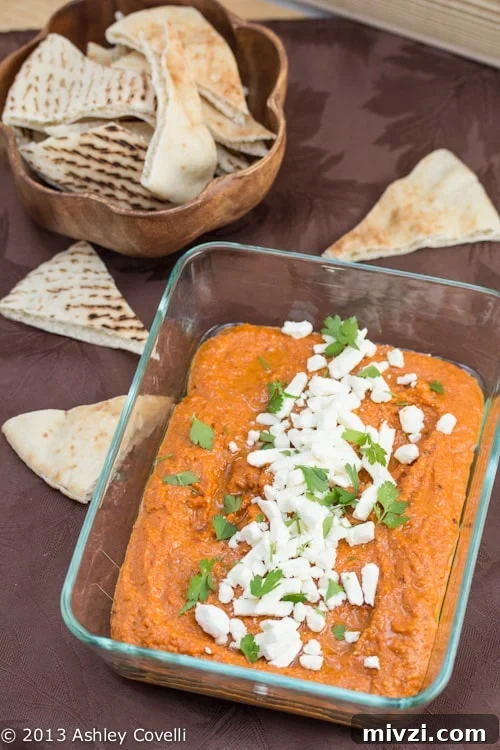
- Include it on a Mediterranean mezze platter alongside tzatziki, baba ganoush, muhammara, stuffed grape leaves, and olives.
- Pair with crunchy dippers: pita chips, crackers, pretzels, or tortilla chips.
- Layer with tzatziki, chopped cucumbers, tomatoes, and feta for a Greek-style dip.
- Add hummus to bowls, salads, or as a sauce for grilled vegetables and kebabs.
🍴 Finishing tips
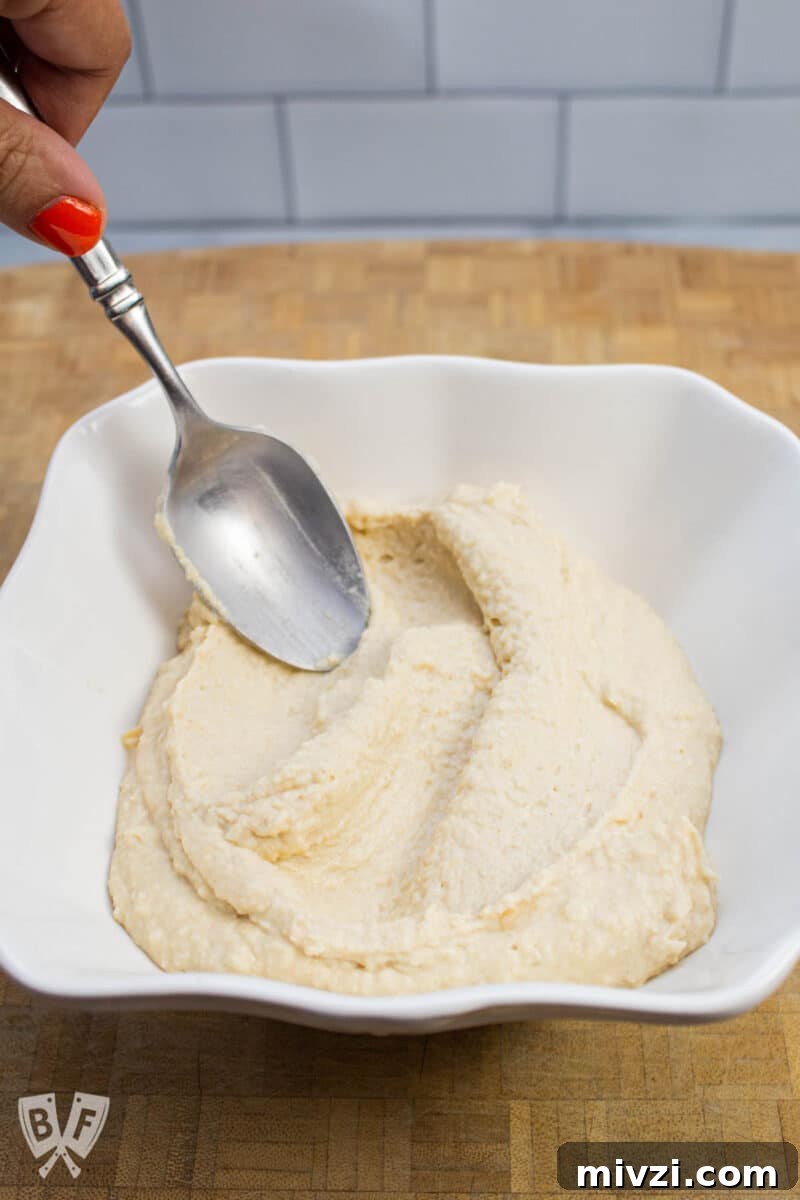
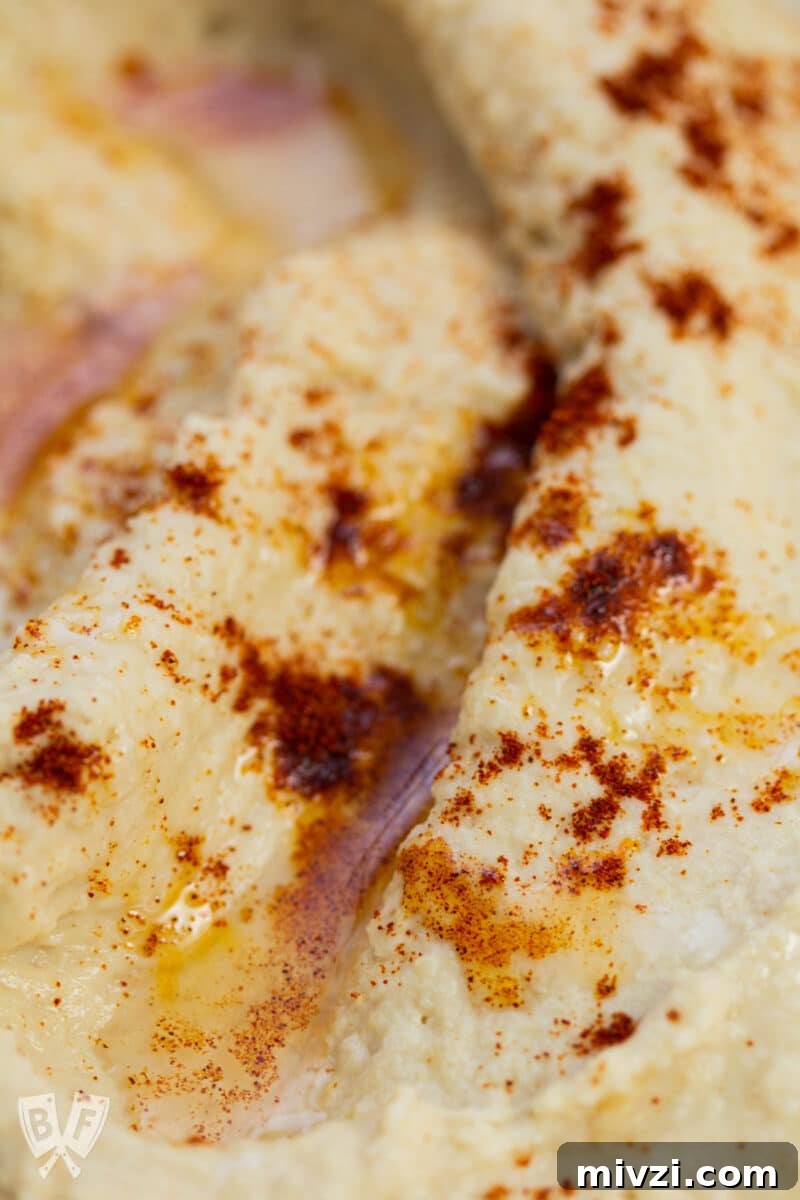
Presentation makes a difference. Smooth the hummus with a spoon and create shallow swirls or indentations, then add a drizzle of extra-virgin olive oil and a sprinkle of paprika or sumac for color.
Fresh herbs like chopped parsley, toasted nuts, roasted red pepper, pomegranate arils, or crumbled feta also make attractive garnishes. Reserve a few whole chickpeas from the can to scatter on top for texture and visual interest.
🥡 Storage recommendations
Store hummus in an airtight container in the refrigerator for several days. Make it ahead of time and hold off on garnishes until just before serving to keep them fresh.
Still hungry? You may also like…

📖 Recipe
Easy Classic Hummus Using Canned Chickpeas
Big Flavors from a Tiny Kitchen – Ashley Covelli
Ingredients
- 1 (15-ounce) can chickpeas
- 1 clove garlic
- ¼ cup freshly squeezed lemon juice
- ¼ cup tahini
- 2 tablespoons olive oil
- ½ teaspoon kosher salt
- ½ teaspoon ground cumin
- 2 tablespoons cold water
- Ground paprika or ground sumac
- Extra-virgin olive oil
- Pita chips or fresh veggies for dipping
Instructions
-
Drain the chickpeas in a colander and rinse well. Drain again.
-
Peel the garlic. With the food processor running on low, drop the garlic through the feed chute and process until minced.
-
Add the drained chickpeas, lemon juice, tahini, olive oil, salt, cumin, and cold water. Process for about 1 minute.
-
Scrape down the sides and bottom of the bowl, then process again until the hummus is smooth and creamy. Continue processing longer for an ultra-smooth texture.
-
Transfer the hummus to a serving bowl. Drizzle with extra-virgin olive oil and sprinkle with paprika or sumac if desired. Serve with pita chips or fresh vegetables.
Notes
- If your tahini has separated, stir it well before measuring so the oil is reincorporated.
- Suggested dippers: pita bread, pita chips, cucumber slices, carrot sticks, snap peas, broccoli, radishes, or pretzels. Hummus also makes a great sandwich spread.
Useful products:



Nutrition information
Did you make this recipe?
Leave a comment and star rating below to let people know how it was!
Check out my latest posts…
-

Italian Seasoning Blend
-
Easy Homemade Tzatziki
-
Turkey Sausage Patties