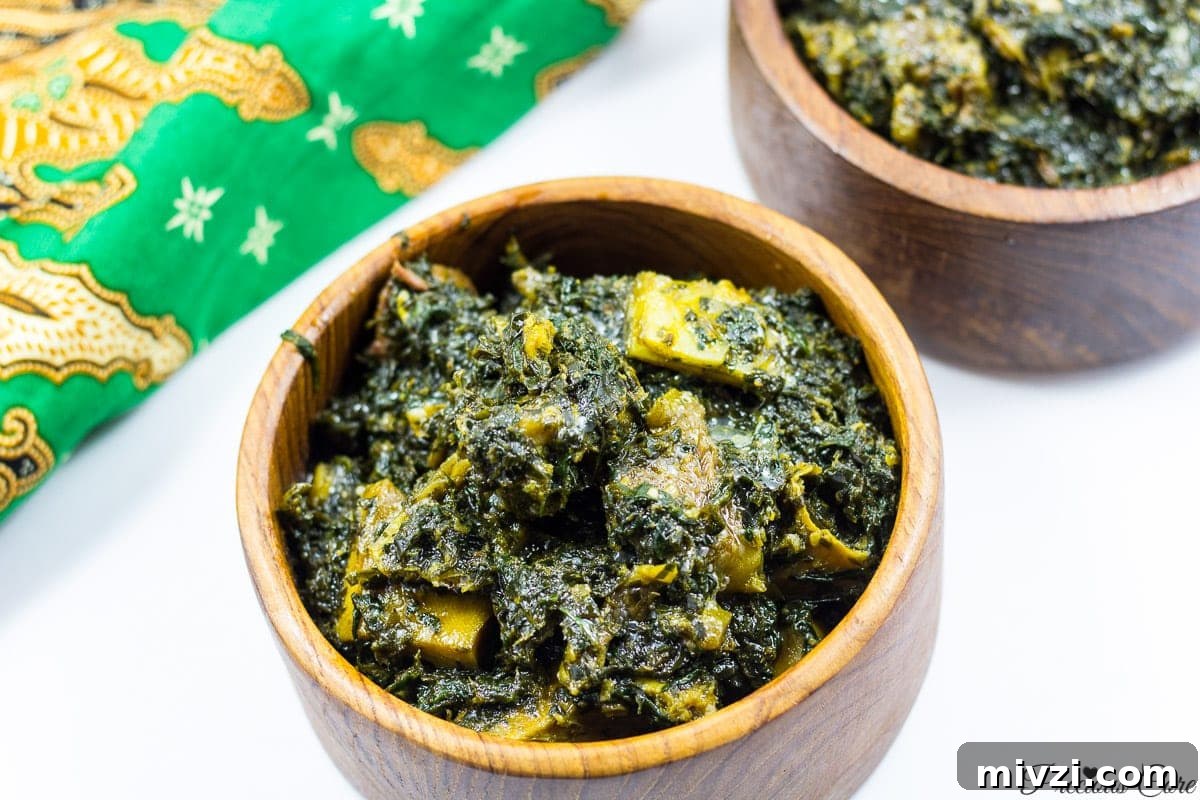
Here are a few things that went wrong while we were filming this Eru recipe:
- A part of my blouse that was supposed to stay hidden peeked out during the intro.
- My wig decided to show its age.
- I started the shoot wearing both earrings and finished with only one.
So if you notice I’m wearing just one earring toward the end of the video, it’s not a fashion statement—its partner fell off and wouldn’t stay on.
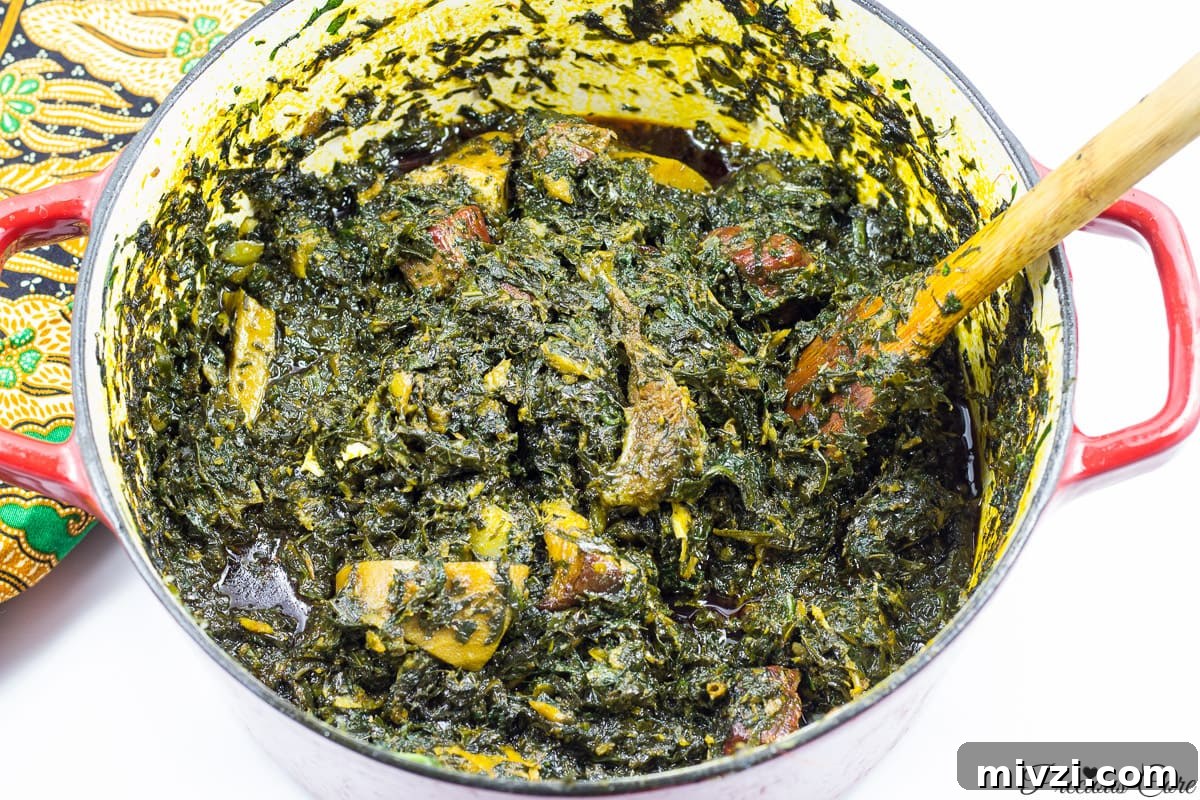
Now that we’ve dealt with the wardrobe and wig drama, I’m excited to share one of my absolute favourite dishes. I’ve probably made this hundreds of times—seriously, it’s that good—and everyone in my family loves it. Eru is a leafy forest vegetable known scientifically as Gnetum africanum. In Nigeria it’s called okazi or ukazi, and in some Central African countries it’s referred to as koko.
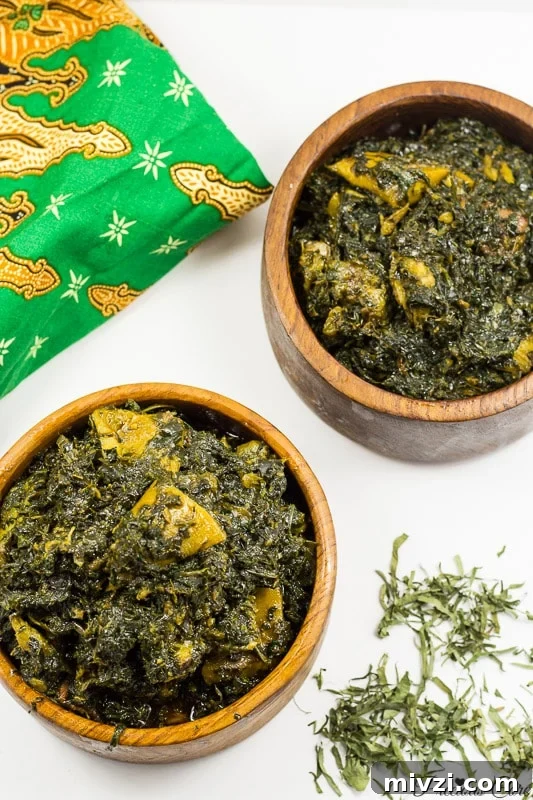
Eru can be prepared several ways: simmered with groundnuts, cooked with waterleaf, or paired with spinach. The combination of eru and waterleaf is the most popular version in Cameroon. The dish originates with the Manyu people in the South West region of Cameroon. Culturally and culinarily, the Manyu people share much in common with communities in Cross River and Akwa Ibom states in Nigeria, which explains why this dish resembles Nigerian Afang and Edika Ikong soups. If you ask me, Eru sits right where Afang and Edika meet.
I highly recommend adding smoked meat to this dish—the flavour is divine.
Is Eru a soup, a vegetable stew, or something in between? It’s hard to label. It’s not exactly a clear broth-based soup; it’s a richly seasoned vegetable dish typically served with a starchy side such as garri or water fufu (similar to akpu)—both of which are cassava-based staples.
Eru has a distinctive, deeply earthy flavour that’s difficult to put into words. The best way to understand it is to try it yourself. In the early days of filming recipes on my phone I posted an extensive version called “The Best Eru Recipe Ever.” If you haven’t seen it, it’s worth checking out for a fuller guide.
When I cook eru, I prefer the vegetables to be quite soft so they blend smoothly with fufu in the mouth. Below you can watch me make it—don’t forget the earring incident appears in the video.
Eru
Pin Recipe
Rate
Print Recipe
Ingredients
- 8 cups dry eru/okazi (packed) or 5 cups fresh 250g
- 10 cups chopped waterleaf or spinach (use less if using fresh eru) 280g
- 1 1/2 cups crayfish, lightly blended
- 1 1/2 cups palm oil ~325 ml
- 1 teaspoon salt
- 2 pounds (about 1 kg) boiled meats with stock — I used beef, beef skin (canda) and tripe
- 1/2 pound fish (I used stock fish and smoked catfish)
- 4 small seasoning cubes (Maggi)
- 2 scotch bonnet peppers — blended or whole (optional)
Instructions
-
If using dried eru/okazi, soak it in warm water for at least 30 minutes. Adding a small pinch of baking soda (about 1/2–1 teaspoon) to the soak water can help brighten the colour and soften the leaves, but this is optional.
-
Place the boiled meats and their stock in a large pot. Bring to a simmer over medium-high heat and let it cook for 5–7 minutes until most of the stock has reduced.
-
Add the chopped waterleaf or spinach and cook about 5 minutes until wilted and juicy. Stir and cook another 3–5 minutes, taking care not to let the greens brown.
-
Rinse the soaked eru thoroughly, then add it to the pot and mix well with the spinach. Pour in the palm oil and stir to combine. Simmer together for about 5 minutes, stirring occasionally.
-
Add seasoning cubes, crayfish, fish and pepper (if using). Mix and let everything cook together for about 5 more minutes. Taste and adjust seasoning. The final dish should be moist but not watery—add a little water or oil if too dry, or cook a bit longer if too moist.
-
Turn off the heat and serve warm with your choice of fufu, garri, or another starchy side.