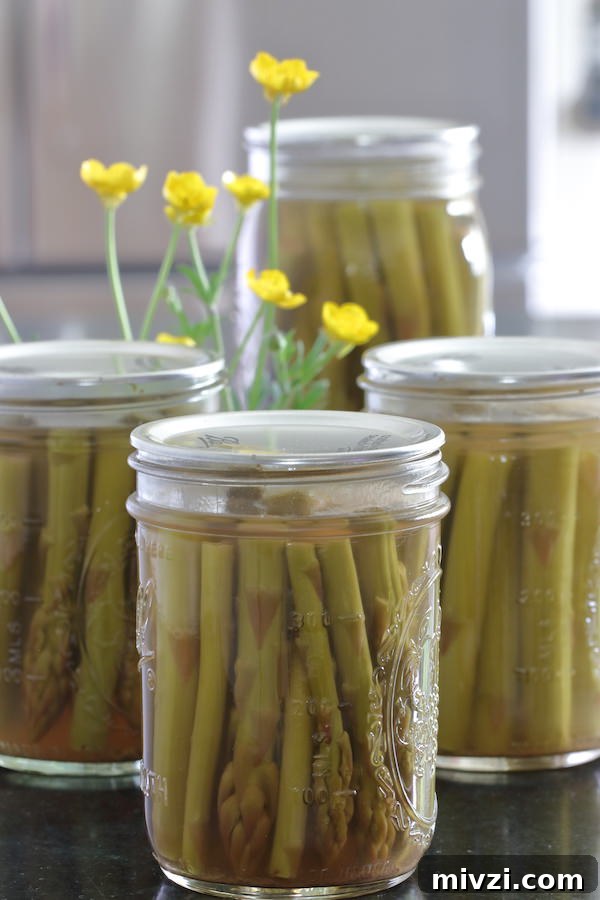
Our asparagus patch is producing abundantly. We’ve already harvested at least ten pounds, and if Jamie’s estimate holds true, we’ll pick another 20 pounds before the season ends. Besides making asparagus pickles, we’ve enjoyed asparagus in several ways:
- Brushed with olive oil, sprinkled with garlic powder and salt, then oven roasted (the omnivores in our home also like to add parmesan or pecorino Romano)
- Made into Easy Vegan Asparagus Risotto
- Chopped raw spears and added to daily garden salads
- Grilled, added to Faux Chicken Salad (delicious), and used in Potato Leek Soup with Asparagus (all three recipes are in my plant-based cookbook)
- And of course, snacked on many freshly picked raw spears
Before the season ends I’ll also blanch single layers of spears on trays, freeze them, and vacuum-seal the frozen asparagus in BPA-free bags using my FoodSaver.
For the first time this week I canned jars of asparagus pickles. We opened a jar today and my husband, two adult children, my mother, and I all enjoyed them. I’ve canned beets, cucumbers, and string beans before, but this was my first time pickling asparagus. Before sharing that process, let’s pause and appreciate this remarkable vegetable.
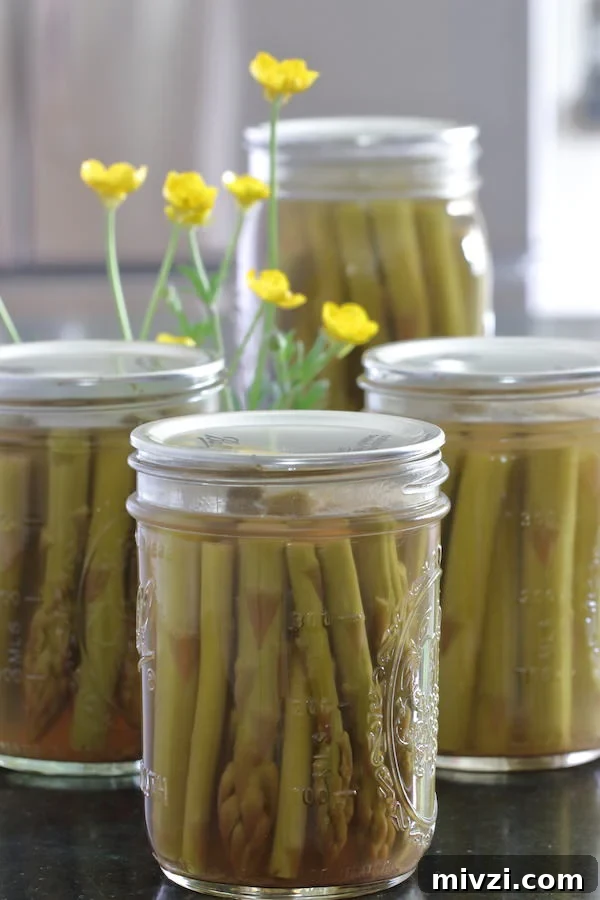
Asparagus is a Generous and Fascinating Crop
- Plant it once and, with proper care, a patch can produce for decades. By the third season most beds begin producing reliably.
- Spears erupt from the soil in early spring and can grow very fast—sometimes several inches in a single day. A healthy patch produces for several weeks each season.
- After harvest the plants develop lacy, light-green fronds that can reach up to six feet tall. These fern-like leaves capture sunlight to store energy in the crowns and roots, which is why asparagus is long-lived.
- During the harvest window the only visible part above ground is the spears themselves—so unlike most garden vegetables and part of what makes asparagus so special.
Nutritional Benefits
- Asparagus is high in folate and provides potassium, fiber, vitamin B6, vitamin A, vitamin C, and thiamine.
- It contains antioxidants and compounds with anti-inflammatory properties.
- Research suggests asparagus and other vegetables may help prevent or support treatment of cardiovascular disease.
- Health organizations note asparagus contains compounds with potential anticancer benefits.
How to Make and Can Asparagus Pickles
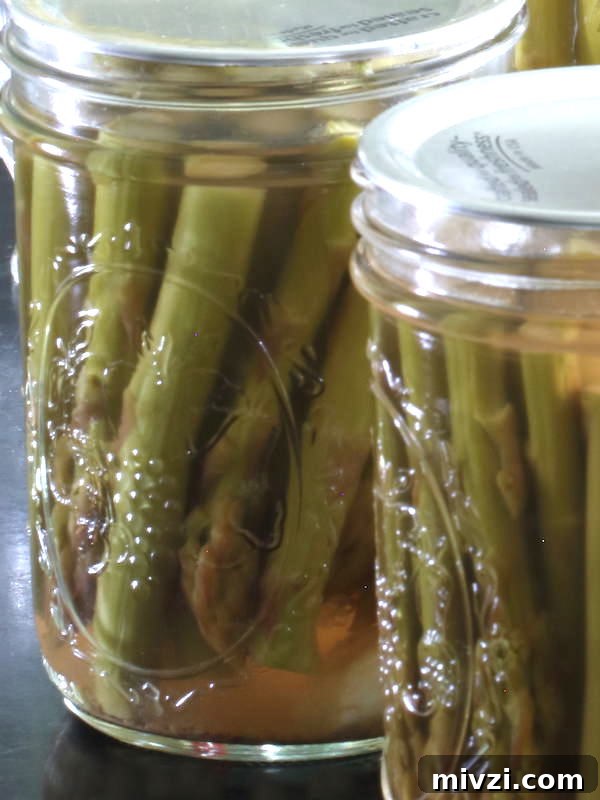
What does “canning” mean?
Canning is preserving food by processing it and sealing it in airtight containers. Home canning typically uses Mason jars with two-piece lids.
Depending on the food, you use either a boiling water bath or a pressure canner. Acidic foods—pickles, tomatoes, jams—usually require only a boiling water bath.
When canning, use recipes that have been lab-tested by reputable sources such as university extension services or the National Center for Home Food Preservation. The Ball Blue Book of Preserving also offers tested recipes.
From Chronically Ill to Vibrantly Well: recovery through a plant-based diet
Pickling Asparagus
I followed the Washington State University Extension Service pickling asparagus recipe. That recipe yields 8 pints or 4 quarts and requires processing in a boiling water bath. Once properly canned, the jars are shelf-stable; store them in a cool, dark pantry and use within a year for best quality.
Method Overview
- Trim asparagus to fit jars
- Heat the brine with salt and spices
- Pack asparagus and garlic into hot jars
- Cover with boiling brine
- Process jars in a boiling water bath
Adjusting Salt and Spices
In my batch I reduced the salt substantially—from 6 tablespoons in the original recipe down to 1 tablespoon—and used 1 teaspoon of dill seed instead of a commercial pickling spice. Experienced canners note that salt and spices may be adjusted for flavor when making pickled vegetables because they are not required for food safety in recipes tested for water-bath canning. Reducing salt can affect crispness and flavor for some, but I haven’t had issues. Do not alter salt amounts in recipes intended for fermenting—fermentation is a different preservation method.
Brine Acidity and Safety
The safety of canned pickles depends on the acidity of the brine. Different vegetables require different acidity levels based on their density. Pickled asparagus recipes typically call for a 50/50 ratio of water to vinegar. You may strengthen acidity by increasing vinegar, but never dilute it with more water than specified. Use white or apple cider vinegar labeled at least 5% acidity. Apple cider vinegar adds flavor; white vinegar is less likely to affect color.
If you have more asparagus than you can eat fresh, try making asparagus pickles. They’re an easy, delicious way to preserve a bumper crop for the off-season. Enjoy them straight from the jar or add them to salads, sandwiches, and wraps.