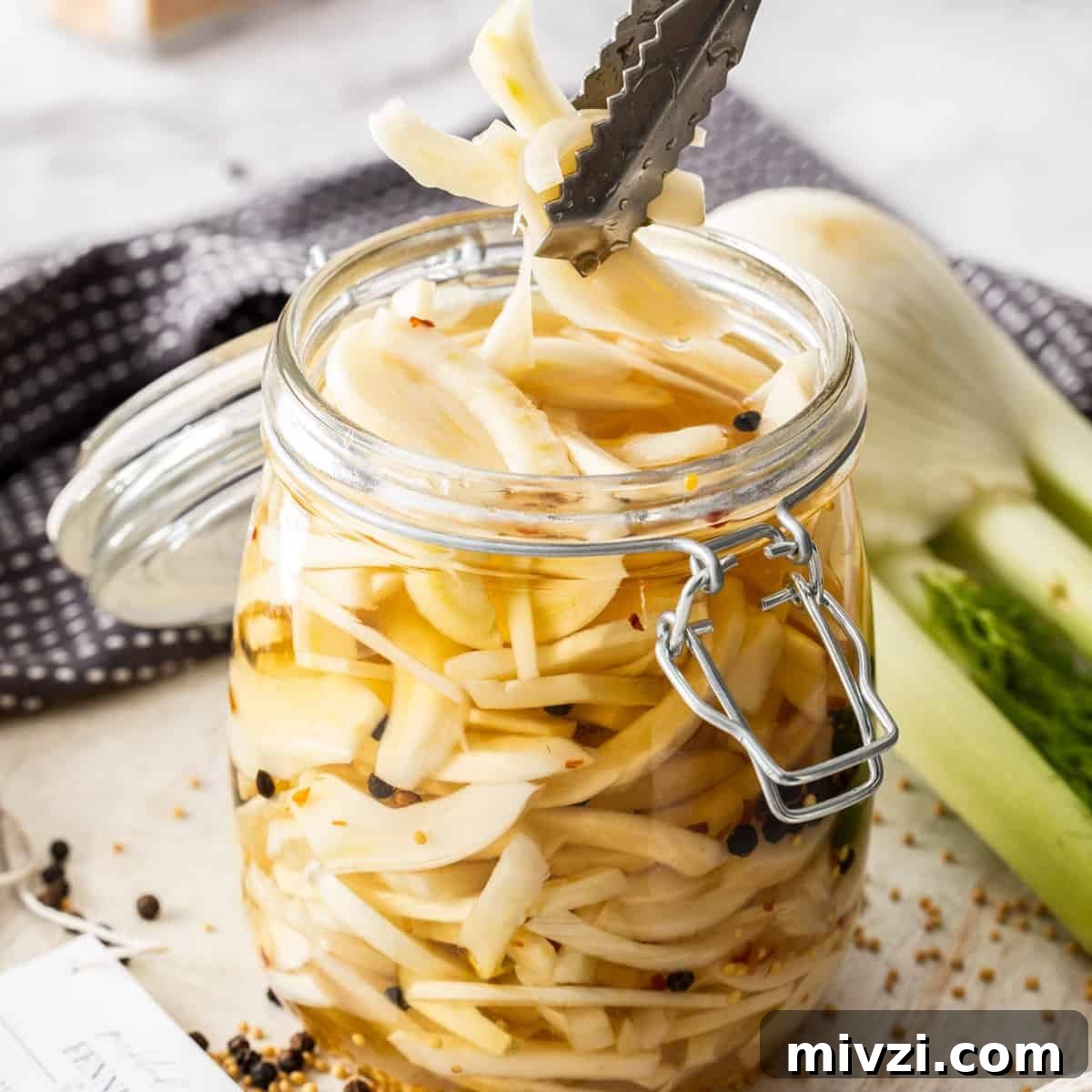
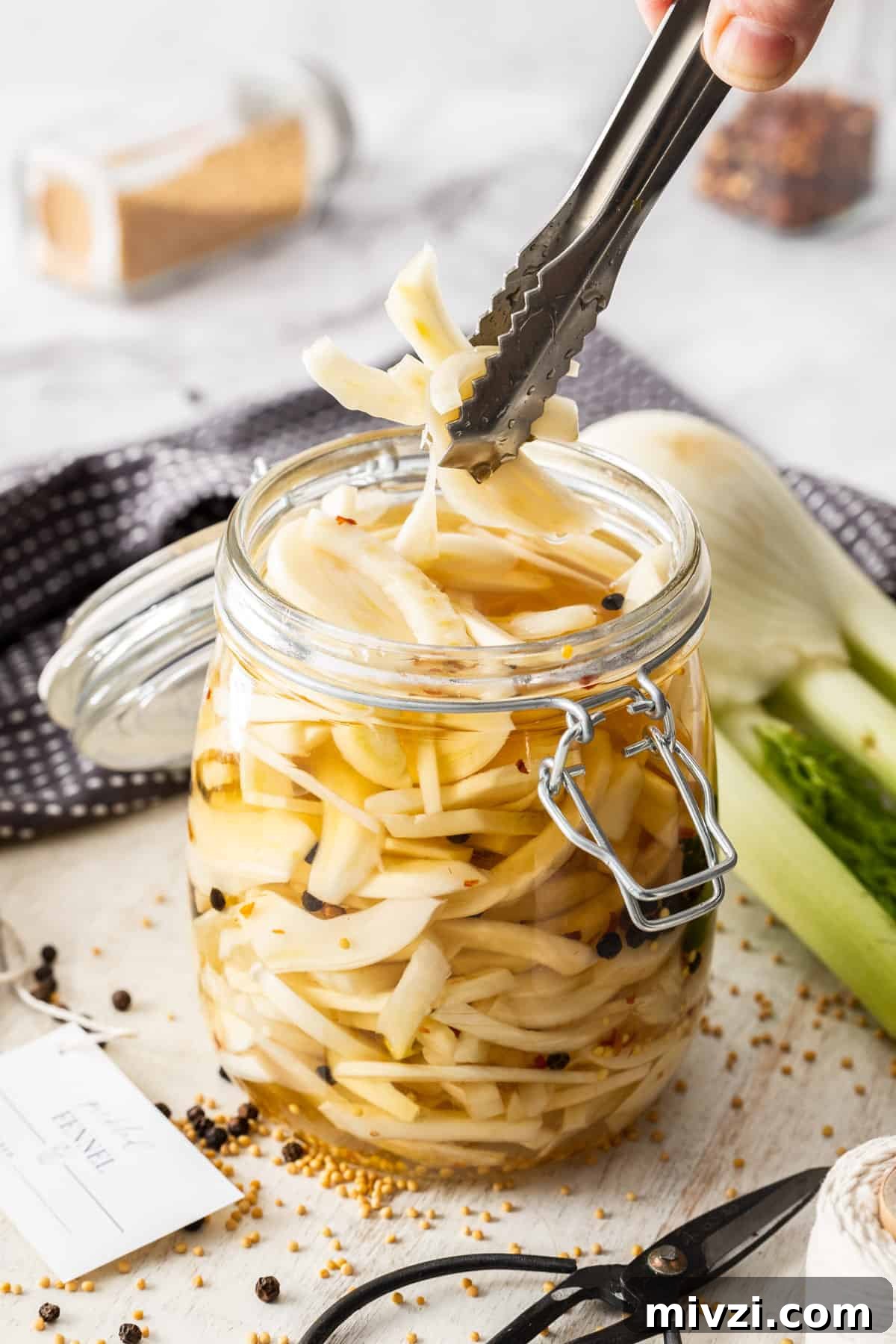
This quick and simple Pickled Fennel delivers crisp texture and bright, tangy flavour with minimal effort. Thinly sliced fennel is packed into a sterilised jar, covered with a hot, well-seasoned brine and sealed. After chilling in the fridge for a short time the pickles are ready to enjoy alongside meat, fish or poultry, or as a lively addition to grazing platters, salads and sandwiches.
I started putting pickled fennel on my charcuterie tray. Yum—so tangy, crispy and different. Love this easy recipe.
– Conchetta
[feast_advanced_jump_to]
Why You’ll Love This Recipe:
- A quick pickle can transform the taste and texture of many vegetables. This crisp pickled fennel is an instant flavour booster for a wide range of dishes.
- It’s fast and easy to prepare.
- Making your own pickles means you know exactly what goes into them.
- A great way to preserve fennel at the peak of season so you can enjoy it for weeks.
- Suitable for beginners and experienced cooks alike—an excellent first pickling project.
- These pickles elevate many recipes and make thoughtful edible gifts.
Recipe inspiration: When fennel is abundant I like to preserve some using this simple quick-pickle method. Fennel is especially good in the cooler months, and pickling keeps its crispness and flavour to enjoy later.
Ingredients and Substitutions:
Please refer to the recipe card later in the post for exact quantities and the full method.
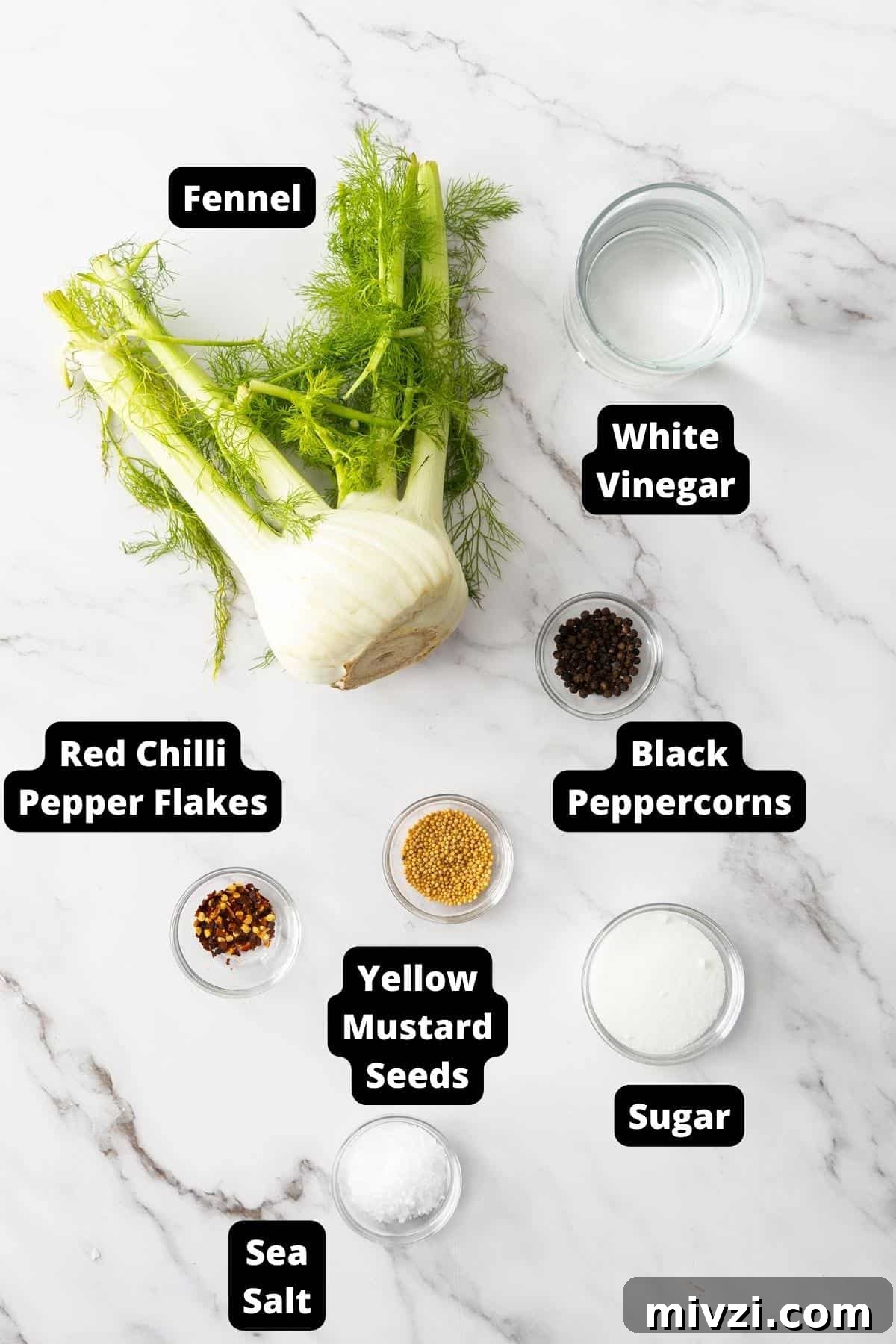
- Fennel bulb: choose fresh, firm small-to-medium bulbs with white flesh and bright fronds.
- Vinegar: white vinegar (5% acidity) is used here; white wine or apple cider vinegar are fine substitutes.
- Water: a little filtered water is added to mellow the brine—avoid chlorinated water that can cloud flavour.
- Salt: use coarse cooking salt or sea salt; table salt may contain anti-caking agents and tastes stronger.
- Sugar: granulated (or caster) sugar balances the vinegar and helps preservation.
- Black pepper: whole peppercorns add a warm spice note.
- Red chilli flakes: a pinch adds gentle heat; adjust to taste.
- Mustard seeds: yellow seeds give a mild crunch; brown seeds will be spicier.
Variations:
Mustard seeds: swap yellow for brown if you want more bite.
Vinegar: white wine or apple cider vinegar work well too—keep the acidity near 5% for best results.
How To Make Pickled Fennel:
Please see the recipe card further along in the post for exact quantities of ingredients and the full method.
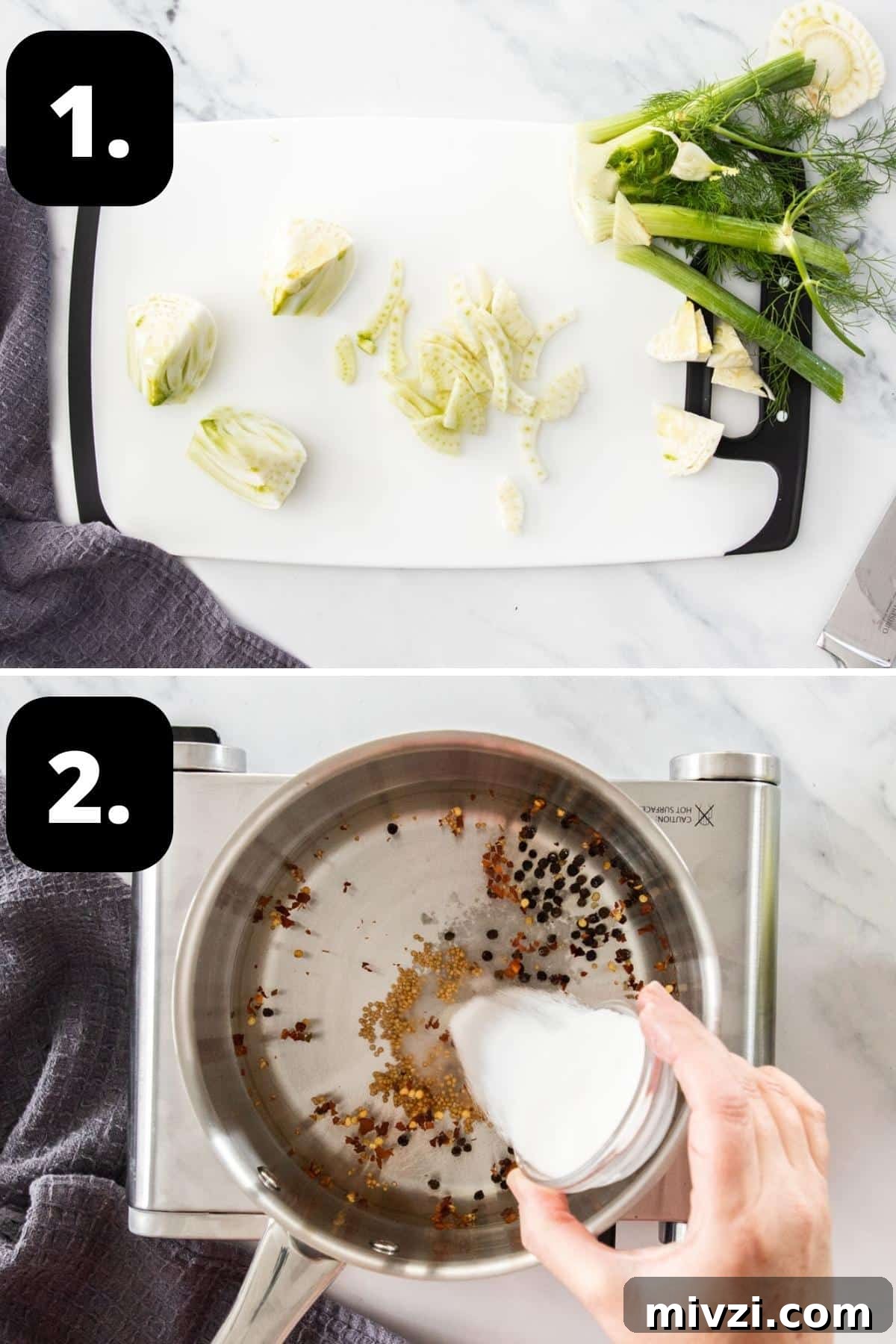
1 – Prepare the fennel:
Trim the top and base of the bulb, remove any coarse outer layers and discard the core. Slice the fennel into thin strips (a mandolin or sharp knife works well).
2 – Make the brine:
Combine vinegar, water, sugar, salt and the spices in a small non-reactive saucepan. Stir over medium heat until the sugar dissolves, bring to a gentle boil, then remove from the heat.
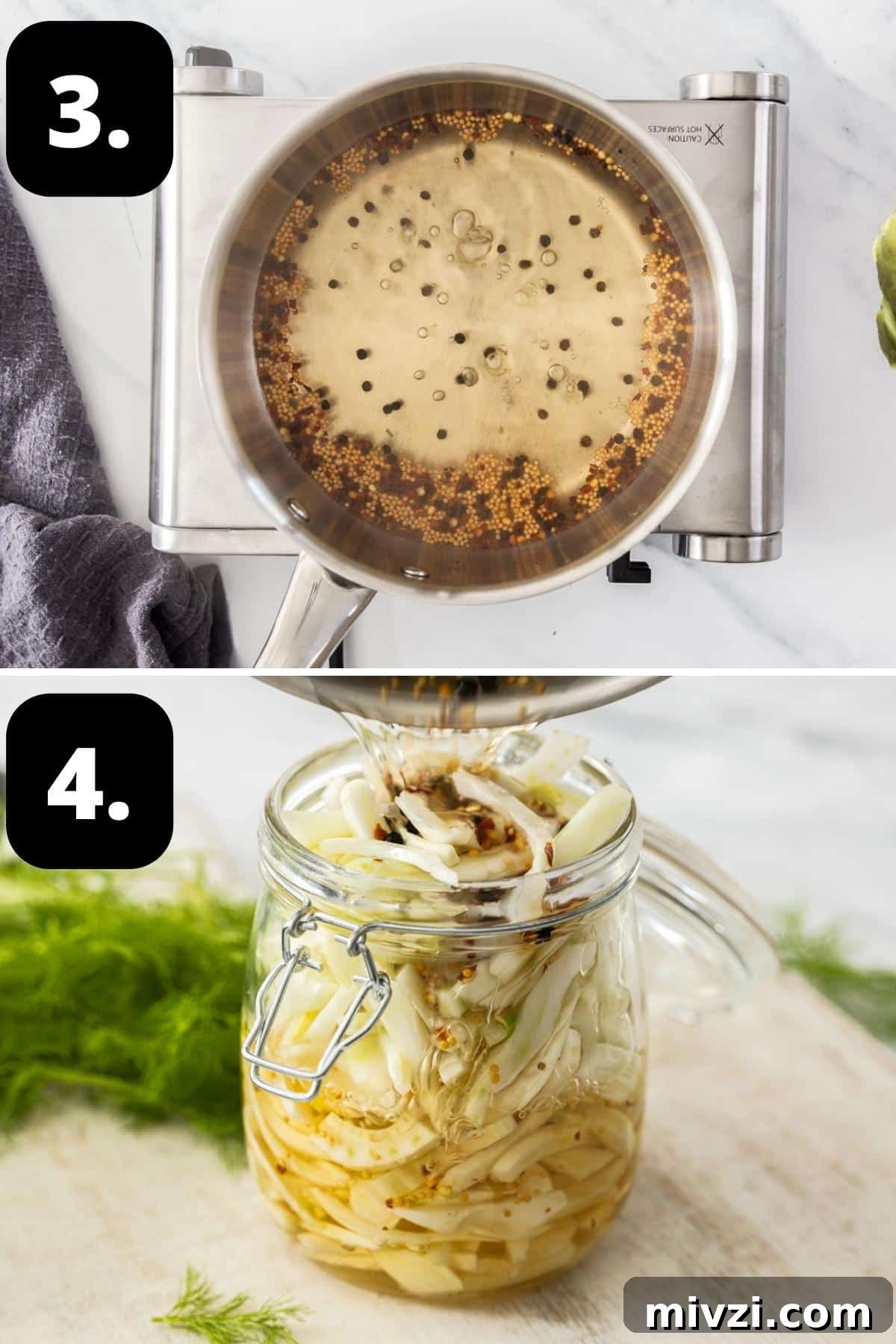
3 – Combine and seal:
Pack the sliced fennel into the sterilised jar, pour the hot brine over until the fennel is covered, then seal immediately.
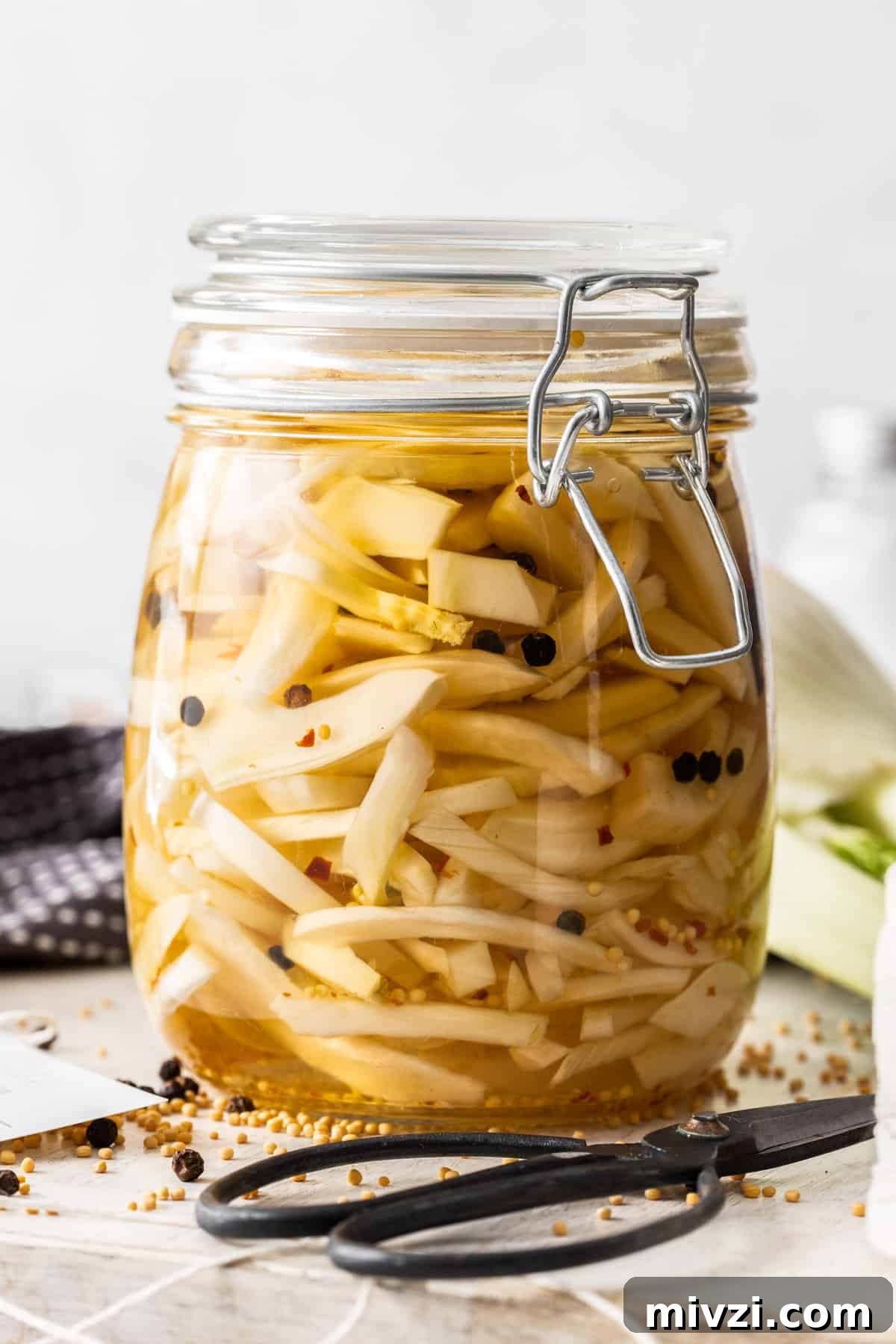
Allow the jar to cool to room temperature before refrigerating. For best flavour, wait at least 12–24 hours before eating; the taste develops further with time.
Hint: flavours continue to mellow and meld as the pickles rest in the fridge.
Tips for Success, Storage and FAQs:
Stored in the fridge, these quick pickles keep for up to three weeks. They will soften the longer they sit.
They can be eaten once cooled, but 12–24 hours in the fridge gives the best flavour and texture.
Yes—scale the ingredients to suit the jar size and quantity you want to make.
White vinegar (5% acidity) is used here, but white wine or apple cider vinegar are good alternatives—keep acidity around 5% for consistent results.
Top Tip:
Sterilise your jars before filling: wash in hot soapy water, rinse and warm them in a low oven (about 130°C / 270°F) for 15–20 minutes. Use a wide-mouth jar for easier filling and ensure your fennel is fresh and firm for the best crunch.
Serving Suggestions:
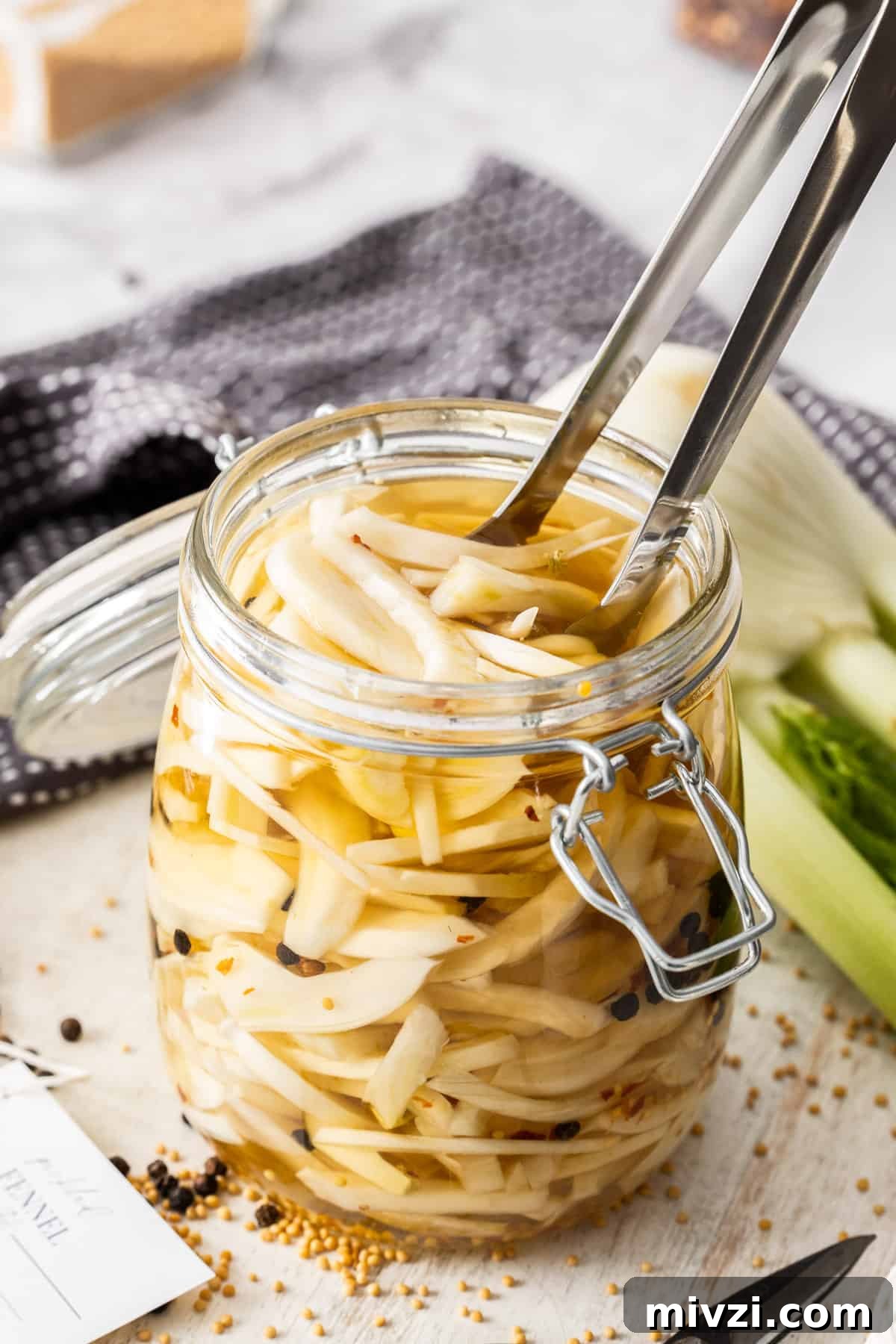
Pickled fennel adds crisp texture and vibrant acidity to many dishes. Ideas for serving:
- Serve alongside fish dishes to brighten the plate.
- Add to an antipasto or charcuterie selection.
- Toss into green salads for extra crunch and tang.
- Pair with rich braised meats to cut the richness.
- Top crostini with sour cream, flaked hot-smoked salmon and pickled fennel; finish with freshly ground black pepper.
- Pack in a jar as a homemade gift—decorate with a label if you like.

I hope you’ll try this simple pickled fennel and enjoy its bright, crunchy flavour. Let me know how it turns out!
Alex xx
More Delicious Recipes For You To Try:
- Pickled Turnips
- Pickled Kohlrabi
- Homemade Pickled Jalapeños
- Pickled Celery
Stay in touch!
Follow the author on social channels and subscribe to the newsletter for more recipes and updates.
Pickled Fennel
Print
Pin
Review
Remove Ads
Equipment
-
1 x 800ml (27 fluid oz) Jar
Please note:
For accuracy, weigh ingredients when possible. Oven temperatures refer to fan-forced ovens.
Ingredients
- 400 g (14 oz) fennel – prepared weight, approx. 1 large bulb.
- 2 teaspoon sea salt
- 1 cup (250 ml) white vinegar
- ¾ cup (180 ml) water
- 2 ½ tablespoon sugar
- 1 teaspoon whole yellow mustard seeds
- 1 teaspoon whole black peppercorns
- ¼ teaspoon red chilli pepper flakes
Instructions
To Sterilise the Jars:
-
Wash jars and lids in hot soapy water and rinse well. Preheat the oven to 130°C (270°F) and warm the jars for 15–20 minutes. Keep the jars warm until ready to fill. If lids have rubber inserts, let them air dry instead of heating.
For the Pickled Fennel:
-
Wash and dry the fennel. Trim the top and base and remove any coarse outer leaves.
-
Cut the fennel into quarters, remove the core and slice into thin strips (about ¼ cm).
-
In a small non-reactive saucepan combine water, vinegar, sugar, salt and spices. Stir over medium heat until the sugar dissolves, bring to a boil, then remove from heat.
-
Pack the fennel into the warm, sterilised jar, pour the hot pickling liquid over to cover and seal the jar immediately.
-
Let the jar cool on the bench, then refrigerate. Allow 12–24 hours for best flavour before serving.
Notes
- Fennel: use fresh, crisp bulbs for the best texture.
- Cooking sea salt: use coarse salt rather than fine table salt to avoid excessive saltiness or clouding.
- Vinegar: keep acidity at about 5%—apple cider or white wine vinegar are suitable alternatives.
- Water: filtered water is recommended to avoid off-flavours from chlorine.
- Tablespoon: the recipe uses a 20 ml tablespoon; if your tablespoon is smaller use 1 tablespoon + 1 teaspoon per listed Australian tablespoon.
- Non-reactive saucepan: use stainless steel, enamel, ceramic or glass; avoid copper, iron or plain aluminium with acidic liquids.
- Storage: store refrigerated once cooled. This is a quick-pickle method and not intended for long-term canning.
- Nutritional information: values are estimates and refer to the entire jar including brine.
Leave a comment and rating
Nutrition Estimate:
Nutritional Disclaimer:
The nutritional information is an estimate only, derived from online calculators. For precise values, calculate based on the actual ingredients and brands you use.