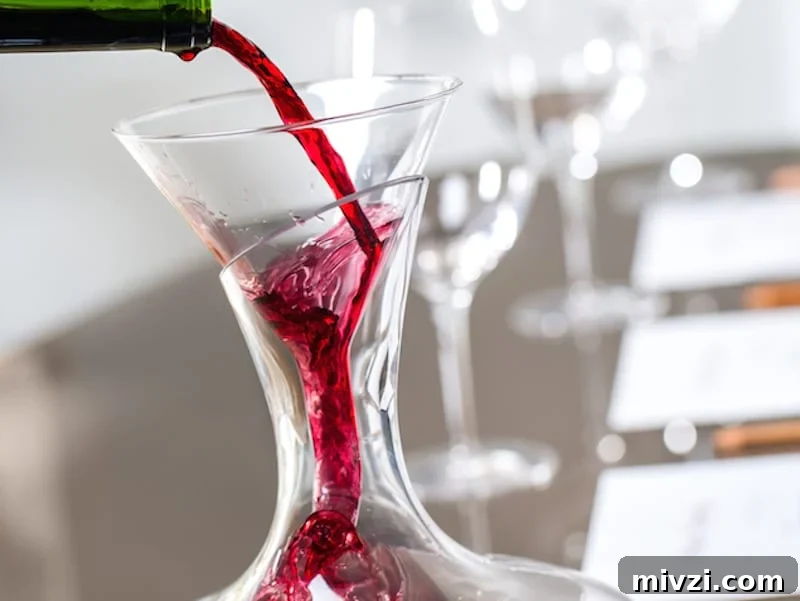
Do you know when to decant wine? Learn from one of NYC’s top sommeliers why the technique works and when to use it.
Shutterstock: karelnoppe
Richard Breitkreutz, a veteran New York City sommelier and Corporate Beverage Director for BR Guest Hospitality, explains the purpose of decanting and when it is truly beneficial. Beyond its elegant presentation, decanting is a practical technique that can improve the experience of many wines—but not every bottle needs it. Read on to learn when decanting helps and when it’s an unnecessary step.
Many of us have seen the graceful motion of a server pouring wine into a glass decanter at a restaurant, and some people keep a decanter at home for special occasions. Decanting is not one-size-fits-all: opinions vary, but Richard argues that decanting can enhance most wines when done for the right reasons.
At its core, decanting exposes wine to air. Most decanters are clear, wide vessels that increase the wine’s surface area so it can interact with oxygen. That interaction can soften tannins, release aromas, or help separate liquid from sediment.
Shutterstock: Daria Minaeva
Here are Richard’s four main reasons to decant a bottle of wine:
Sediment
As red wines age, pigments and tannins can drop out of solution and form sediment that settles in the bottle. A sensible guideline is to consider decanting red wines older than ten years to separate the clear wine from the solid deposits. When decanting for sediment, hold a light under the neck of the bottle to watch for particles—restaurants often use candles for this, though a small flashlight is more reliable. For more delicate varieties or very old bottles, stand the bottle upright for a day or rest it in an angled rack before opening so the sediment can settle to the bottom. Then pour gently to leave the sediment in the bottle.
Oxygen
Many young wines, and certain varieties such as Nebbiolo or Syrah, benefit from exposure to air to fully open up and display their aromas and flavors. A quick decant—pouring the wine rapidly into a decanter—maximizes the wine’s contact with oxygen and helps it breathe. Even some older white wines, including mature Rieslings, can revive and reveal more complexity after a short period in a decanter.
Temperature
Restaurants often store whites and reds at different constant temperatures. If a wine is served too cold, decanting can help it warm slightly and reach a more suitable drinking temperature. This can be especially useful for high-quality white Burgundies or other wines where temperature affects aroma and texture.
Presentation
Decanting also brings a theatrical element to the table. Having a bottle decanted and presented on a decanter adds ceremony and signals special attention to the guest. At home, decanting can elevate a dinner party—using the technique thoughtfully will impress guests without feeling ostentatious.
In summary, decanting serves practical purposes—removing sediment, aerating young or closed wines, and adjusting temperature—while also enhancing presentation. Use decanting selectively based on the bottle’s age, grape variety, condition, and your goals for the wine. When applied appropriately, it can make a meaningful difference to the enjoyment of the bottle.